Photo: Ščenza
Barcelona, Spain · Europe
Barcelona without the postcard: a week with the working city
Barcelona is a city that has been loved nearly to death and is, slowly, recovering. You can still have a beautiful week here. You just need to skip half of what the guidebooks insist on, and learn the names of three or four streets that aren't on the tourist map.
By Ščenza
· updated · 6 min read
I was in Barcelona the spring of 2017, the spring before the worst of the over-tourism arguments boiled over, and I remember a sentence the waiter at a small bar in El Born said while pouring me a vermouth: La ciutat ja no és nostra — the city isn’t ours anymore. He was forty-five. He was Catalan. He was tired.
I’ve thought about that sentence on every visit since. It’s true and it isn’t. The Barcelona that people queue up to see — the Sagrada Família, the Ramblas, Park Güell — has effectively been ceded to its visitors. But the rest of the city, the working ten kilometres of it, is still very much there, still cooking, still arguing, still living. You can have an honest week in Barcelona. You just have to want one.
Why I keep coming back
My first visit was in 2005, on the way somewhere else, and I stayed three weeks instead of three days. I learned more Spanish from the Sunday markets than from any class. The light comes in off the Mediterranean at an angle that flatters everything; the food is among the most quietly excellent in Europe; and the city has a Catalan habit of doing things properly that I happen to love — the long lunch, the late dinner, the proper vermut hour between 12:30 and 2.
Where to base yourself
Gràcia. Not the old town. Gràcia, north of the Eixample, was its own village until 1897 and still acts like one — narrow streets, small plaças where children play in the evening, neighbourhood bars where the owner remembers you on the second visit. This is where I stay now, almost always.
Sant Antoni if you want to be closer to the centre but not in it. The market hall is one of the best in the city, the streets around it have an unselfconscious mix of new bars and old shops, and you’re a fifteen-minute walk from everywhere.
Poblenou if you want the Mediterranean side. Formerly the city’s industrial belt, now half-gentrified, half-still-warehouses. The Rambla del Poblenou is the rare pedestrian street in Barcelona that isn’t currently being trampled.
Avoid: the Gothic Quarter as a base (too noisy, too touristed) and Barceloneta as a base (you’ll be a fifteen-minute Metro from everywhere).
What to actually do
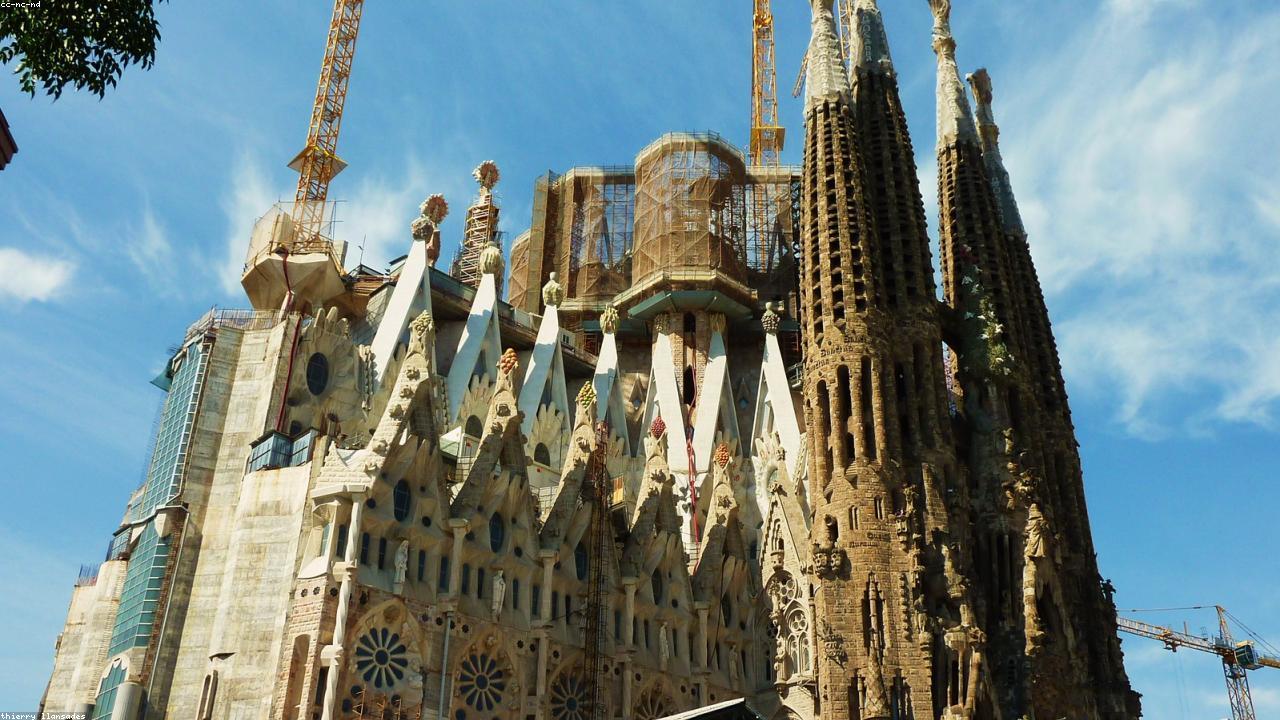
Gaudí, yes, but only two. If you must choose between Sagrada Família, Park Güell, Casa Batlló, and the Casa Milà, choose the Sagrada Família (you really do have to, and a 9 a.m. timed entry with the tower included is non-negotiable) and the Casa Vicens in Gràcia — Gaudí’s first commission, far less crowded, weird and beautiful and very nineteenth century. Skip Park Güell unless you’re up at dawn and walking in through the back. The free hours in the morning are still genuinely free if you arrive before the gate opens.
Spend an afternoon at the MNAC. The National Art Museum of Catalonia, up the hill on Montjuïc, has the greatest collection of Romanesque frescoes anywhere — eleventh- and twelfth-century church paintings rescued from Pyrenean chapels and reinstalled in the museum’s vaulted rooms. The crowds are thin; the work is extraordinary. Walk down through the gardens afterwards.
Eat tapas where the staff don’t speak English first. This rules out most of the Gothic Quarter. Try Quimet i Quimet in Poble Sec — a standing-room-only sliver of a place where five generations of one family have been assembling cold preserved fish on bread for over a hundred years. Get the smoked salmon with yogurt and truffle honey. Drink the vermouth.
Take a train up the coast. A €4.40 R1 commuter line ticket gets you to Caldes d’Estrac or Sant Pol de Mar in just over an hour. Small towns, calm beaches, a fish restaurant that serves whatever came in this morning. The Barcelona beach is fine but it isn’t, properly, a beach.
Look up. The roofs of the Eixample are largely accessible and frequently astonishing — the rooftop of the Hotel Casa Fuster is one example, with a glass of vermouth and the city stretched out below you. The Casa Milà rooftop is famous; the Palau de la Música Catalana is, in my view, the more rewarding building if you can catch a midday tour.
Where to eat
A Catalan tapas bar is structurally different from a Madrid one. They lean on the sea, on the smoke of charcoal, on preserved foods, on the vermut.
Bar del Pla (Born) — The chef trained at El Bulli; the menu doesn’t show off about it. Tendrón of veal, an absurdly good potato omelette, a wine list of small Catalan producers.
Cal Pep (Born) — Counter only, walk-in only, queue up. The clams with ham, the tortilleta with whitebait. Some of these things have been on the bar for decades.
Bar Cañete (Raval) — The shellfish counter is the show, but the menu of the day is what keeps Catalans coming back.
Bodega 1900 (Sant Antoni) — Albert Adrià’s vermouth bar, the dignified contemporary cousin of the old Catalan bodegas. The spherified olive (yes, that one) is here.
Granja Petitbo (Eixample) — Coffee, a quiet morning room, a working-from-an-armchair sort of place. Good when you need to recover.
A Catalan habit worth adopting: the vermut hour, between roughly 12:30 and 2 on a Sunday, in which the city gathers on plaçes for a glass of fortified wine, olives, salted anchovies, and a slow conversation. El Xampanyet in El Born is the postcard version, Bar Calders in Sant Antoni the local one.
When to come
April–May and mid-September–October. The summer is now uncomfortably hot and the city, especially the historic centre, is overrun.
November and February are the genuine secrets. Cool, occasionally rainy, the restaurants quiet, the Catalans visible again.
August is the month locals leave; many neighbourhood places shut for two or three weeks. Confirm before you go.
Practical notes
- Visa: Schengen rules.
- Money: Card universally. Cash is useful in markets and the older bars.
- Transport: The Metro is efficient and a T-casual card (10 rides) is the right starter ticket. The buses run later than the Metro.
- Pickpockets: A real, professional, occasionally astonishing presence on La Rambla, the Metro line 3, and in Barceloneta. Front pocket, money belt, no phone on the café table.
- The Catalan thing: Catalonia has its own language and a complicated relationship with the rest of Spain. Use bon dia in the morning, gràcies when you leave a shop. You don’t have to take sides on independence to be polite.
A final thought
What I’ve come to love about Barcelona is that it is, despite everything that’s happened to it, still a city that can hold a long Sunday lunch in a plaça in Gràcia and not feel performative about it. The grandmothers are still drinking vermouth. The children are still kicking a ball. The waiter who told me, in 2017, that the city wasn’t theirs anymore: I went back to that bar last year. He was still there. The vermouth was still cold. He nodded at me when I sat down.
The city is not gone. The city is hanging on. So am I. So, I suspect, will you, if you give it three quiet days.
If you only have a few days
8 ideal things to do in Barcelona
Sagrada Família at first opening, with a Nativity tower ticket
EixampleFirst entry slot of the day; book weeks ahead
In February 2026 the central Jesus tower topped out at 172.5 metres and the building still isn't finished, which is roughly the correct amount of finished for a church begun in 1882. Only the Nativity and Passion towers are open to visitors: lift up, narrow spiral staircase down. Take the Nativity side — the stone is older, the carving is Gaudí's own, and the morning light coming through the east windows is the whole argument for getting up. I once did the descent with a hangover and learned that a spiral staircase and a Catalan vermouth are not compatible technologies.
Casa Vicens
Carrer de les Carolines, GràciaWeekday mornings; allow about an hour and a quarter
Gaudí's first commissioned house, and the one that looks least like the Gaudí on the fridge magnets — marigold tiles, exposed brick, an interior that goes full orientalist and refuses to apologise for it. It opened as a museum in 2017 after being a private home for well over a century. I went expecting a warm-up act and came out convinced it was the best thing he built before he got famous enough to be interrupted. It's ten minutes' walk from the squares of Gràcia, where you can sit down afterwards and argue about it.
The Romanesque rooms at the MNAC
Palau Nacional, MontjuïcAfternoon; walk down through the terrace gardens after
Between 1919 and 1923, teams stripped the frescoes off the walls of abandoned Pyrenean churches — the Christ of Sant Climent de Taüll among them — and rebuilt them here inside reconstructed apses, partly to stop dealers shipping them to America. It is the greatest Romanesque collection anywhere and I have never queued for it, because everyone is across town looking at Gaudí. Two hours minimum. The Pantocrator's eyes follow you round the apse in a way that unsettled me, and I grew up in a cathedral that used to be an emperor's tomb.
Recinte Modernista de Sant Pau
Ten minutes uphill from the Sagrada FamíliaMorning; allow two hours for the pavilions and gardens
Domènech i Montaner built a hospital as a village of separate pavilions joined by underground tunnels, between 1901 and 1930, on the theory that sick people recover faster surrounded by gardens and coloured tile. You begin in the hypostyle hall — the old emergency department, more beautiful than most cathedrals — and finish wandering the grounds. It is a short uphill walk from the Sagrada Família and the crowd thins out to almost nothing over that distance, which tells you a great deal about how people plan their trips.
The rooftop and tribunes of Santa Maria del Mar
Passeig del Born, La RiberaGuided-visit slots only; check which language runs that day
Fourteenth-century, and the Born neighbourhood grew up around it. The guided visit takes you onto the roof terraces and through the restored tribunes, which were shut to the public until recently. From up there the medieval street plan below suddenly becomes legible — you can read the shape of the old city the way a pigeon does. It runs about seventy-five minutes. I booked the Spanish tour out of misplaced pride, followed maybe half of it, and would happily do the English one next time like an adult.
Standing up at Quimet i Quimet
Carrer del Poeta Cabanyes, Poble SecWeekday lunch or early evening; shut Saturday and Sunday
Same family, four generations, a room roughly the size of a generous hallway with bottles stacked to the ceiling and nowhere at all to sit. You order montaditos across the counter and eat them standing with your elbows tucked in. There are no reservations and there never will be. Twice I have arrived to find it already wedged full and walked away again. It closes at weekends, which catches out almost every visitor who has read about it — including me, once, in 2011, on a Saturday, with a hungry friend.
Walk the Carretera de les Aigües
Parc de Collserola; funicular up from Peu del FunicularEarly morning, any season
A flat gravel road, close to nine kilometres of it, cut along the flank of Collserola to service the city's water pipes and now full of Barcelonans running off their weekend. It is level the entire way, which after three days of Gothic Quarter stairs feels like a personal favour. The whole city lies below — Sagrada Família, Torre Glòries, the sea past it. Turn around whenever you like; nobody is monitoring your progress. Dogs are allowed, and there are a very great many of them.
The R1 up the Maresme coast to Sant Pol de Mar
About an hour north by commuter trainWeekdays; September for warm sea and an empty beach
Trains on this line run so close to the water for most of the way north that the sea fills the right-hand windows. Sant Pol is white houses stacked up a hill above a small beach, and there is essentially nothing to do there, which is the entire proposition. I swam, ate grilled fish, misread the timetable, sat on the platform for forty minutes watching the light go off the water, and it stayed one of my better days in Catalonia. Sit on the right going out.
From a Split boy’s notebook
The Split lens
What reminded me of home
Mediterranean port, language minority defending itself against the larger nation, café-on-the-square evenings that don't really start until ten. The Gràcia plaças felt like a bigger version of Matejuška on a Friday — same crowd density, same wine in plastic, same children running between adult legs.
What Split could borrow
Barcelona's *superilles* (superblocks) close three of every nine streets to cars and turn them into neighbourhood squares. Veli Varoš, Lučac, and Manuš in Split are exactly the right scale for the same experiment. Three streets, one square, replicate.
Who can take you
Tour operators & guides to try
A short, opinionated starter list — just my humble opinion. Verify before booking.
Devour Toursspecialistwww.devourtours.com →
Devour's tapas crawl through Gràcia or the Born is the right introduction to how Catalan eating actually works — vermut hour, the standing-bar order rhythm, three bars in an evening rather than a single restaurant. Guides are bilingual and know which family has owned which bodega since the 1970s. Best for a first or second night in town. Skip Devour's Sagrada Familia + tapas combo — the combinations are awkward; do the cathedral separately.
Context Travelspecialistwww.contexttravel.com →
Context's Gaudí walks are excellent if you actually care about Catalan modernisme rather than just the postcards — the architectural-historian guides on the Sagrada Família visit explain why the geometry works, not just that it does. Six-person cap. Pick this over a group tour if Casa Batlló and Casa Milà are on your list. Caveat: the entrance fees are not included, and they add up; budget separately.