Photo: Ščenza
Copenhagen, Denmark · Europe
Copenhagen on a bicycle: the quietly competent capital
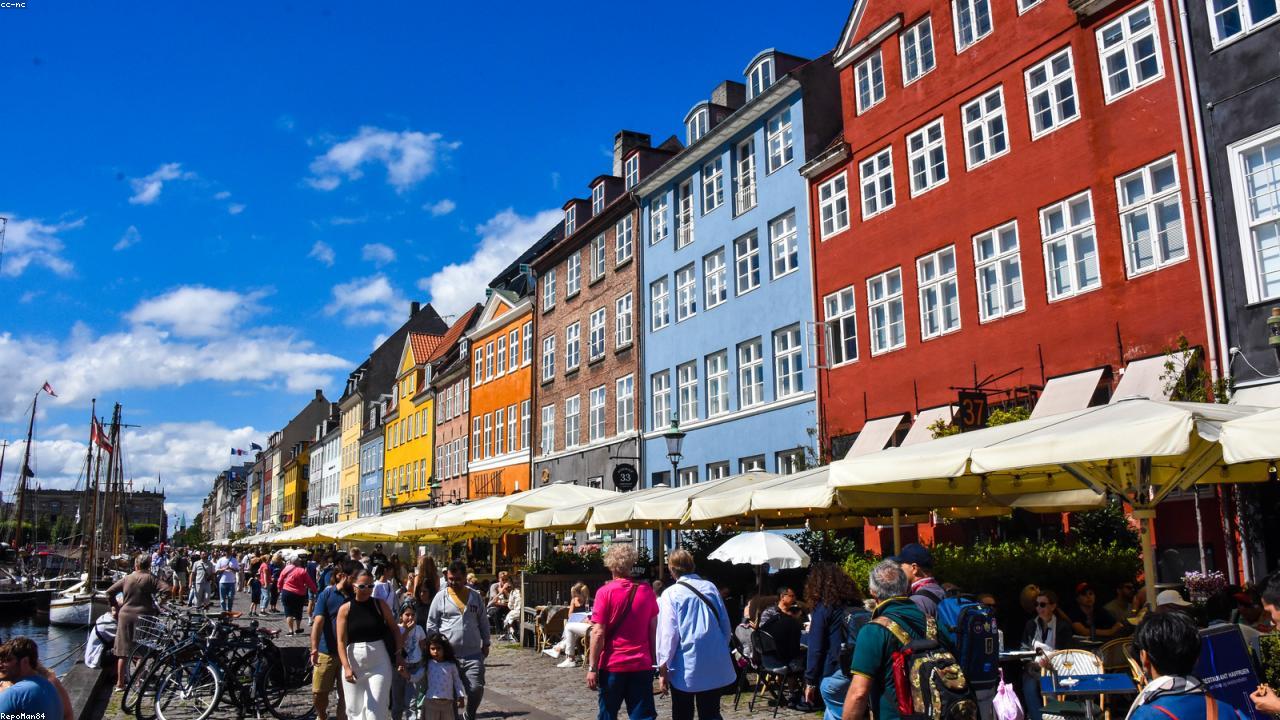
Copenhagen doesn't try to impress you. The city's pleasures are small and structural — a bike lane that works, a harbour you can swim in, a city built at human scale and against the temptation to grow taller. Most great visits start by hiring a bike on day one.
By Ščenza
· updated · 5 min read
I was on a borrowed bicycle on the harbour cycle path in Nordhavn last June and I realised, slightly resentfully, that I had not had a moment of cycling stress in five days. No close calls. No buses pulling in front of me. No pedestrians stepping into the bike lane. The infrastructure works. The drivers expect bicycles. The traffic lights have separate timing for cyclists. Coming from almost any other European city, this is a quiet shock.
Why I keep coming back
Copenhagen is the European city I have most consistently underestimated and most consistently come back to. It is not flashy. The historic centre is small. The weather is, frankly, often terrible. And yet every visit, ending on the day I leave, I am already plotting the next one.
The reason, I think, is that Copenhagen is one of the very few major cities where the actual lived experience — moving around, eating, drinking, sleeping — has been systematically optimised for the people who live there rather than the people who visit. It rewards low expectations and patient walking.
Where to base yourself
Vesterbro, west of the centre. Formerly the red-light district, now a smart residential and food-focused neighbourhood. Reffen, Kødbyen (the Meatpacking District), and excellent coffee.
Nørrebro, north of the lakes. The most multicultural and arguably the most interesting neighbourhood; the Jægersborggade has the small shops and the artisan bakery (Mirabelle) and the wine bars.
Christianshavn, on its island just across from the centre. Canal-laced, residential, walking distance to everywhere, where the Christianites once squatted (the Christiania commune is still next door, though increasingly normalised).
Avoid anywhere directly on Strøget, the pedestrian shopping street, as a base. Too noisy, too touristy.
What to actually do
Rent a bicycle on day one. Most hotels rent them; Donkey Republic is the city-wide app system. Cycle the harbour bike paths from the southern bath at Sluseholmen to the new Reffen food market in the north. About 12 km, an hour at a slow pace. The whole city makes more sense afterwards.
Swim in the harbour. The Copenhagen harbour has been clean and swimmable since the early 2000s. Three public swimming baths — Islands Brygge, Fisketorvet, Sluseholmen — let you swim in the city centre. Free.
Spend an afternoon at the Louisiana Museum. Not in the city — a 35-minute train ride north along the coast to Humlebæk. One of the most beautifully sited modern-art museums on earth, with a sculpture garden running down to the sea. Calder, Giacometti, the permanent collection rooms; the temporary exhibitions are usually excellent. Lunch at the museum café with the sound view.
Visit the small museums. Designmuseum Danmark (Danish design from the Wegner chairs onwards), the David Collection (Islamic art, free, almost no tourists), the Cisterns (a former water reservoir converted to an art space underneath Frederiksberg Park).
Walk through Christiania. The 1971 commune in the former military barracks on the eastern side of Christianshavn. Recently transformed by tighter regulation; the open hashish trade on Pusher Street was, for forty years, the famous (and illegal) feature and was dismantled in 2024. The rest of the commune — the homes, the workshops, the small lake — remains a genuinely strange enclave of the city. Photography of Pusher Street is still forbidden.
Where to eat
Copenhagen has spent fifteen years at the forefront of European cooking, ever since René Redzepi at Noma rewrote what ‘Nordic cuisine’ meant. The trickle-down through the city is now extensive.
Noma is famous, three-Michelin, fully booked years out, and yes still worth it once if your finances permit and you can plan that far ahead.
Kadeau — Two Michelin, Bornholm produce, refined contemporary Nordic. The lunch is the entry point.
Hija de Sanchez (Kødbyen) — A taqueria from a former Noma pastry chef. Three-euro tacos that are some of the best on any continent.
Apollo Bar (Charlottenborg) — Set in an art-school courtyard, set menu, well-priced for the quality.
Reffen — A food-truck market on the harbour, useful when you can’t decide.
Brød or Hart Bageri — The new generation of Copenhagen sourdough bakeries, the cardamom buns are religious.
When to come
Late May to early September for the daylight (nearly 18 hours at the solstice) and the harbour swimming. The summer is the obvious move.
October for the hygge — the long candlelit evenings, the early dark, the city slowing down.
Winter is cold, often grey, sometimes snowy; the Christmas market at Tivoli is the season’s centrepiece. The harbour swim is for the brave; the locals do still do it.
Practical notes
- Visa: Schengen.
- Money: Danish krone. Card universally; many places no longer take cash. Apple Pay, Google Pay accepted everywhere.
- Transport: Walk and cycle. The Metro is brilliant — driverless, runs 24 hours on weekends. A 24-hour ticket is around DKK 80.
- Cycling rules: Stay in the bike lane. Signal turns with your arm. Don’t ride on pavements. Lights front and rear at all times after dark, by law.
- Cost: Copenhagen is one of the most expensive cities in Europe. A casual restaurant dinner is €40–60 per person; a beer in a bar €8.
- The ‘Strøget tourist trap’ lunch: Skip it. Walk five streets away in any direction.
A final thought
The Danish word hygge has been mass-marketed to death in English-language books and lifestyle articles. Locally, it is more banal and more useful than the marketing version. It means, approximately, the small, often unphotographable pleasure of being indoors and warm and slightly companionable when it is cold outside. A coffee in a candle-lit café in late afternoon. A pint at a bar with one friend. A walk through the lakes when the snow is falling.
Copenhagen, more than any city I know, has built itself around the right to have this experience consistently and cheaply. The cycling, the harbour, the small museums, the strong but unfussy food scene — all of it is, in the end, about making the day-to-day better. This is not glamorous. It is not Instagrammable in the way Lisbon or Santorini is. But it is, slowly, addictive, and it explains why this small Nordic capital keeps appearing on lists of the world’s most liveable cities. The lesson, if there is one, is that liveability and visitability are roughly the same thing in the long run. Make the city work, and people will come.
If you only have a few days
6 ideal things to do in Copenhagen
Louisiana Museum of Modern Art at Humlebæk
Humlebæk, about forty minutes north on the coastal Kystbanen lineA weekday. Closed Mondays
Louisiana is the one good reason to leave Copenhagen for a day, and the city takes it surprisingly well. The galleries thread through a garden that runs down to the Øresund, so you keep stepping outdoors between rooms — Calder and Giacometti on the grass, Sweden visible across the water. I have twice arrived intending to spend two hours and left after six, both times mildly irritated at the return train I had already booked.
CopenHill, the ski slope on the incinerator
Amager, on the harbour east of the centreYear-round — the piste is plastic, not snow
Skiing down the roof of a waste-to-energy plant is precisely as absurd as it sounds, and the Danes built it with a completely straight face: Bjarke Ingels wrapped 450 metres of dry piste around a working incinerator that burns the city's rubbish into heat for something like 150,000 homes. You don't have to ski it. The hiking path to the summit is free, and the view back over the harbour and out to the Øresund is the best the city offers.
The Winter Garden at the Ny Carlsberg Glyptotek
Dantes Plads, behind TivoliRainy afternoons, of which Copenhagen supplies a generous number
Palm trees under a wrought-iron dome, inside a museum a brewer built to hold what he bought with beer money. Carl Jacobsen assembled Scandinavia's largest antiquities collection here, plus mummies out of Egypt and the biggest holding of Rodin outside France — the Burghers of Calais included. There is a café in the palm house and nobody minds how long you occupy a chair in it. I have used this building three times purely as shelter and only twice as a museum, and it forgave me on both counts.
Assistens Cemetery, Nørrebro
Nørrebro, at the far end of JægersborggadeSpring, when the whole neighbourhood moves outdoors
Hans Christian Andersen and Søren Kierkegaard are buried a short walk apart in what functions, day to day, as the neighbourhood's main park. People picnic between eighteenth-century graves. Students revise on the grass. A band was rehearsing badly behind a hedge the last time I walked through and nobody present appeared to consider this disrespectful, myself included. Andersen's stone is signposted; Kierkegaard's takes some looking for, which he would probably have considered appropriate.
Cisternerne under Søndermarken
Søndermarken park, FrederiksbergAny season. It is cold and dripping down there regardless
Under Søndermarken park lies a drained nineteenth-century drinking-water reservoir, now a permanently damp exhibition space where the ceiling drips on you at unpredictable intervals. One artist gets the room each year, and the room does half the work — vast acoustics, air cold enough to see your breath in August, and a darkness that reorganises whatever has been installed in it. Take a jacket. I did not, and spent an excellent hour shivering at something I would otherwise have walked past in ten minutes.
Swim at the Islands Brygge harbour bath
Havneparken, Islands Brygge, across the water from the centreLate June through August for the water temperature
Copenhagen spent fifteen years cleaning its inner harbour to the point where swimming in the middle of the working port is unremarkable, and the harbour bath is the proof of it: free, busy, full of office workers doing lengths in their lunch hour. Split has Bačvice, which is a beach and therefore an easier problem. Our Gradska luka is still too oily to put a foot into, and every time I climb out of this water I get a little more annoyed about that.
From a Split boy’s notebook
The Split lens
What reminded me of home
Bay city that has learnt to use its water as public space. The harbour swimming at Islands Brygge is exactly what Bačvice already is for us — except theirs is the formerly industrial port, now cleaned to drinkable. Both cities understand that water is the city's largest free amenity.
What Split could borrow
Copenhagen cleaned its inner harbour over fifteen years to the point where swimming in the city centre is normal. Our inner port (Gradska luka) is too oily to swim in. A serious municipal investment — sealed marina, fuel-spill capture, a swimming platform near Matejuška — would be the most useful thing Split could do for itself this decade.
Who can take you
Tour operators & guides to try
A short, opinionated starter list — just my humble opinion. Verify before booking.
Context Travelspecialistwww.contexttravel.com →
Context's Copenhagen walks lean cultural-history rather than design-focused, which is mildly disappointing in a city where modernism is the point. The Carlsberg / Danish-brewing walk and the Christianshavn maritime walk are the standouts. Caveat: their Louisiana Museum day trip is overpriced; the Louisiana itself is easily done independently by train and lunch at the café.
Bike Copenhagen With Mikeactivitywww.bikecopenhagenwithmike.dk →
Bike Copenhagen With Mike is genuinely the city's most-recommended cycling tour — Mike Sommerville has been guiding daily since the early 2000s, his English-language tours are storytelling-heavy in a way that brings the city's social-democratic history to life. Group size 15–20. Caveat: this is a 3-hour bike tour and the bikes are upright Dutch-style. If you're not confident on a bicycle in city traffic, walk the same routes instead — Copenhagen is small enough.