Photo: Ščenza
Berlin, Germany · Europe
Berlin keeps becoming itself: a guide to a city that won't sit still
Berlin is the only major European capital that has been multiple cities within a single lifetime — divided, reunited, gentrified, bohemian, exhausted, reborn — and that experience of being remade is still, somehow, the city's most reliable trait.
By Ščenza
· updated · 5 min read
There’s an apartment building on the Reichenberger Straße in Kreuzberg where the courtyard, in the back, has six different layers of paint visible on the wall depending on where you look — anarchist black, communist red, post-Wende beige, three rounds of graffiti and one polite mural. Nobody who lives there has ever painted it over completely. They’ve added. This is, I’ve come to think, the metaphor for the whole city.
Why I keep coming back
I first came to Berlin in 2004 with two hundred euros, slept in a hostel above a kebab shop, and stayed eleven days. The Wall had been down for fifteen years. The east still looked east. Rent was nothing. An entire generation of artists and DJs had moved in to take advantage of cheap space in the formerly walled-in West and the suddenly post-state East.
I came back almost every year. In 2010 the city was — by its own admission — the bohemian capital of Europe. By 2018 the rents were no longer trivial and the techno clubs were tighter at the door. By 2024 Berlin was richer, sharper, more globally visible, and arguably less interesting on its surface — and yet, like a lot of cities that have been hyped, it remained more itself underneath than I’d have predicted.
Where to base yourself
Kreuzberg (around Kottbusser Tor or Görlitzer Park) — Still the central energy of the city. Multiethnic, food-loaded, slightly chaotic, walkable to the river and to Mitte. The neighbourhood I keep returning to.
Neukölln — Younger, cheaper, the southerly extension of Kreuzberg’s energy. Excellent natural-wine bars and Turkish bakeries on the same street.
Prenzlauer Berg — Belle-époque streets, family-friendly, organic bakeries, the cleanest version of Berlin. A useful base if Kreuzberg sounds too loud.
Mitte — Convenient, central, occasionally sterile. Fine for two nights, dull for a week.
Friedrichshain for the proximity to the clubs, if that’s what you’re here for.
What to actually do
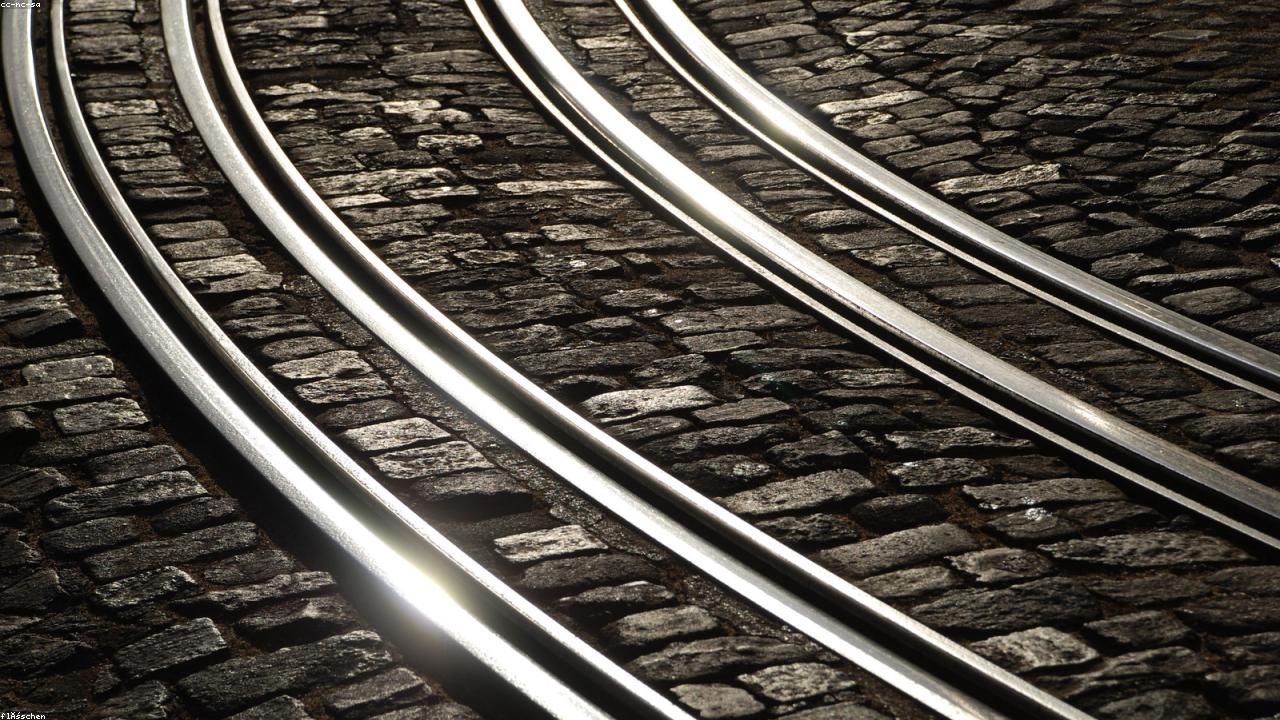
Walk the entire course of the Wall, at least the central section. From the Brandenburg Gate to the East Side Gallery. The path is marked with a double row of cobblestones in the road. You’ll cross it three or four times without noticing. The point is to feel how trivial it now looks and how absolutely it once divided a city.
Visit the Pergamonmuseum if it is still partially open during the renovation (the building is in a long phased closure through the late 2020s; check the Staatliche Museen website). The Ishtar Gate, reconstructed from blue Babylonian tiles, is one of the great experiences in European museums. If Pergamon is fully closed, the Neues Museum next door has the Nefertiti bust and is, on balance, the more emotionally resonant of the two.
Spend a long afternoon at the Berghain perimeter. Whether or not you try the door (mostly you won’t get in; sometimes you will; the rules are deliberately illegible). The surrounding area on a Sunday afternoon is unique: a converted power station, a former no-man’s-land, queues of people who travelled here for this single building. Even from outside, it tells you something about the city’s relationship with what it does at night.
Eat döner the way the Turkish-German community invented it. The doner kebab in its modern form was invented in Berlin in the 1970s. The best ones are in Kreuzberg and Wedding. Don’t expect a queue — that’s a tourist sign. Mustafa’s Gemüse Kebab is famous and slow; the smaller ones around Kottbusser Tor are faster and as good.
Take the S-Bahn to Wannsee in summer. The lake is huge, the lido (Strandbad Wannsee) is a 1920s public swimming construction that still works on the same plan, and you can hire a small boat. The S-Bahn goes there directly from Mitte in 40 minutes.
Visit the Memorial to the Murdered Jews of Europe. Walk into it, not around it. The Stelenfeld field of grey concrete pillars is engineered to disorient and to silence. The information centre underneath is, if you can stand it, essential.
Where to eat
Berlin’s food culture has matured significantly. There’s now serious bistronomy alongside the döner, the currywurst, and the Turkish breakfasts.
Lode & Stijn (Kreuzberg) — A small Dutch-run kitchen serving a refined seasonal tasting menu in a relaxed dining room. Reserve weeks out.
Nobelhart & Schmutzig (Mitte) — One Michelin star, fanatically local sourcing, ten seats around the kitchen counter.
Mrs. Robinson’s (Prenzlauer Berg) — A young, smart fusion kitchen.
Markthalle Neun (Kreuzberg) — A Thursday-night street-food market in a 1891 market hall. The naan stand, the Italian pasta counter, the kimchi-and-rice place.
Konnopke’s Imbiss — The classic East Berlin currywurst stand under the Eberswalder S-Bahn arches. Eat it standing up.
A Turkish breakfast is the great Berlin meal — bread, olives, cheeses, jams, eggs, herbs, sometimes seven small plates, sometimes twenty. Manouche in Neukölln does an excellent one.
When to come
Late spring (May, June) and early autumn (September). The summer is now too hot and too long. The winter is grey but the indoor culture, the museums, and the cheaper rents are real compensations.
If you’re here for clubs: any weekend, but the Sunday afternoon shift at Berghain is the unique one.
Practical notes
- Visa: Schengen.
- Money: A surprising number of restaurants and clubs in Berlin remain cash-only. ATM up at the airport. Card is increasingly accepted in cafés and shops.
- Transport: The U-Bahn, S-Bahn, and tram together are excellent. A 24-hour ticket is around €10. Bicycles are common; cycling infrastructure is improving but still patchy compared with Amsterdam or Copenhagen.
- The clubs: Door policies are real. They are also not personal. Berghain is famous for selectivity; Sisyphos and Watergate are easier; Hoppetosse runs through the day. Don’t argue with the doormen; turn around politely.
- Sundays: Almost all shops are closed by law. Stock up on Saturday or eat out.
A final thought
Berlin is the European capital I have written about most often and felt most ambivalent about. It has the surface attractions — the history, the architecture, the nightlife, the food — but the deep reason to keep coming back, for me, is the city’s particular tolerance of the unfinished.
No other major European capital allows so many of its public spaces to look incomplete, half-painted, half-occupied, half-something. Tempelhof — the former Nazi airport, now a vast public park where Berliners cycle down the runways — is the perfect example. There is no plan to finish it. There is barely a plan to maintain it. It is, simply, there, and the city walks across it.
The lesson, I think, is that the polished city, the finished city, the city without contradictions, is the city without people. Berlin has people. It has contradictions. It has six layers of paint on the courtyard wall. The wall is fine. Don’t paint it over.
If you only have a few days
8 ideal things to do in Berlin
Walk a runway on Tempelhofer Feld
Tempelhof, between Neukölln and KreuzbergLate afternoon; the field closes at dusk, which in December is early
Three hundred hectares of decommissioned airport that Berliners voted, in a referendum, to leave almost entirely alone. You walk down an actual runway past kitesurfers on skateboards, allotment plots built out of pallets, and a man teaching his daughter to cycle along the centreline markings. Nothing is finished. Nothing is scheduled to be. Watching Split sell its own waterfront off in slices, I found the stubbornness of this place close to enviable.
The Berlin Wall Memorial at Bernauer Straße
Bernauer Straße, on the Mitte–Prenzlauer Berg lineFirst thing in the morning, before the school groups arrive
Fourteen hundred metres of the actual border, kept where it stood: the death strip, a watchtower, the Chapel of Reconciliation built on the footprint of a church the GDR dynamited in 1985. The Window of Remembrance carries photographs of the people who died trying to cross. On my first Berlin trip I went to the East Side Gallery first, which was the wrong order — the painted section is a souvenir, this is the document. Free, open air, and quiet enough to hear the S-Bahn going past.
Nefertiti at the Neues Museum
Museumsinsel, MitteWeekday morning. The Pergamonmuseum next door stays shut until at least mid-2027
Pergamon has been closed since October 2023 and its north wing is not due back until mid-2027, so the Ishtar Gate is out of reach for years yet. Go next door instead. The bust sits alone in a domed room, one eye never finished, and the crowd manages the rare trick of falling silent without being asked to. David Chipperfield's reconstruction of the bombed-out building around her deserves as much of your attention as she does: he left the shell damage visible rather than smoothing it over, which is the most Berlin decision an architect has ever taken.
Teufelsberg listening station
Grunewald, west of the city; walk up through the forestA dry afternoon — the hill is exposed and the wind up there is a real factor
An American signals-intelligence post built on top of a hill made from the rubble of the bombed city, planted with trees so that it now reads as landscape. The radomes are torn open and every surface carries several layers of paint. Stand under the biggest dome and say something out loud: your own voice comes back at you half a beat late, an acoustic accident nobody designed and nobody has fixed. It is a ticketed site with proper guided tours now. The fence-hopping era is over, and honestly the guides are better than the fence was.
Strandbad Wannsee
Wannsee, about forty minutes from Mitte on the S-BahnJune to August
Sand — 1,275 metres of it, trucked in — with a New Objectivity bathing complex behind it finished in 1930 and still running on the same premise: that a working city needs somewhere to lie down. Berliners bring the hooded wicker Strandkörbe and an unreasonable volume of sausage. As a Dalmatian I turned up fully prepared to be superior about swimming in a lake, and I was, for about ten minutes.
Street Food Thursday at Markthalle Neun
Eisenbahnstraße, KreuzbergThursday evenings; arrive early or accept the queue
Every Thursday since 2013, an 1891 market hall in Kreuzberg hands its floor over to cooks who don't have restaurants — Peruvian ceviche, Nigerian fufu, Korean buns, Allgäu mac and cheese, all under the same iron roof. Bring some cash; a few stalls still treat card readers as a rumour. The hall's other trading days are calmer and better for actually buying food to cook, but Thursday is the one where you eat standing up among strangers, which is Berlin's default social arrangement anyway.
Sachsenhausen Memorial at Oranienburg
Oranienburg, 35 km north; the S1 runs the whole wayGive it a full day, and put nothing else in that day
Oranienburg is forty-five minutes north on the S1, then a twenty-minute walk through an ordinary commuter town to the gates of a camp the SS built in 1936 as the model for the ones that followed. Entry is free. There is no version of this that is a pleasant morning, and the memorial makes no attempt to pretend otherwise. I have been twice and both times took the train back without speaking to anybody. Go early, allow the whole day, and do not book dinner.
The Humboldthain flak tower with Berliner Unterwelten
Volkspark Humboldthain, GesundbrunnenApril to October only — bats hibernate inside for the rest of the year
Bats have the run of the place from November, which is why the tours only go underground between spring and autumn. Volunteers shifted more than 1,400 cubic metres of rubble by hand to open three of the tower's seven floors, and standing inside a half-demolished anti-aircraft fortress in the middle of a municipal park does more to explain what the war did to this city's masonry than any museum caption. Afterwards, climb the outside to the ruined gun platform. The whole northern skyline, for nothing.
From a Split boy’s notebook
The Split lens
What reminded me of home
The post-industrial reuse — a power station becoming a club, an airport becoming a park — is what we should be doing with the closed sections of Brodogradilište shipyard. Berlin lets buildings be unfinished and the city is more interesting for it.
What Split could borrow
Tempelhof. A 1930s airport, decommissioned, turned into a giant urban park where Berliners cycle down the runways. Our old shipyard at Brodogradilište could be exactly this — a working harbour, partially reclaimed, with the old gantries kept as monuments and the surrounding land becoming Split's biggest urban park.
Who can take you
Tour operators & guides to try
A short, opinionated starter list — just my humble opinion. Verify before booking.
Context Travelspecialistwww.contexttravel.com →
Context's Berlin walks — specifically the Cold War history walk through Mitte and the architectural-modernism walk through the Hansaviertel — are far more substantial than the standard 'Berlin Wall' tour. Historian-led; six-person cap. Caveat: the city's deeper themes (the Stasi, the GDR experience, post-reunification gentrification) sometimes get compressed; supplement with the DDR Museum or the Stasi Museum on your own.
Original Berlin Walksspecialistwww.berlinwalks.de →
Original Berlin Walks is the long-running Berlin walking-tour outfit, founded by historians in 1993 — the Third Reich walk, the Cold War / Berlin Wall walk, the Sachsenhausen concentration-camp day trip. Groups can run to 25, which is large, but the guides are typically senior historians with deep credibility. Caveat: the group size means it's hard to get individual questions answered; pair with a separate small-format private if you want to dig further on a specific theme.