Photo: Ščenza
Edinburgh, Scotland · Europe
Edinburgh between festivals: the stone city in its quieter clothes
I love Edinburgh in February. I know nobody is supposed to, but the festivals have packed up, the Christmas markets are gone, the tour buses are dormant, and the city — built of dark stone on top of an extinct volcano — looks like itself again.
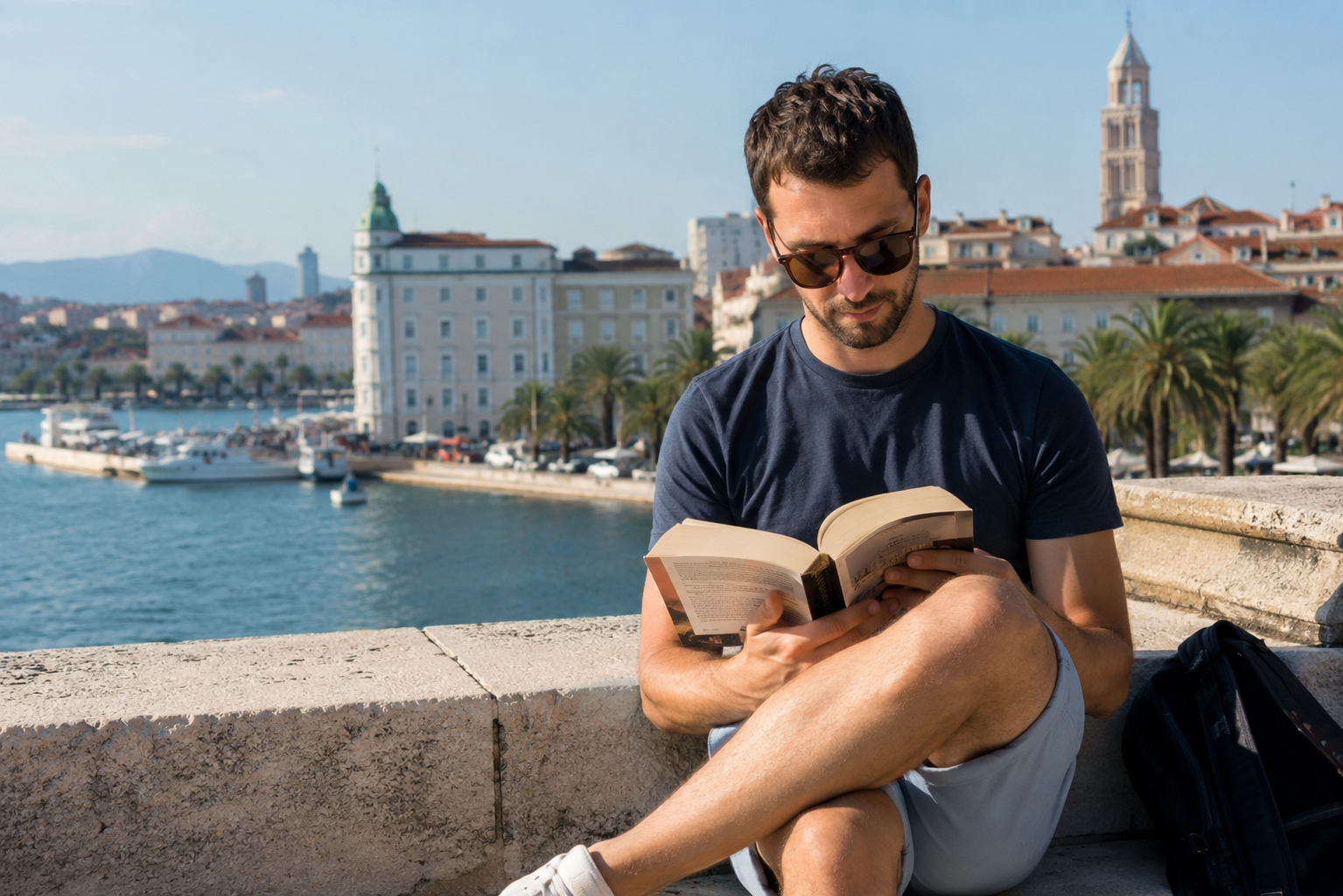
By Ščenza
· updated · 5 min read
There’s a small bar at the bottom of Cockburn Street — pronounced Co-burn, please — where a man called Iain has been working the lunchtime shift for twenty-six years. He remembers your face after the second visit. He pours a half-pint of 80 Shilling without being asked. The fire is on between October and April. The conversation, if you let it happen, is some of the best I’ve had in any city in Europe.
This is Edinburgh out of the festival season, which is to say Edinburgh as the Edinburghers themselves know it. The city has, frankly, a reputation problem during the month of August — when the Fringe and the International Festival together turn it into the world’s largest single performing-arts event. That month is its own thing and worth experiencing once, if your sanity tolerates it. The rest of the year is the city worth knowing.
Why I keep coming back
I first came to Edinburgh in 2002 for a friend’s wedding and stayed an extra week because the November light on the stone was unlike anything I’d seen. I came back in 2007 for a Burns Night, in 2011 for a literary festival, in 2014 for a deep-winter walking holiday on the Pentland Hills outside town, and several times since. The city has stayed structurally the same and improved at its food.
Where to base yourself
The New Town (north of Princes Street). Don’t be misled — it’s only new compared with the medieval Old Town; the New Town was laid out in the 1760s. Georgian terraces, broad streets, a manageable walk to everything. Stay around Stockbridge or Northumberland Street.
Stockbridge itself if you want a village-within-the-city feel. The Water of Leith runs past, the Sunday market is excellent, and you’re a 12-minute walk to Princes Street.
Avoid the Royal Mile as a base unless your stay is two nights. It is the tourist axis of the Old Town and noisy until well past midnight in the summer.
What to actually do
Climb Arthur’s Seat at dawn. The extinct volcano in the middle of the city; the climb is forty minutes, moderate, and the summit gives you a view of the entire city, the Firth of Forth, and on a clear day Fife. In summer, do it for sunrise (4:30 a.m. — short night); in winter, midmorning is fine.
Spend a long afternoon in the National Museum of Scotland. Free entry, and one of the great national museums of Europe — Scottish history from prehistoric stone heads to the Lewis Chessmen, with a wing of decorative arts and a roof terrace with a view. The Pictish carvings are the unexpected highlight.
Walk the Water of Leith. A small river that winds from the Pentland Hills through the western edge of the city to the port of Leith. The path runs the whole way, mostly hidden in greenery; eight kilometres, three hours, takes you past the Dean Gallery and the Modern Two and ends at the harbour in Leith, where you can have a pint at the King’s Wark and a fish-and-chips supper.
Take the bus to South Queensferry. A small town on the Firth of Forth, half an hour out, under the three great bridges (the 1890 Forth Bridge, still the most beautiful cantilevered railway bridge in the world). The old pub on the high street, the Hawes Inn, where Robert Louis Stevenson set the kidnapping scene in Kidnapped. Walk back along the seafront.
Find a working ceilidh. Not the staged tourist one. The Sandy Bell’s pub on Forrest Road has live traditional folk most nights, free. The dance ceilidhs at the St Bride’s Centre or Pleasance Cabaret Bar are advertised at the door; the locals will pull you onto the floor whether you can dance or not.
Where to eat
Edinburgh’s food has improved dramatically over twenty years.
The Kitchin (Leith) — Tom Kitchin’s flagship, Scottish-French, one Michelin star, an institution. Reserve weeks out.
Timberyard — Scandi-inflected, set-menu, an old timber warehouse in a courtyard.
Ondine (Old Town) — Roy Brett’s seafood; the seafood is from that morning’s boat at Newhaven.
The Scran & Scallie (Stockbridge) — A gastropub that takes its haggis seriously. Reliable.
The Cafe Royal Bar — Victorian tiled interior, oysters at the bar, a pint of cask ale. Don’t miss.
Mary’s Milk Bar (Grassmarket) — Gelato made in front of you. Worth the queue.
When to come
February and March for the city to itself. Cold, occasionally bright, fires in the bars.
Late April through May for the longer light and the city in bloom.
August for the festival. Plan accommodation eight months out and budget on triple the off-season prices.
Avoid the third week of August unless you specifically want the chaos.
Practical notes
- Visa: UK visa rules (post-Brexit). Most Western passports get six months visa-free.
- Money: Pound sterling. Card universally; Scottish-issued banknotes (£20 in particular) sometimes confuse English shopkeepers — they are legal tender, but you may have an awkward exchange.
- Transport: Walkable city. Buses are good (Lothian Buses; contactless or app). Trams run from the airport down Princes Street. Trains to Glasgow leave every 15 minutes and take 50.
- Weather: Layers. The city sits on a coastal volcanic plug and the weather changes by the hour. A waterproof shell is non-negotiable.
- Whisky: A small dram at any of the proper bars (the Bow Bar, the Devil’s Advocate, the Last Word Saloon) will cost £4–10 depending on the malt. Don’t add water until the bartender suggests it.
A final thought
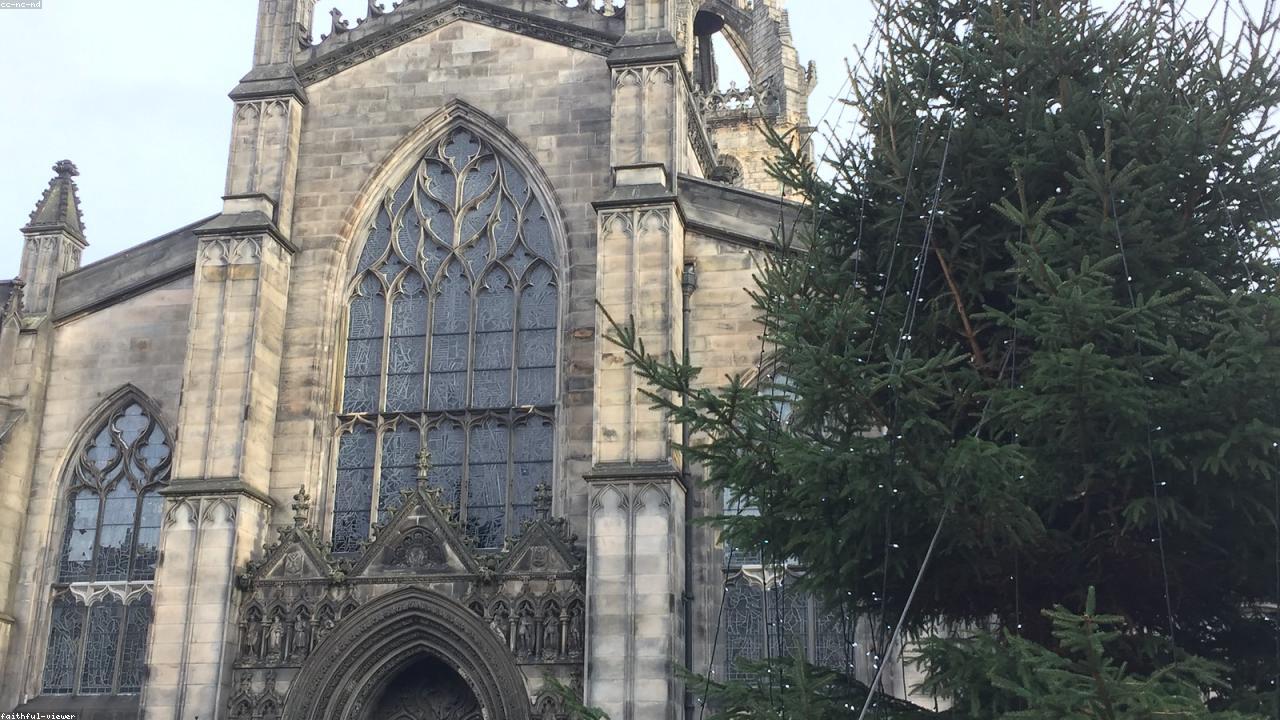
Edinburgh is a city built largely of one material — the dark sandstone of Craigleith Quarry, which gave the New Town its grey-cream colour and the Old Town its blackened, weathered face. Most cities are a collage of stones and bricks and concretes. Edinburgh is, for the most part, one stone.
The consequence is that the city has a coherent visual key. In winter, with low cloud and the stone wet, the city is one of the most beautiful in Europe. In summer, with the festival crowds, less so. But the city is the same city in either season. The festivals don’t change Edinburgh; they just turn the volume up on it.
Go in February. Walk Arthur’s Seat. Sit by Iain’s fire. Read Stevenson. Stay a week.
If you only have a few days
6 ideal things to do in Edinburgh
Arthur's Seat before breakfast
Holyrood Park, east of the Old TownMid-morning in winter; absurdly early in summer
Two hundred and fifty-one metres of extinct volcano sitting inside the city, with the earthworks of an Iron Age fort still legible on the summit and the Firth of Forth laid out beyond it. Forty minutes up the eastern grass slope, rather less if you decide to race a stranger, which I did once and regretted well before the top. James Hutton worked out deep time on these rocks, which is a great deal to have happened on a hill you can climb in a jumper.
The National Museum of Scotland
Chambers Street, Old TownA wet afternoon, which Edinburgh will supply
Free, enormous, and the only museum I know where the Lewis chessmen, a Pictish stone and the actual stuffed body of Dolly the sheep are about four minutes' walk apart. The Victorian Grand Gallery is a cast-iron hall with a four-storey column of eight hundred objects running up through the middle of it. I have gone in for an hour on three separate visits and come out after three, and I have still never found the roof terrace on the first attempt.
The One O'Clock Gun and the Calton Hill time ball
Edinburgh Castle and the Nelson MonumentOne o'clock, obviously
Since 1854 a ball has dropped down a mast on the Nelson Monument at one o'clock so that ships in Leith could set their chronometers, and since 1861 a gun has been fired from the castle as the foggy-day version of the same signal. Both still happen. Stand on Calton Hill, watch the ball fall, wait about three seconds, then hear the gun — sound being slow and the castle being a kilometre away. Half of Princes Street flinches. I still do.
Dean Village and the Water of Leith walkway
Ten minutes downhill from Princes StreetLate afternoon, for the light in the valley
Eleven watermills once ground the city's grain in this hollow, and the buildings are still standing — restored, lived in, and slightly unreal, in a valley you drop into from Telford's bridge with no warning at all. The walkway follows the river out towards Leith, past St Bernard's Well and the modern art galleries. I have never once managed the full eight kilometres to the harbour without stopping, which is either a stamina problem or a very well-sited pub.
A session at Sandy Bell's
Forrest Road, Old TownEvenings; sit where you can see the corner
Small bar with a serious claim on the Scottish folk revival: people have been playing traditional music in the corner here since the late 1940s, and Billy Connolly and Barbara Dickson were regulars long before either was famous. No stage, no tickets, no amplification. Musicians arrive, sit down, start. You stop talking when the fiddle starts, a rule I worked out on my second visit rather than my first, having spent the first one being an idiot at volume.
South Queensferry, under the Forth Bridge
Half an hour out of Waverley by train or busA clear day; the bridge is best in low sun
Nineteenth-century cantilever railway bridge, opened in 1890, painted the particular red that gave English a phrase for a job that never ends, and a UNESCO site since 2015. From the little high street underneath it the scale refuses to compute — trains cross constantly and look like models. The Hawes Inn on the waterfront is where Stevenson set the kidnapping in Kidnapped and is still a working pub, which is a continuity Split keeps failing to manage with its own literary addresses.
From a Split boy’s notebook
The Split lens
What reminded me of home
Stone city built into a hill, with a single grand old town and a fierce local identity. The Edinburgh wynd-and-close geometry — narrow alleys between tall buildings — is a colder version of our Lučac and Manuš streets. Both cities feel small to walk but contain disproportionate history.
What Split could borrow
The August Festival turned a quiet northern city into the world's largest performing-arts event. Split has Splitsko ljeto (the summer festival) but it's underpromoted internationally. A bigger investment in the festival, with the Peristyle and the Klis fortress as flagship venues, would do for Split what Fringe did for Edinburgh.
Who can take you
Tour operators & guides to try
A short, opinionated starter list — just my humble opinion. Verify before booking.
Context Travelspecialistwww.contexttravel.com →
Context's Edinburgh walks — the Old Town and the Scottish Enlightenment route in particular — pair well with a literary visit. The guides are typically working academics from the University of Edinburgh and the depth on Hume, Smith, Burns shows. Six-person cap. Caveat: the Castle and the Royal Mile are partly covered but you still want the audio guide inside the Castle itself for the regimental history.
Mercat Toursspecialistwww.mercattours.com →
Mercat Tours is Edinburgh's longest-running walking-tour outfit (since 1986) — the historic underground-vaults tours, the Old Town walks, the literary Edinburgh walks. Groups around 25, which is large, but the guides are theatrically strong and the historical depth is real. The underground vaults are the standout. Caveat: in summer the ghost-tour evenings are so popular that bookings fill the same day; reserve at least a couple of days ahead for the August Fringe weeks.