Photo: Ščenza
Marrakech, Morocco · Africa
Marrakech inside the medina: a week in the red city
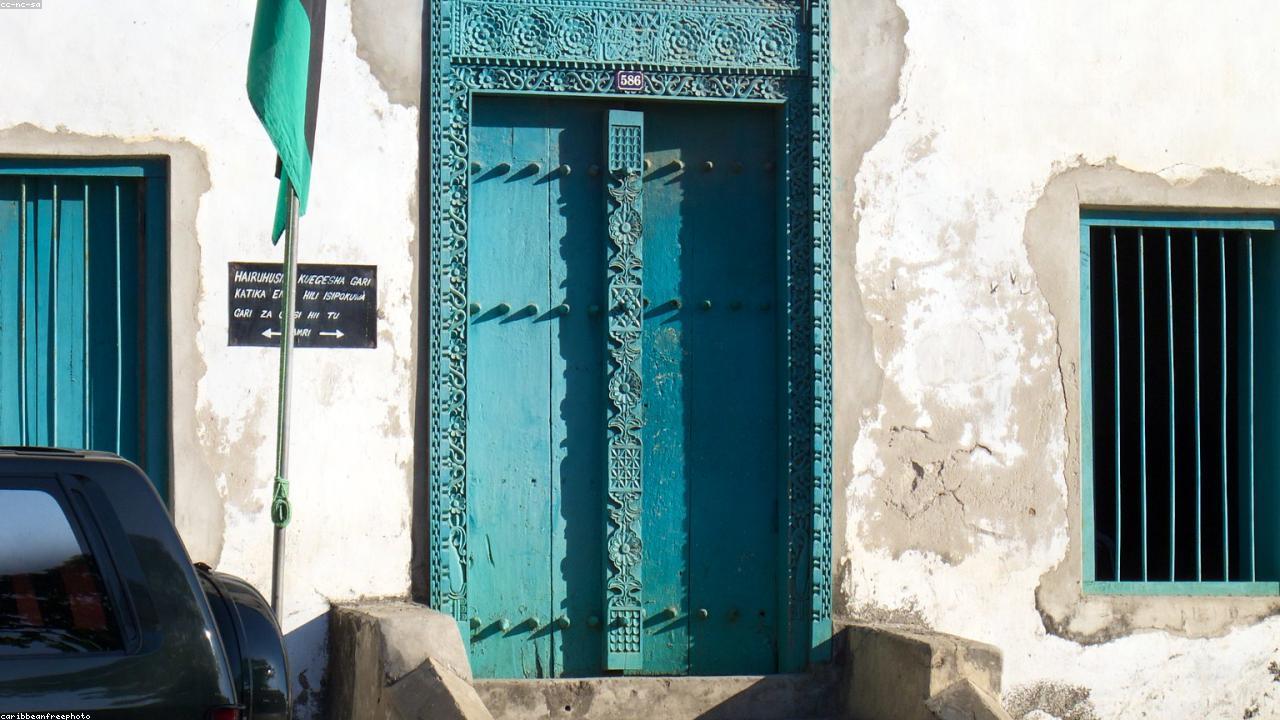
Marrakech is a city built for confusion. The medina was designed in the 11th century as a fortified labyrinth, and the design has held. The riad — the inward-facing courtyard house — is built around a small fountain and a fragment of sky. The streets are narrow on purpose. Surrender to it.
By Ščenza
· updated · 5 min read
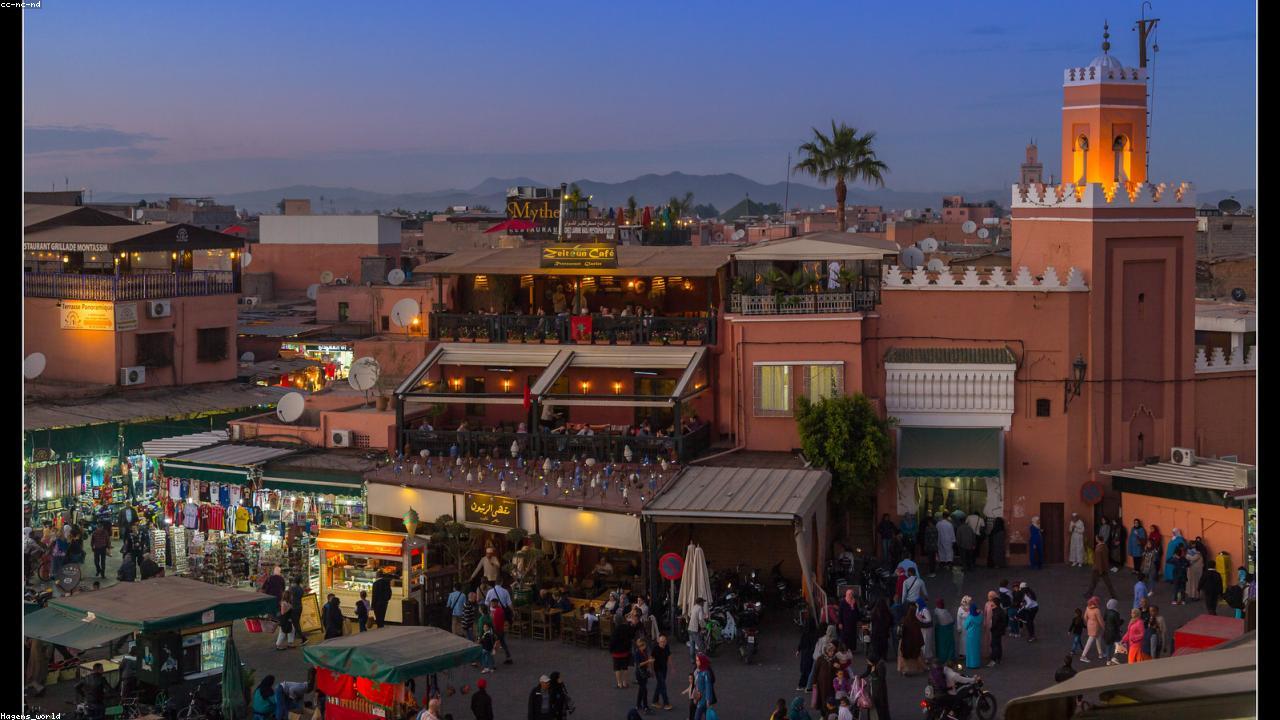
It’s 5:47 p.m. on the Jemaa el-Fnaa, the central square of the Marrakech medina, and the daily transformation is happening. The square spent the day as a relatively quiet space — a few orange-juice vendors, some henna ladies, a snake-charmer or two for the tourist photos. Now, in the cool of the early evening, the dozens of food carts are being wheeled in, fire-pits lit, and the entire square turns, in about ninety minutes, into the largest open-air dining room in Africa. A small boy is selling glasses of mint tea from a brass pot. A storyteller is starting to gather a circle. The call to prayer from the Koutoubia mosque, the 12th-century minaret on the western edge, is winding through it all. This is what I keep coming back for.
Why I keep coming back
Marrakech is one of the four imperial cities of Morocco and the most architecturally distinctive of them. The medina is a UNESCO site of 700-year-old buildings, 19th-century palaces, mosques, hammams, and souks (markets) arranged in a fortified perimeter of red rammed-earth walls. The riad — the introverted house built around a central tile-and-fountain courtyard — has been refined over centuries.
The city is, also, the easiest North African city to fly to from Europe (three hours from Paris or London, two from Spain), which has made it the most heavily touristed in the country. The trick is to stay inside the medina, in a riad, and to walk slowly enough that the city’s logic becomes legible.
Where to base yourself
In a riad inside the medina. The proper experience. Hidden behind unmarked doors in the alleys, surprisingly serene inside. The Mellah (old Jewish quarter) and around the Bahia Palace are quieter; the area immediately around Jemaa el-Fnaa is the loudest.
Gueliz (the new city, French-built in the 1920s) is the modern alternative — wider streets, more restaurants, less character.
What to actually do
Walk the souks in the morning. Each souk historically specialised in a single trade — the spice souk, the dyer’s souk, the metalworker’s souk, the carpet souk, the slipper souk. Start from Jemaa el-Fnaa, work north into the souks. Expect to get lost; the navigation isn’t really the point. By midday the alleys are packed; mornings are quieter.
Visit the Bahia Palace. A 19th-century vizier’s palace with the most intricate Moroccan tile-work and carved-cedar ceiling design.
Visit the Ben Youssef Madrasa. A restored 16th-century Quranic school with extraordinary plaster, tile, and cedar craftsmanship. Recently reopened after restoration.
Have a hammam. The traditional Moroccan steam-and-scrub. Hammam de la Rose for a contemporary version; Hammam Mouassine for the local public version (much cheaper, much rougher, more authentic).
Spend an evening on Jemaa el-Fnaa. Eat at one of the food stalls (the ones with the highest turnover are the safest bet; stall 14, the snail vendor, the sheep’s-head specialist). Watch the storytellers and the musicians. Drink a glass of orange juice.
Day trip to the Atlas Mountains. The Ourika Valley is the closest, an hour out. The Imlil trailhead (the start of Toubkal, North Africa’s highest peak) is a 90-minute drive. Day hikes or longer treks are easily arranged.
Visit the Yves Saint Laurent Museum and the Jardin Majorelle. In the new city; the cobalt-blue garden created by Jacques Majorelle in the 1920s and saved by YSL in the 1980s, and the YSL museum next door.
Where to eat
Le Foundouk — Refined Moroccan in a beautifully restored caravanserai. Nomad (near the Spice Souk) — Modern Moroccan; roof terrace. Café des Épices — A simpler rooftop café in the heart of the spice souk. Dar Yacout — A grand-old-Marrakech dinner experience; a slow tasting menu in a traditional riad. Touristy and beautiful. Le Jardin — A cool, calm courtyard restaurant in the medina. Stall 14 on Jemaa el-Fnaa — The famous snail-and-sheep’s-head vendor; not for the squeamish but it’s the show. Tagine — The slow-cooked stew (lamb, chicken, fish, vegetable variants), served in the conical clay pot it’s named after.
When to come
March–May, or September–November. Pleasant temperatures.
June through August is brutally hot (40°C+); the medina becomes uncomfortable. December through February is mild in the day and cool at night; the snow on the Atlas mountains is visible from the city.
Ramadan: the city’s working rhythm shifts dramatically. Many small restaurants close during daylight. Iftar (the evening meal that breaks the fast) is a beautiful daily moment.
Practical notes
- Visa: 90 days visa-free for most Western passports.
- Money: Moroccan dirham. Card increasingly accepted; cash needed in the souks and smaller restaurants.
- Transport: The medina is walked. A petit taxi from the airport into the medina is around 100 dirham. Marrakech to Casablanca by train is 2.5 hours; to Fez, 8 hours by train or a 6-hour drive across the Atlas.
- Hassle factor: Significant in the souks. The unsolicited ‘guide’ who attaches himself to you and then demands payment. The carpet-shop pitch that becomes hours long. A firm ‘la, shukran’ (‘no, thank you’ in Arabic) repeated as needed.
- Photography: Many vendors in the souks and on the square charge for photos; some don’t appreciate being photographed at all. Ask, or pay, or take from a distance.
- Scams: The ‘this way to the tannery / mosque’ redirect, leading you into a shop. The friendly local who walks you somewhere and demands payment. Predictable.
A final thought
Marrakech is the rare city that has been visited heavily by Westerners for over a hundred years and remains, structurally, what it has always been: a fortified red-walled medieval Moroccan city, with the souks at its heart, and the riads opening secret-garden interior spaces off unmarked alley doors. The Western tourism economy has changed the surface — the riads-turned-boutique-hotels, the slower-Moroccan-cooking restaurants, the YSL inheritance — but not the underlying texture.
Stay in a riad. Walk slowly. Get lost daily. Eat on the square at least once. The medina is impatient with the visitor who tries to optimise; it rewards the visitor who shows up, opens a tagine, drinks a mint tea, and lets the call to prayer come and go. Five days minimum. Ten is better.
If you only have a few days
6 ideal things to do in Marrakech
Walk the souks north from Jemaa el-Fnaa toward the Ben Youssef Mosque
Medina, between the square and the main mosqueThe first two hours after the shutters go up
Eighteen souks, tens of thousands of people working in them, historically divided by trade — leather here, copper there, pottery, carpets, slippers — and the divisions still broadly hold even where they have blurred. Go early, while the shutters are still going up and nobody has begun their pitch. You will get lost. Getting lost is the mechanism, not the failure: the medina was laid out by people who did not want an invading army to find its way through, and the design continues to work perfectly on me.
The Ben Youssef Madrasa
Medina, at the northern end of the souksFirst hour of the day
Sixteenth-century Quranic college, closed for restoration in 2018 and reopened in 2022, and the four years were spent well. A white marble courtyard with a long reflecting pool, cedar galleries above it, zellij and carved plaster over every surface a hand could reach. Upstairs are 132 student cells, most about the size of a cupboard, which is a useful corrective if you have spent the morning complaining about the ceiling height in your riad. Come at opening — once the courtyard fills, the pool reflects nothing but people.
El Badi Palace
Kasbah quarter, near the MellahLate afternoon, for the light on the rammed earth
A sultan named it 'the Incomparable' in 1578; a later one stripped it back to the brick and carted the marble off to Meknes, which is a thorough way of making a point about your predecessor. What survives is a sunken orange garden, a ninety-metre pool, and rammed-earth walls with white storks nesting along the top, clattering their bills at one another all afternoon. It is the emptiest large site in the medina. I go every visit and, if I am honest, mostly just watch the storks.
A scrub at Hammam Mouassine
Mouassine quarter, medinaLate afternoon; men's and women's hours are separate
Part of a Saadian complex begun in 1562, which makes this the oldest working public bath in the city — stone rooms, domed ceilings, black soap, a kessa glove, and an attendant who removes a layer of you that you had not realised was optional. It is not a spa. There is no herbal tea at the end. We had Roman baths in Split for four centuries and quietly let the whole tradition go; walking out of here into a warm alley is what not letting it go looks like.
Jemaa el-Fnaa when the food carts are wheeled in
The main square, medinaFrom about an hour before sunset
In something like ninety minutes the square converts from a fairly ordinary open space into the largest outdoor dining room in Africa: carts rolled into position, fires lit, numbered stalls, storytellers pulling circles around themselves, the Koutoubia calling to prayer over the lot of it. Eat wherever the turnover is fastest — that is the only rule that reliably matters. The touts work hard on the approach. Say no clearly, keep walking, and don't take it personally; they are at work, and so, once, were you.
A day in the High Atlas from Imlil
About 90 minutes' drive south of the citySpring or autumn; the peaks hold snow well into May
Imlil sits at the foot of Toubkal, which at 4,167 metres is the highest mountain in North Africa, and you do not have to climb it to justify the drive. Walk between the villages instead, up through the walnut terraces, and eat lunch in sight of a slope you have no intention of attempting. Going from forty degrees in the medina to cold clean air in under two hours is a genuine physiological event. I did it on the same day as the hammam once and then slept for eleven hours.
From a Split boy’s notebook
The Split lens
What reminded me of home
Walled medina city with a souk economy and the same hammam-bath cultural inheritance our Roman ancestors built ours on. The narrow medina alleys, the riad courtyards opening off blank exterior walls, are kindred to our Diocletian's palace residential cells. Two stone cities organised around hidden interiors.
What Split could borrow
Marrakech's hammam tradition has been turned into a real industry — there's a working bath at every price point from the local 30-dirham scrub-room to the boutique-hotel spa. We had this. The Roman thermal complex at Salona was once on a Marrakech scale. Rebuilding a public hammam network is a heritage opportunity we keep ignoring.
Who can take you
Tour operators & guides to try
A short, opinionated starter list — just my humble opinion. Verify before booking.
Intrepid Travelsmall groupwww.intrepidtravel.com →
Intrepid's Morocco trips run Marrakech as a 2–3 night chapter — the medina walk, a cooking class, a tannery visit, an evening at the Jemaa el-Fnaa. Group size 12–16. The riad accommodation Intrepid uses is reliably mid-tier and well-located. Caveat: the souks are aggressive for solo women particularly; the group format provides some buffer but doesn't eliminate the experience entirely.
Wild Frontierssmall groupwww.wildfrontierstravel.com →
Wild Frontiers' Morocco itineraries are more substantial — longer stays in the south (Skoura, Aït Benhaddou), serious Atlas Mountain trekking, and a less-touristed take on Marrakech (the lesser-walked Mellah, the Bahia Palace at dawn). Group size 8–12. Higher cost than Intrepid. Caveat: their full-country loops are 14+ days; for a Marrakech-only short stay, Intrepid is the more efficient fit.