Photo: Ščenza
Stone Town, Tanzania · Africa
Zanzibar: Stone Town and the spice islands
Zanzibar splits cleanly in two: Stone Town, the densely woven Swahili-Arab-Indian trading city, and the white-sand beaches and spice plantations of the rest of the island. Most safari travellers tack on three nights on the beach. The better trip gives Stone Town three nights of its own.

By Ščenza
· updated · 4 min read
It’s 6:18 p.m. on the Forodhani Gardens waterfront in Stone Town and the nightly food market is being set up — small charcoal grills, racks of grilled fish and prawns and ‘Zanzibar pizza’ (a fried-bread street snack with various savoury and sweet fillings), the smell of grilled meat carrying across the harbour. The dhows are anchored offshore. The call to prayer from the Old Fort mosque is winding down. Tourists, locals, and Stone Town teenagers are mixing in the same evening crowd. This is Zanzibar at its layered best.
Why I keep coming back
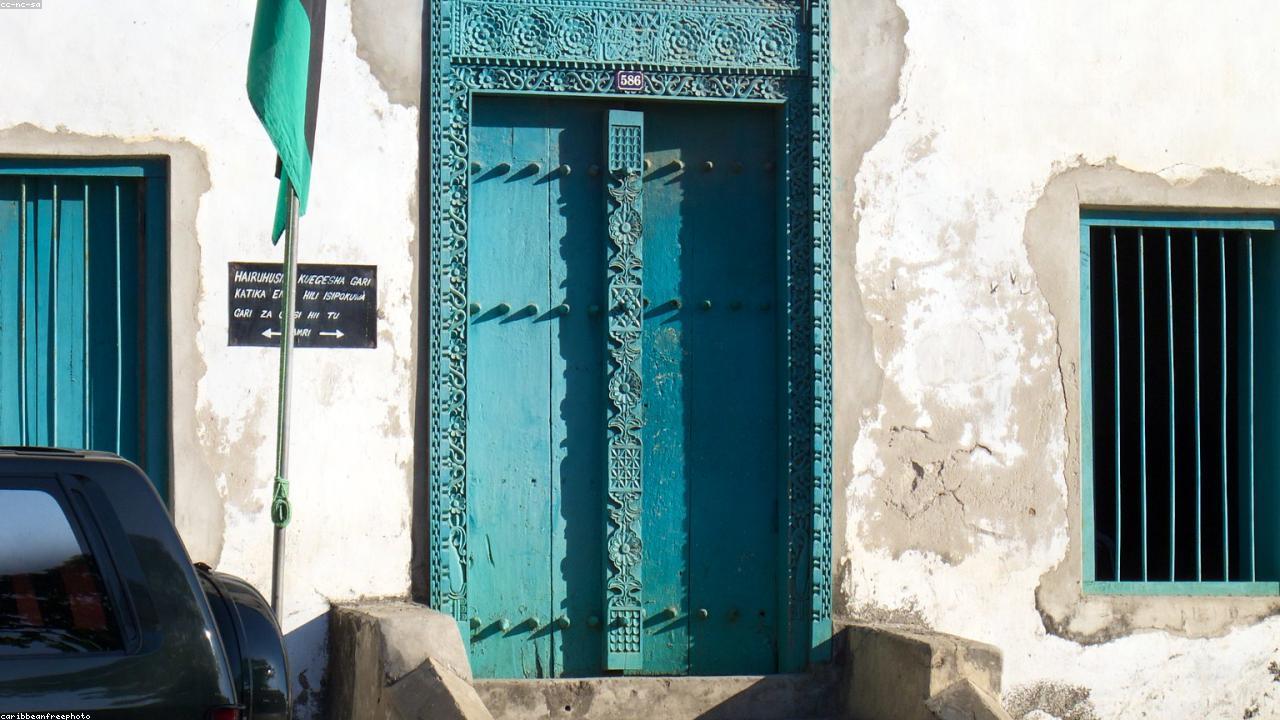
Zanzibar — strictly, the Zanzibar archipelago, of which Unguja (commonly just called Zanzibar) is the main island and Pemba is the smaller northern one — was the spice-trade hub of the western Indian Ocean for centuries. Stone Town, the capital, is a UNESCO World Heritage site of densely interwoven Arab-Swahili-Indian-Portuguese-British architecture, with the famous carved wooden doors (Indian and Arab styles, mostly), narrow alleys, and a Muslim-majority population practicing a culturally distinct Swahili Islam.
The beaches are the postcard reason most visitors come — soft white sand, turquoise Indian Ocean, low-rise beach hotels. The trick is to not skip Stone Town in the rush to the beach.
Where to base yourself
Stone Town for the first 2–3 nights. Heritage hotels in converted Arab merchant houses: Emerson Spice, Park Hyatt Zanzibar, Tembo House Hotel, the slightly more affordable Maru Maru.
Beach side for the remaining nights:
- East coast (Paje, Jambiani, Bwejuu) for the windsurfing/kitesurfing beaches and a more local feel.
- North (Nungwi, Kendwa) for the most consistent beach (no tidal swings) and the most developed resorts.
- Southwest (Kizimkazi) for the dolphin tours.
- Pemba for the divers and the genuinely off-grid quiet.
What to actually do
Walk Stone Town slowly. A morning walk through the alleys, looking at the carved doors, the old Arab houses, the Anglican cathedral (built on the site of the old slave market — the small below-ground holding cells are still visible), the Persian baths.
Visit the Old Fort and the House of Wonders. Two landmarks on the seafront. The House of Wonders (built 1883 for the Sultan, the first building in East Africa with electricity and an elevator) suffered a partial collapse in 2020 and is undergoing structural repair; check status.
Take a spice tour. A 3-hour drive into the central plantations — cardamom, cloves (Zanzibar was for a century the world’s leading clove producer), vanilla, cinnamon, lemongrass, turmeric, ginger. The guides break stems and let you smell the fresh material.
Sail on a dhow at sunset. The traditional Arab sailing vessels still in active use; sunset cruises depart from the Forodhani seafront and circle out into the harbour. About US$25 per person.
Snorkel or dive at Mnemba Atoll. A small atoll off the northeast coast; one of the best reefs in East Africa. Day trips run from Nungwi or Matemwe.
Eat at the Forodhani night market. Stone Town’s evening food market on the seafront; grilled seafood at fair prices. The Zanzibar pizza is the local must-eat (despite the name, more like a stuffed crêpe).
Where to eat
The Tea House at Emerson Spice (Stone Town) — Rooftop set menus, Swahili-influenced fusion; reservations required. Lazuli (Stone Town) — Smoothie bowls, breakfasts; the lunch standby. Forodhani night market — Grilled meat and fish, urojo soup, sugarcane juice. ฿15,000–30,000 Tsh for a substantial dinner. Lukmaan Restaurant (Stone Town) — Tray-buffet Zanzibari home-style; cheap and packed with locals. The Rock Restaurant (east coast) — A restaurant on a tiny tidal rock you can wade or be ferried to; touristy and the location is the show. Stone Town Café — Decent coffee and a quiet morning option.
When to come
June through October is the dry season; the best weather, the warmer water, the highest prices.
December through February is the short dry season (with December’s holidays elevating prices).
March through May is the long rains; many beach hotels offer significantly reduced rates but expect intermittent downpours.
Ramadan: Zanzibar is overwhelmingly Muslim and many restaurants will be closed during daylight; iftar evenings are atmospheric.
Practical notes
- Visa: Most Western passports get visa on arrival; US$50.
- Money: Tanzanian shilling. US dollars widely accepted in tourist establishments.
- Transport: A 20-minute taxi from the airport into Stone Town. The east coast is about 90 minutes from Stone Town; the north about an hour. Many travellers hire a driver for inter-coast moves.
- Health: Malaria risk is real on Zanzibar (lower in Stone Town, higher in coastal villages); prophylaxis recommended.
- Dress code: Stone Town is a conservative Muslim city; shoulders and knees covered, especially in the main streets. Beach resort areas are relaxed.
- Tides: The east coast has very large tidal swings; the beach can recede 500 m at low tide. The north coast has less dramatic tides.
A final thought
Zanzibar is the rare beach destination that has, alongside its postcard coast, one of the most architecturally and culturally rich coastal old towns in Africa. The mistake most safari-tackon visitors make is to spend two nights in Stone Town as a transit point and the rest of the trip on a beach.
Do it the other way. Stay three or four nights in Stone Town. Walk the alleys morning and evening. Eat at Forodhani. Take a spice tour. Hire a dhow for sunset. Then go to the beach for whatever time remains.
The island has been a cultural crossroads of the western Indian Ocean for a thousand years. Stone Town is the visible result. The beaches are beautiful but they are also, structurally, much the same beaches you can find in many places. Stone Town isn’t.
If you only have a few days
6 ideal things to do in Stone Town
Walk Stone Town's alleys for the doors
Stone Town, UngujaEarly morning, or after the late-afternoon prayer
Carved doors are the reason to walk slowly here — Indian-style with the brass spikes, Omani-style with the rounded top and the chain motif, several of them older than the houses they are now set into. The lanes are too narrow for cars and laid out on no grid whatsoever, and getting lost is the intended method rather than a failure of yours. Our old town has hundreds of stone door frames vanishing behind aluminium shopfronts; here the doors are protected by law. That comparison stings, and it ought to.
Christ Church and the slave-market memorial
Mkunazini, Stone TownMorning, and give it more time than you planned
The Anglican cathedral was put up deliberately on the site of East Africa's largest slave market, opening on Christmas Day 1879, with the altar placed where the whipping post had stood. In the yard a monument sets five figures in a pit wearing real chains. Beneath the adjacent building are holding chambers you have to stoop to enter and cannot straighten up inside. I came out, sat on a wall, and did nothing for half an hour. Build that half hour into the day.
Forodhani Gardens as the grills come out
The seafront, in front of the Old FortFrom sunset
Grills come out along the seafront as the sun goes down: trays of fish and prawns and octopus, sugarcane juice pressed through a hand mangle, and the sweet-or-savoury fried thing they insist on calling Zanzibar pizza. The Aga Khan Trust rebuilt the gardens in 2009 and the place genuinely works — locals and visitors in the same crowd, which is rarer than it sounds. Nothing is priced on a board; agree the number before it reaches the plate, and accept that you will be talked into one more skewer.
A spice farm in the plantations inland
North and east of Stone TownHalf a day, in the morning
Cloves, nutmeg, cinnamon, black pepper, vanilla, lemongrass — Zanzibar led the world in clove production for a long stretch of the nineteenth century, and the plantations are still out there, half an hour inland. The guides break a stem or scrape back a strip of bark and hand it to you, and you understand that you have spent your whole cooking life working with the ghosts of these things. Someone will weave you a hat out of palm leaf. Let them.
Jozani Chwaka Bay and the red colobus
About 35 km south-east of Stone TownMorning; the monkeys feed early
Zanzibar's only national park, fifty square kilometres of it, and the last stronghold of the Zanzibar red colobus — an endemic monkey down to roughly a thousand animals. They are habituated enough that a troop will cross the road above your head while you stand underneath doing nothing useful. There is also a boardwalk through the mangroves that hardly anyone bothers with, and if you happen to prefer a tidal channel to a primate, it is the better half of the visit.
Snorkel the reef at Mnemba Atoll
Off the north-east coast; day boats from Matemwe or NungwiNovember or March for the visibility
Mnemba island itself is private and you cannot land on it — there is a 500-metre exclusion zone and a very polite boat that will explain this to you. The reef around it is the actual draw: a marine conservation area with something like 600 species of reef fish, green turtles, and dolphins that turn up when it suits them. Go out from Matemwe rather than crossing the island for it, and go early, before the day boats stack up on the same three moorings.
From a Split boy’s notebook
The Split lens
What reminded me of home
Stone Town in Zanzibar is what our old town should aspire to in its restoration discipline — carved Arabic doors maintained as identity markers, narrow alley wayfinding preserved as inherited geometry, a working market at the heart. Both cities are coral-stone and Mediterranean-Indian-Ocean trading-port descendants.
What Split could borrow
Stone Town's carved wooden doors are protected as a registered heritage feature — they cannot be removed, painted over, or replaced with modern doors. Our old town has hundreds of original 14th-to-19th-century stone door frames that are gradually being lost to commercial signage and aluminum shop fronts. Door protection is a small, achievable, real heritage win.
Who can take you
Tour operators & guides to try
A short, opinionated starter list — just my humble opinion. Verify before booking.
Asilia Africaluxurywww.asiliaafrica.com →
Asilia's Zanzibar offering is mostly their small boutique properties on the northeast coast (Matemwe Lodge, the Manta Resort on Pemba). Strong on the snorkelling and the smaller-island experience. Upper-tier pricing. Caveat: their Zanzibar properties are not on Stone Town; for the town experience itself, book a heritage hotel inside the walls independently and use Asilia for the beach extension.
&Beyondluxurywww.andbeyond.com →
&Beyond's Zanzibar properties (Mnemba Island in particular) are at the upper-luxury end of the archipelago — a single small private island with house reef, very high price. Caveat: this is a honeymoon-tier price point. The same coral diving is accessible from the cheaper Matemwe beach lodges with a day-boat trip out to the Mnemba atoll.