Photo: Ščenza
Rio de Janeiro, Brazil · South America
Rio de Janeiro: the city between the mountains and the sea
Rio is one of the most dramatically sited cities on earth — granite peaks rising from the sea, beaches that stretch across the city's southern edge, forest-clad hills that run almost to the centre. The city's energy is famous and real; the trick is to find the slower-walking version of it.
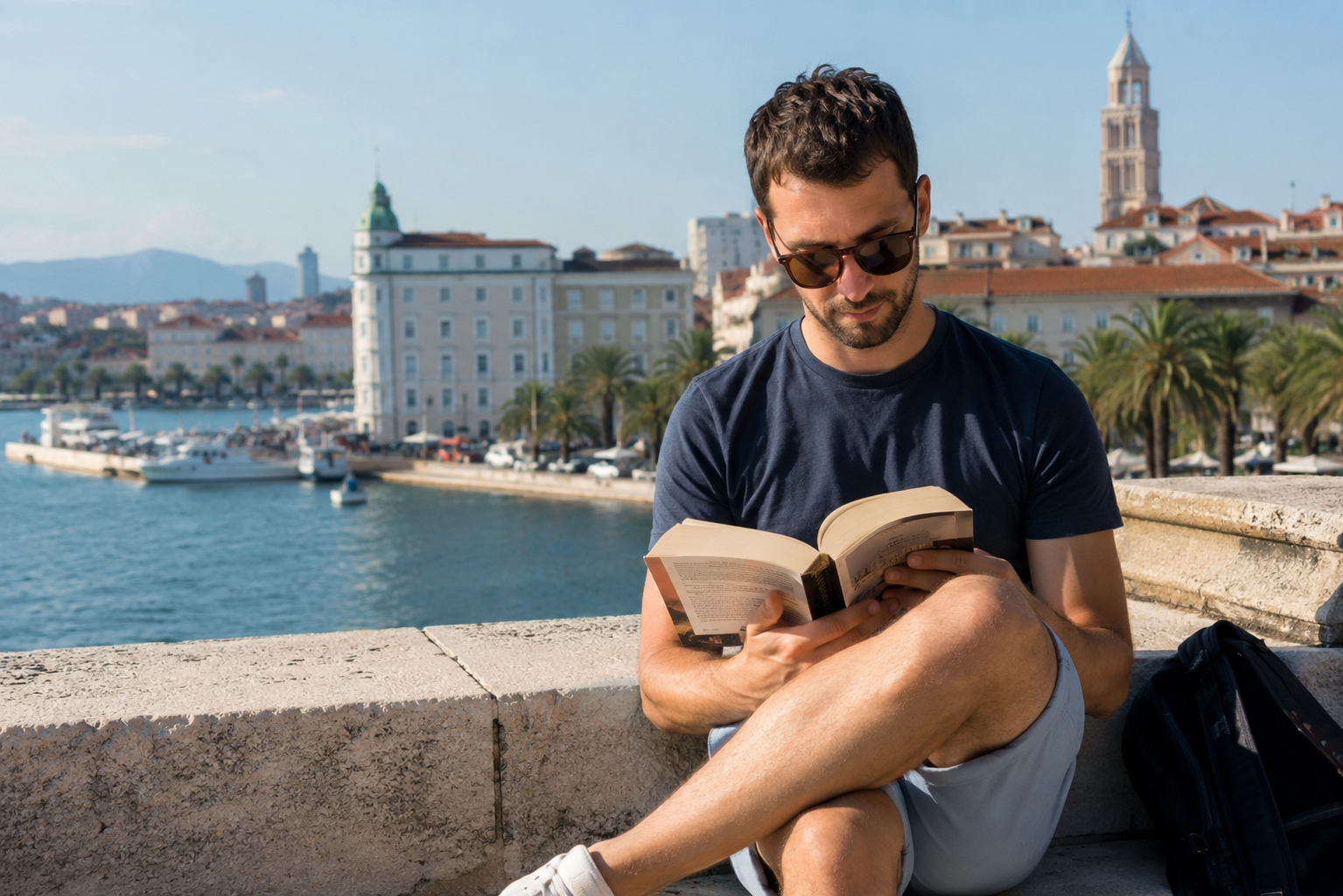
By Ščenza
· updated · 5 min read
It’s 5:48 a.m. on Ipanema beach and the sun is starting to come up over the Cagarras islands offshore. The first joggers are out. A vendor is setting up his small kiosk for the day. The waves are about a metre and a half — small by Rio standards — and a few of the morning surfers are paddling out. The two granite peaks of the Dois Irmãos (‘Two Brothers’) at the western end of the beach are catching the first orange light. By 9 a.m., the beach will be a continuous arrangement of beach chairs and umbrellas. Right now, it is mostly mine.
Why I keep coming back
Rio’s geography is the city’s first and lasting impression. The granite-domed peaks of the Atlantic Forest range come almost to the sea. The Atlantic Forest itself, much of it preserved in the Tijuca National Park, is the largest urban forest in the world (32 km²). The beaches of the Zona Sul — Leblon, Ipanema, Copacabana — line the southern edge for 10 km. The city is layered between mountain, beach, and lagoon in a way that does not exist anywhere else on earth.
The city is also one of the most musically rich in the Americas. Samba, bossa nova, and the contemporary Brazilian funk-and-baile of the favelas all live here.
Where to base yourself
Ipanema or Leblon for the central beach-neighbourhood experience. Walkable, food-rich, beach access.
Santa Teresa for the historic hillside artists’ neighbourhood; cobblestoned, viewy, slower.
Botafogo for a residential mid-budget option with great food and bay views.
Avoid Copacabana for stays of more than two nights — the beach is iconic but the neighbourhood is denser, less walkable, and the food is largely tourist-tier.
What to actually do
Walk Ipanema and Leblon beaches. The 4-km stretch of the famous beach. Sunset at Arpoador, the small rocky promontory between Ipanema and Copacabana, is the city’s daily ritual.
Hike to Christ the Redeemer. The 700-m peak with the 30-m Cristo Redentor statue is the city’s icon. The recommended route is the train from Cosme Velho (book online ahead); the hike from Parque Lage is the harder local alternative.
Take the cable car up Sugarloaf (Pão de Açúcar). Two-stage cable-car ride up the granite peak. Best at sunset.
Walk in Tijuca National Park. The huge urban Atlantic Forest. The Pico da Tijuca hike (a 3-hour round trip from Alto da Boa Vista) is the classic; the smaller trails near the Vista Chinesa lookout are accessible.
Hear samba. Pedra do Sal on Monday nights for the historic samba-roda in the harbour district. Rio Scenarium in the Lapa neighbourhood for a more tourist-oriented samba show. The smaller bars in Vila Isabel for the more local scene.
Visit a favela ethically. Rocinha and Vidigal are the famous ones. Resident-led tours (not the touristy ‘safari’ versions) are the right approach. Favela Inn at Cantagalo is an example of community-run lodging.
Walk Lapa and the Escadaria Selarón. The mosaic-tiled steps by the late Chilean artist Jorge Selarón connecting Lapa and Santa Teresa.
Where to eat
Brazilian food in Rio is dominated by the churrascaria (rotating-spit barbecue), the boteco (neighbourhood bar with bar food), and a contemporary Brazilian high-end scene that has been emerging in the past decade.
Lasai — Modern Brazilian, tasting menu; two Michelin stars. Aprazível (Santa Teresa) — Garden setting; modern Brazilian; the view. Olympe — Refined Franco-Brazilian, the senior Brazilian fine-dining brand (Claude Troisgros). Aconchego Carioca (Tijuca) — Reliable boteco; the bolinho de feijoada (black-bean croquette). Aprazível Bar do Mineiro (Santa Teresa) — The Friday feijoada lunch is a Rio institution. Garota de Ipanema (Ipanema) — The bar where ‘The Girl from Ipanema’ was written. Touristy; do go once. Churrasco at Fogo de Chão or Porcão — The all-you-can-eat churrascaria experience; better as an occasional visit than as a destination. Açaí at any neighbourhood juice bar — The Amazonian berry frozen and served in bowls with banana and granola is a Rio breakfast.
When to come
April through June is the most pleasant period; warm without being brutal, less rain than the summer.
September and October are similarly comfortable.
December through March is the high Brazilian summer; hot, humid, the city at maximum.
Carnival (variable date, mostly in February) is the famous five-day pre-Lenten celebration; book a year ahead, expect quadruple prices.
Practical notes
- Visa: Most Western passports get 90 days visa-free.
- Money: Brazilian real. Card universally; cash for smaller things, beach kiosks, and tips.
- Transport: The Metro is excellent and well-signed. Ubers are very inexpensive and the recommended way to move at night.
- Safety: Rio has real urban crime issues. Don’t carry phones or jewellery visible on the street; don’t walk on the beach late at night; don’t walk into a favela without a guide. The standard precautions apply at heightened sensitivity. The tourist-zone neighbourhoods (Ipanema, Leblon, Copacabana, Botafogo) are reasonably safe in daylight hours.
- Language: Portuguese, not Spanish. The language is closer to Spanish than to most other languages but the two are distinct; Brazilians will appreciate even basic Portuguese.
- Sunscreen: The UV index in Rio is consistently among the highest in the world. Apply more than you think.
A final thought
Rio is the rare city that is at once visually overwhelming and culturally welcoming. The beach culture is real and accessible. The music is in the bars seven nights a week. The mountains are at the back of the city, walkable in a morning, with forests and waterfalls almost within sight of the high-rises.
The city’s challenges — the inequality, the violence, the favela-vs-Zona-Sul divide — are visible and not easily addressed in a week’s visit. Engage them respectfully if you choose. The community-led tours, the music venues in the historically Black neighbourhoods, the boteco bars run by working-class Cariocas, are the places where the visit means more than the postcard.
Five nights minimum. Walk Ipanema in the morning. Hike a peak. See a sunset at Arpoador. Hear samba once. Drink a caipirinha slowly. Eat a feijoada. The Cariocas — the Rio residents — are some of the warmest people I have travelled among, and the city, for all its difficulty, is a remarkable place to spend a week.
If you only have a few days
7 ideal things to do in Rio de Janeiro
Sunset from the Pedra do Arpoador
The rock between Ipanema and CopacabanaArrive forty minutes before the sun goes
Low rock promontory at the eastern end of Ipanema where the city collects every evening to watch the sun drop behind the Dois Irmãos, and then applauds it. Not ironically. Several hundred people clapping at the horizon, every night, and then walking home to dinner. We watch the sun go down behind Šolta most evenings in Split and it has never once occurred to anybody to clap, which I now regard as a failure of nerve.
The Corcovado rack railway from Cosme Velho
Cosme Velho, climbing through Tijuca forestFirst trains of the day; the slot is booked in advance
Dom Pedro II opened this line in 1884 and it still climbs just under four kilometres of Atlantic rainforest to the foot of the statue, slowly enough that you look at the forest you are moving through rather than at the summit you are aiming for. The vans are quicker. The train is the reason to go. Take a morning departure: by eleven the terrace at the top is a shoulder-to-shoulder negotiation about who gets to do the arms photograph.
The cable car up Sugarloaf
Urca, at the mouth of Guanabara BayGo up with daylight left, come down in the dark
Morro da Urca at 220 metres first, then the sugarloaf itself at 396. A cableway has run up here in some form since 1912, the third built anywhere in the world, although the cars you actually ride in are Swiss, modern and disappointingly reliable. This is the one place where Rio's geography — bay, beaches, forest, granite, the lot — finally resolves into a single legible picture instead of a series of postcards.
Parque Lage, under Corcovado
Jardim Botânico, at the foot of the mountainMornings, when the courtyard is still cool
Public park in the forest at the base of Corcovado, laid out around a 1920s mansion with a colonnaded courtyard and a swimming pool in the middle of it, and the statue sitting dead centre above the roofline if you stand in the right place. Free to walk into. The mansion is an art school, so there are students smoking on the steps, and the whole thing feels borrowed rather than curated. Forest trails run uphill from the back gate.
The Jardim Botânico and its avenue of royal palms
Jardim Botânico, Zona SulWeekday morning; it opens early
Founded in 1808 by a Portuguese king in exile who wanted somewhere to acclimatise nutmeg and cinnamon, and now 140 hectares holding around 6,500 species. The set piece is a 750-metre avenue of royal palms, all 134 of them descended from one original tree. Toucans, marmosets, and a great deal of shade. I once spent an entire afternoon in here recovering from a morning on the beach, a sentence that would embarrass me in any other city.
A roda de samba at the Pedra do Sal
Saúde, in the old port districtEvenings; ask locally which night it is running
Stone steps cut into a rock in the old port quarter that Cariocas call Little Africa. This is quilombo ground, still home to a community of descendants, and it is where samba and choro were effectively assembled — Donga, Pixinguinha and João da Baiana all played on this street. The roda still happens on the steps, outdoors, no stage. Ask your host which night is on this month instead of trusting a two-year-old blog, which is how I once ended up standing alone on a rock.
Coffee standing up at the Confeitaria Colombo
Rua Gonçalves Dias, CentroWeekday mid-morning; it is a working city café
Belle époque tearoom from 1894, with crystal mirrors brought from Antwerp set in rosewood and a stained-glass skylight over the upstairs room, and it is still full at eleven on a Tuesday with people from the surrounding offices eating standing up at the counter. That combination is the whole point. Upstairs is where visitors sit down; downstairs, on your feet, slightly in the way, is where you find out the place is alive.
From a Split boy’s notebook
The Split lens
What reminded me of home
Beach city with a serious mountain at the back and a fierce local pride. The Carioca relationship to Ipanema and Copacabana is structurally what Splićanin feels for Bačvice — the city beach is part of identity, not just recreation. Both cities use the sea daily.
What Split could borrow
Rio invented *picigin* without knowing it — the football-on-the-beach culture (futevôlei, beach football) is a serious daily public-sport tradition. Our picigin at Bačvice is one of the world's most localised sports — played only there, in shallow water, with a small ball. It deserves better organised promotion. A Picigin World Championship at Bačvice would put us back on a particular cultural map.
Who can take you
Tour operators & guides to try
A short, opinionated starter list — just my humble opinion. Verify before booking.
Intrepid Travelsmall groupwww.intrepidtravel.com →
Intrepid's Brazil trips treat Rio as a 3–4 night chapter on a longer South America itinerary. Group size 12–16. The Rio portion handles Christ the Redeemer, Sugarloaf, a Lapa music night, and an Ipanema-or-Copacabana beach day. Caveat: Intrepid's favela visit (if it's on your itinerary) is generally well-handled with a community-owned operator, but ask specifically; the standard 'safari' favela visits are unethical.
Rio By Bikeactivityriobybike.com →
Rio By Bike is the Copacabana-based cycling-tour company — the southern-zone beaches, the Tijuca rainforest by mountain bike, the Centro historical-district ride. Groups around 10. Bikes mid-tier urban. The guides are *cariocas* (Rio residents). Caveat: the format suits the southern-zone neighbourhoods but is less useful for the favela visits, which work better on foot with a community-led guide. Book the bike day and the favela day separately, with different operators.