Photo: Ščenza
Split, Croatia · Europe
Split: a love letter, plus a guide
I have left Split a hundred times in twenty years. Every single time the plane banks over the Brač channel on the way back, I tremble. This is the only city in the world I do that for. Here's what to do with mine.
By Ščenza
· 13 min read
It’s 7:14 a.m. on the Riva and the sun is just clearing the bell tower of Sveti Duje, and I am, for the four hundredth time in my life, drinking a coffee at Caffè Bar Centro with one foot in the past and one eye on the calendar wondering when I have to leave again. I left Split for the first time on a Tuesday in September of 2005, on what was supposed to be a two-week software contract in Munich. I am writing this on the same marble table I sat at the night before that flight. I have, in the most literal sense, never finished leaving.
This is a guide to Split. It is also a confession.
Before we begin. Split was built 1,700 years ago by a Roman emperor. Please behave like he is still here. Diocletian retired to this palace in 305 AD to be left alone — the quiet was the point. He is buried in what is now our cathedral, ten metres from where you’ll order your first coffee. He has not, technically, gone anywhere. Don’t shout in the Peristyle. Don’t drag a roller suitcase down the limestone steps at 7 a.m. Don’t carve initials into anything. Don’t get drunk and pee in the cathedral courtyard (yes, this happens; we are very tired of it). The emperor is watching. So are we.
Why I keep coming back
I tremble. I mean this literally. Every single time the plane from wherever I’ve been banks over the Brač channel on the descent into Resnik airport — when the limestone of the Kozjak ridge slides past the right window and the bay opens below me and I can already see the white stone of the city — I tremble. Twenty years. A hundred-plus returns. Still trembling.
I have tried for a long time to articulate why. I think it’s because Split is the only place where I am, structurally, not a stranger. Everywhere else I have lived — Munich, Lisbon, Berlin, three weeks in Cairo, a winter in Bangkok — I have been a foreigner of some grade. Even in cities I love deeply (Lisbon especially), I will always be the estrangeiro with the slightly-too-good Portuguese. In Split, when I walk through the Peristyle on a Tuesday morning at seven, I am simply walking through the Peristyle. The waiter at Caffè Bar Centro doesn’t ask what I’d like. Mate just brings the short coffee, no sugar. He has been doing this since I was seventeen.
That’s the soul of the place. It’s not the tourism. It’s not the postcards. It’s the fact that the city remembers you, and the people in it grew up with you, and the limestone of Diocletian’s Palace was warm under your hands when you were six and is warm under your hands now.
I love its soul. I love its people. I love that the city is small enough that you’ll see the same waiter on three different streets in the same day. I love that the Roman emperor built his retirement palace here in 305 AD and ten thousand of us still live inside its walls. I love that the pomalo — the Dalmatian instruction to take it slow — is genuinely how we work. I love that fjaka — the productive afternoon laziness that doesn’t translate into any other language — is considered a civic virtue. I love that on a hot August evening you can stand on Matejuška breakwater with a takeaway beer and listen to a six-man klapa harmonising about the sea, the wine, and the woman they didn’t marry, and nobody is being paid to perform.
This is my city. I have written ninety essays about places that are not Split. Every single one of them, at the end, has a short paragraph called the Split lens — what reminded me of home, what we could borrow. The accumulation, I realised somewhere around essay sixty, was its own kind of confession. I have been comparing every city I’ve ever been to against Split. I have been measuring the world with a Dalmatian ruler.
A few facts before the guide proper
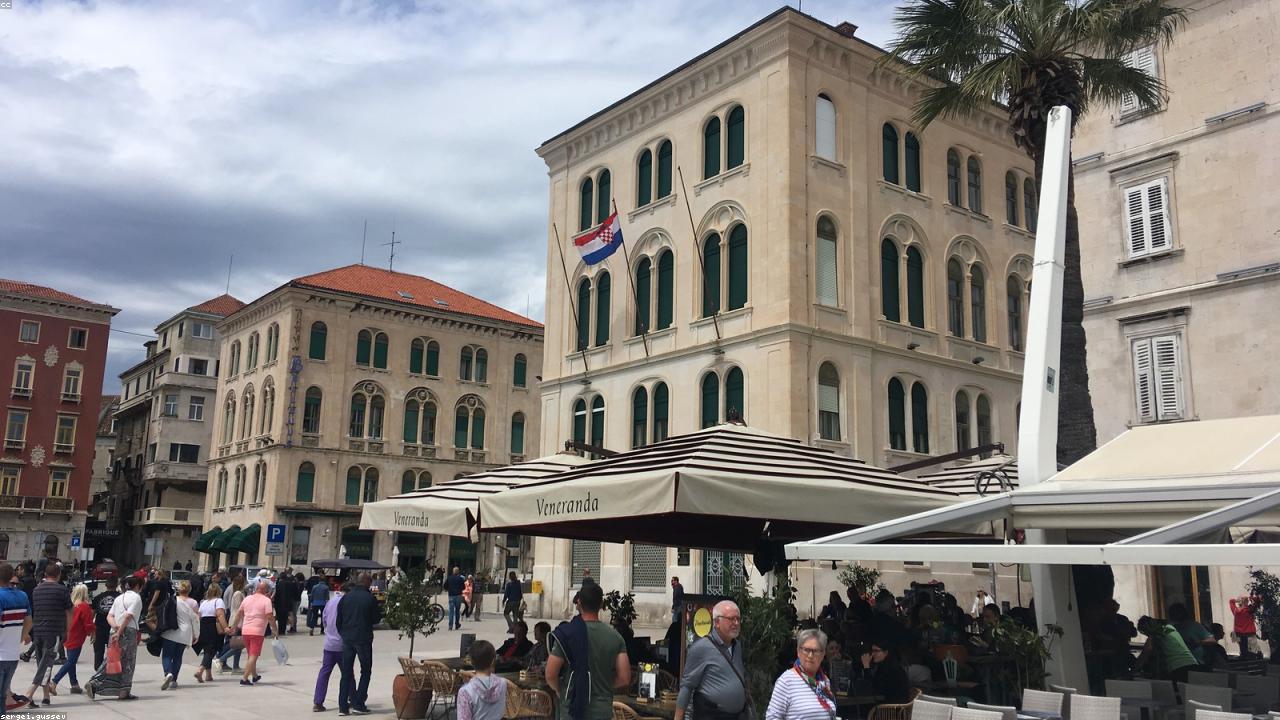
Split is a city of about 175,000 people on the central Dalmatian coast of Croatia. The old town is Diocletian’s Palace — the retirement complex the Roman emperor Diocletian began building for himself in 295 AD and finished by 305. He died here in 311. The palace was perfectly four-square Roman, with the imperial residential half on the southern side facing the sea. After the empire ended and the surrounding city of Salona was destroyed by Avars and Slavs in the 7th century, the survivors moved inside the abandoned palace walls. They never left. There are people living inside Diocletian’s walls today. We are descendants of seventh-century squatters in a third-century emperor’s holiday house. We have, on the whole, made it work.
The dialect is the čakavian of the Dalmatian coast, with significant Italian loanwords from the centuries of Venetian rule. The football club is Hajduk Split. Its supporters’ group, Torcida, founded 1950, is the oldest in Europe. The traditional song form is klapa — unaccompanied male-voice harmony.
That’s the dry summary. Here’s the city.
Where to base yourself
Inside the Palace walls if you want the postcard experience. Accommodation is mostly small apartments in old residential buildings — be warned that some of these have steep stairs and zero soundproofing. The atmosphere is irreplaceable. Don’t stay more than four nights inside the walls; Diocletian designed his rooms to face inward and the lack of direct sun gets to you.
Veli Varoš, just west of the Palace on the slope rising toward Marjan hill. This is where I’d stay. Small stone houses, narrow steep streets, lemon trees in tiny courtyards. The local konobas (Buffet Fife, Konoba Matejuška) are walking distance. So is the sea.
Lučac, on the slope east of the Palace down to the small fishermen’s harbour at Matejuška. Working neighbourhood with the kind of small details — laundry on lines, a man in pyjamas walking a dog — that the postcard doesn’t capture. The harbour, with its small fishing boats and old slipway, is the heart of evening life when the weather is good.
Bačvice, the small bay east of the ferry port. The city’s beach neighbourhood. Useful in summer if you want to be a five-minute walk from the picigin.
Avoid the area immediately around the ferry port for a longer stay — it’s loud, touristed, and the views are mostly of the cruise ships. Two nights max.
What to actually do
Walk Diocletian’s Palace before 8 a.m. This is the entire trip in one instruction. Between 9 a.m. and 8 p.m. in summer, the Peristyle is a slow-moving river of phones held above heads. Before 8, it is one of the most beautiful pieces of late-Roman architecture in the world and you’ll share it with three coffee-drinkers and a postman. The Substructures (the underground service halls of the palace, now an archaeological site) are worth the small entry fee — they’re some of the best-preserved late-Roman vaulted spaces in Europe.
Climb the bell tower of Sveti Duje. Around €7, 183 steps up an enclosed spiral staircase that is not for the claustrophobic or the heat-averse. The tower is bolted onto Diocletian’s own mausoleum — which the Christians took over in the 7th century, removed the emperor’s sarcophagus, and converted into a cathedral. The historical poetry of this is worth a thought: the city’s cathedral is the converted tomb of the man who persecuted Christians most enthusiastically. From the top: the entire palace below, Marjan to the west, Mosor to the east, the islands of Šolta and Brač south. Best at sunset.
Walk Marjan. The 178-metre forested hill on the western promontory of the city. Locals walk it before work, after work, before dinner, after dinner. The main paved path goes from the western edge of Veli Varoš up to the first viewpoint (Prva vidilica) — where, as a seventeen-year-old, I once sat with a joint and glazed over the entire city for the better part of two hours without moving, which I do not recommend but which I am also not going to pretend didn’t happen — then past a series of small chapels carved into the rock, then the second viewpoint and onward to the lighthouse at the far western end. The full loop is 7 km and takes about two hours at an unhurried pace. Do it in the morning.
Play picigin at Bačvice. Picigin is the only-Split sport — a ball-game played in the shallow sand-bottomed water of Bačvice bay with a small bouncy ball (the balun), no points, no winners, only the obligation to keep the ball in the air. It originated here in the 1920s, has never really been played anywhere else, and you are warmly invited to join any circle that’s playing. The locals will laugh at you. They mean it kindly.
Take the ferry to Šolta or Brač. The slow Jadrolinija ferry to Rogač (Šolta) or Supetar (Brač) costs a few euros, takes an hour, and gives you the city’s working maritime life on the way out. On Šolta, walk the trail from Maslinica to Stomorska. On Brač, take the bus from Supetar across the island to Bol on the south coast, where the famous Zlatni Rat beach reshapes itself daily with the currents.
Visit the Meštrović Gallery. On the western slope of Marjan, in the villa Ivan Meštrović — Croatia’s greatest sculptor — built for himself in the 1930s. The collection is one of Europe’s most-overlooked single-artist museums. Combined ticket includes the Kaštelet chapel a few hundred metres further west, where Meštrović’s wood-carved Life of Christ cycle is one of the most quietly extraordinary spaces in Dalmatia.
Eat fish on a Friday. The Pazar (the main market on the eastern wall of the Palace) opens at 7 a.m. The Peškarija (fish market) opens at 7:30. A Friday afternoon at Konoba Matejuška, with a brodet of whatever came in that morning and a half-litre of Plavac Mali, is what Sunday lunch is for in this town.
Hear a klapa. If you’re lucky you’ll catch an informal group on the Riva at dusk on a summer Sunday — no stage, no microphones, just five or six men in middle age standing in a half-circle harmonising about the sea, the wine, and the woman they didn’t marry. If you’re not that lucky, the formal Festa klapa performances at the Peristyle in summer take place in one of the most acoustically alive natural amphitheatres in the world.
See a Hajduk match at Poljud. Stadium just north of the centre. The Torcida supporters’ section is loud, smoke-flared, and entirely friendly to visitors who respect the team colours (white). Don’t wear red. Red is the colour of Dinamo Zagreb, our principal rival, and you will get looks.
Where to eat (the konobas I’d send anyone to)
A konoba is a Dalmatian tavern — traditional, family-run, fish and meat from a wood-fired grill, the wine in a pitcher.
Konoba Matejuška — Family-run, a side street one block from the harbour. The brodet (Dalmatian fish stew), the grilled fish, the proper old-school service. Two-week-advance reservation in season.
Villa Spiza — Old-town, tiny, no menu (the day’s catch is on a board), no reservations. Queue at 7 p.m. or arrive at 11 for late lunch. The grilled sole, the octopus salad.
Buffet Fife — Bottom of Veli Varoš near the harbour. Cheap, working-class, the same family since 1936. The pašticada (slow-cooked beef in dark wine sauce, served with gnocchi) is the dish.
Bokeria — Modern Dalmatian in a converted old building. Younger, more wine-focused, the cooking inventive but rooted. For a less-traditional evening.
Kruščić — Sourdough bakery on Obrov for the morning bread; their fritule and kroštule at Christmas are the city’s best.
Caffè Bar Centro — Mate’s place. The short coffee, no sugar. Sit on the marble. Don’t ask for Wi-Fi.
Bačvice gelaterias — the small ones along the bay. Classic vanilla on a hot August afternoon, eaten with feet in the water.
Nightlife (I don’t really do this anymore but)
Confession: I haven’t closed a Split bar in maybe seven years. Forty turned out to be the age where I started preferring sleep. But the city’s summer-party reputation is real and earned; here’s where I’d still go and where I’d send my younger cousins.
Bačvice strip — Above the city beach, the rib of cafe-bars and clubs (Bani, Vanilla, Tropic) that runs from the seafront up the hill. This is the loud version of Split’s night. Loud until 4 a.m. in season. Mostly under-30. Plastic cups. The walk home is downhill, which is the saving grace.
Marvlvs Library Jazz Bar — Where I’d actually go if forced. Tiny room near the Peristyle, jazz on most evenings, the kind of place where you can hear yourself think.
Fluid — Small cocktail bar inside the palace walls. Decent list, intimate, opens late.
Dom Mladih — The city’s youth centre, where the alternative-music scene the cruise-ship circuit doesn’t see lives — Croatian rock bands, small electronica nights, the occasional poetry reading. Check their calendar.
Galija after a Hajduk win — Not nightlife in the bar-crawl sense, but the post-match drinking ritual at one of the small Hajduk pubs is a Split institution. White shirts, loud voices, deep love for a football club that wins less often than it should. Wear white. Don’t wear red.
Caveat: in July and August the Bačvice strip is a slow-moving river of teenagers from a hundred countries and the locals largely avoid it. The smaller old-town bars are where you’ll find Splićani after midnight, if you find them at all.
When to come
Late September through early November. The summer cruise crowds are gone, the sea is still 22°C in October, the figs are ripe. The right answer if you can only come once.
Late April through May. The other right answer. The orange trees flower, the city wakes up, the locals are not yet exhausted by tourism.
July and August are the high season. The old town is at full saturation between 10 a.m. and 8 p.m. The locals largely retreat to the islands or to the kuća na moru (sea cottages) on the coast. Don’t expect the city to be itself in July.
Late December through early March is the off-season. Many konobas keep reduced hours. The city is grey, occasionally bura-blasted, and entirely itself. I love it in February. It is the only time I’m here without other visitors and the only time the Peristyle at 7 a.m. has me as the only person standing in it.
Practical notes
- Visa: Croatia is in Schengen since 2023.
- Money: Euro since 2023. Card universally; cash useful at the Pazar and the smaller konobas.
- Language: Croatian. Dobar dan (good day), hvala (thank you), pomalo (slowly), fjaka (the productive lazy afternoon). The Split dialect is čakavian with Italian loanwords; locals will switch to standard Croatian when they hear visitors trying.
- The cruise ships: Up to four large ones in port simultaneously on summer Saturdays. The old town is at maximum saturation on those days. Check the port schedule and plan around them — at least, plan to be at Marjan, on a ferry, or on the back streets of Veli Varoš between 10 a.m. and 4 p.m.
- The bura and jugo winds: The bura is the cold dry north wind off Mosor in autumn and winter. The jugo is the warm humid south wind that brings the rain. Locals will tell you the bura is honest weather and the jugo makes everyone irritable. They are not entirely wrong.
- Football: Hajduk matches at Poljud are some of the most atmospheric in European football. Tickets at the Torcida section are €10–15. Wear white.
A final thought
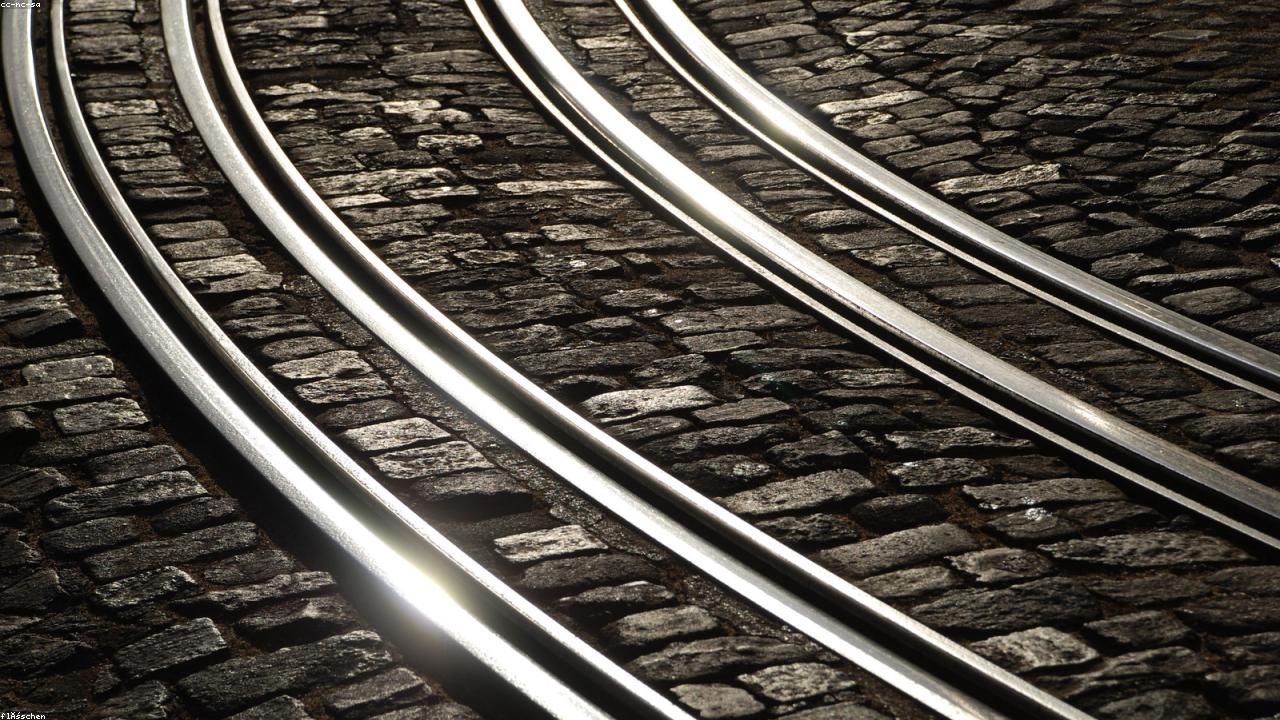
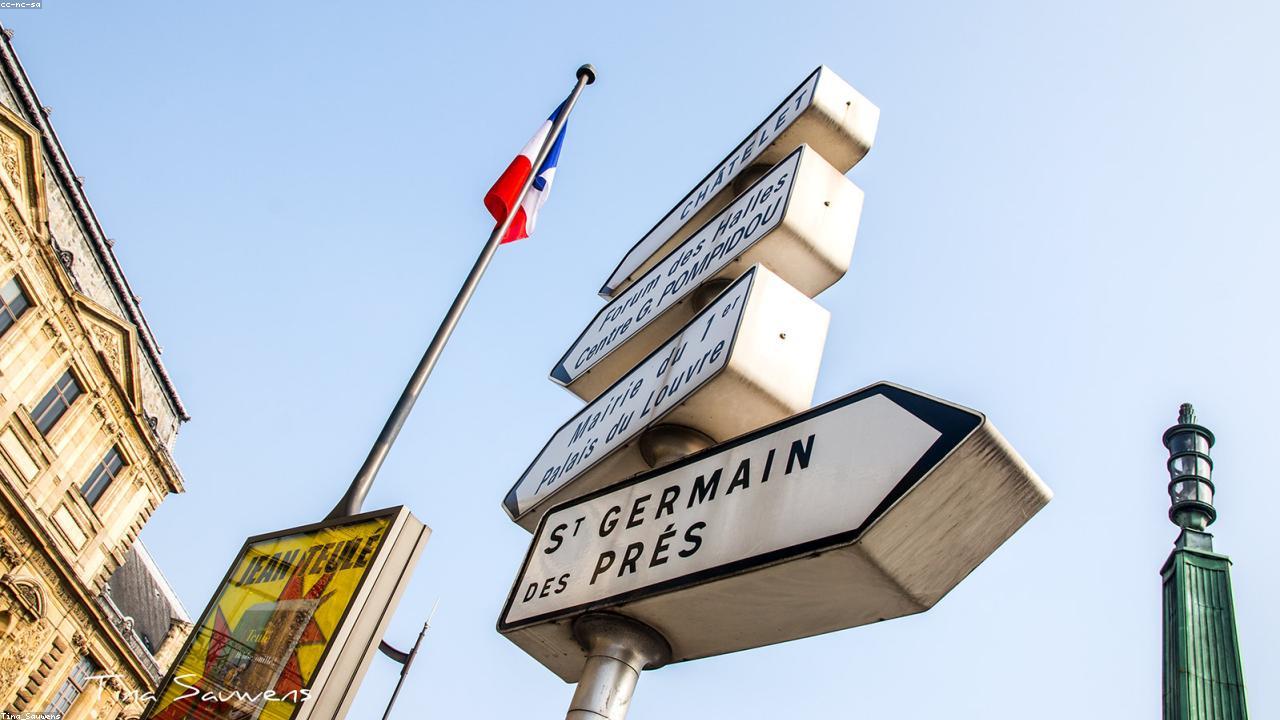
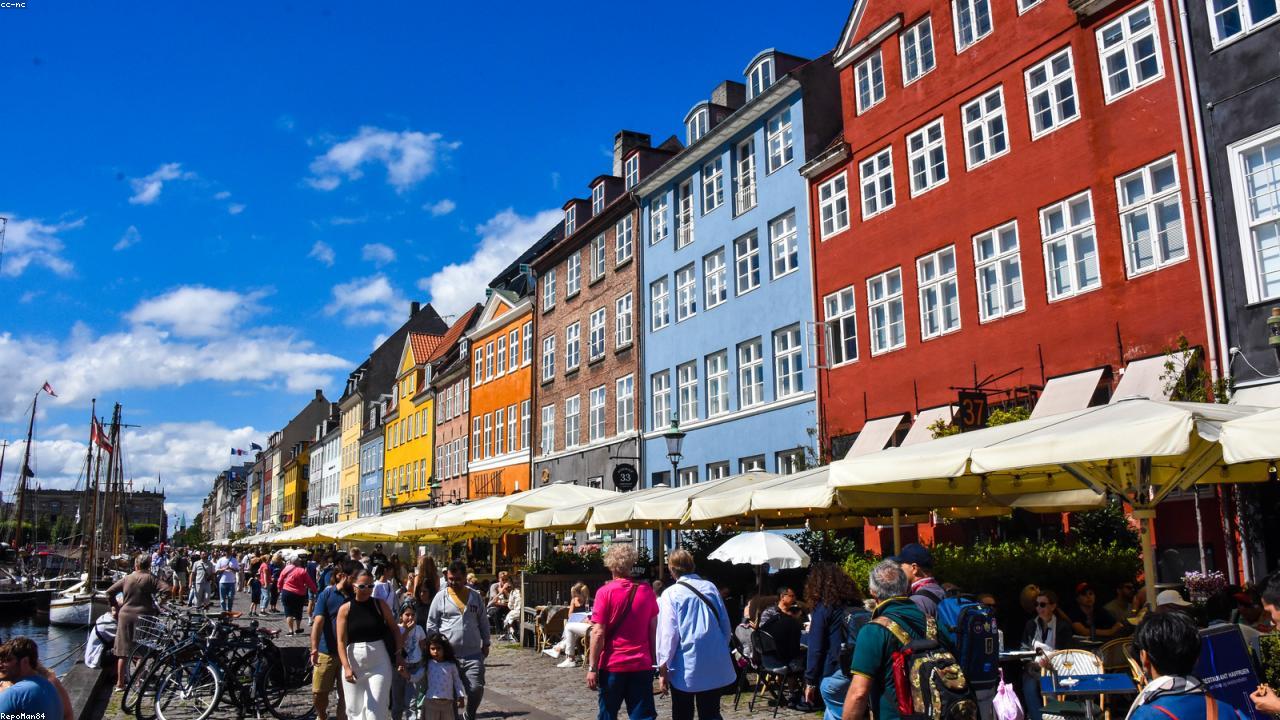
I have spent twenty years measuring the world against my city. I have come back from Tokyo wishing we had Tokyo’s metro, from Paris wishing we’d closed our waterfront to cars the way they closed the Seine, from Lisbon wishing we’d kept our trams, from Copenhagen wishing we’d cleaned the harbour, from Marrakech wishing we’d kept our Roman bath culture, from Patagonia wishing we’d built the Velebit trail network. And every single time, the plane has banked over the Brač channel, I have seen the white stone of the city below, and I have trembled. The lessons from elsewhere are real. The trembling is realer.
Split is the love of my life. I have known this since I was nineteen and tried to leave for the first time and got as far as Trogir and turned around. I left properly at twenty-two. I have spent the twenty years since calibrating exactly how much absence I can stand before I have to come back.
If you visit, please be gentle with the city. Stay in the small family-run apartments rather than the corporate short-term rentals. Eat in the konobas where the same family has cooked the same food for sixty years. Walk Marjan in the morning before the heat. Try picigin at Bačvice and laugh when the locals laugh at you. Sit on the Riva at sunset with a coffee and watch the light go down behind Šolta. Be quiet in the Peristyle at seven in the morning. Tip the klapa singers on the Matejuška breakwater.
This is my city. It is not yours. But for the four or five days you’ll spend here, you are welcome to share it with me. The plane will bank over the channel. You’ll see the bay. You won’t tremble — that’s just my thing. But you’ll understand, I think, why I do.
If you only have a few days
8 ideal things to do in Split
The Peristyle before eight, then the Substructures
The centre of Diocletian's PalaceBefore 8 a.m., any day of the year
Three thousand of us live inside this palace. At seven in the morning the Peristyle belongs to a postman, two coffee drinkers and whoever is sweeping, and it is one of the finest surviving pieces of late-Roman architecture in Europe. By ten it is a river of raised phones. Afterwards go down into the cellars beneath the imperial apartments — among the best-preserved late-Roman vaulted halls anywhere, and blessedly cool when the town is at thirty-four degrees. One request: do not drag a wheeled suitcase over the limestone at dawn. We can hear it in Lučac.
Climb the bell tower of Sveti Duje
Peristyle, Diocletian's PalaceLate afternoon into sunset; not for the claustrophobic
Fifty-seven metres of Romanesque-Gothic tower, begun in the thirteenth century and not finished for three hundred years, bolted onto the mausoleum of the emperor who persecuted Christians most enthusiastically — a building the Christians then converted into our cathedral, having first removed him from it. The stairs are an enclosed spiral and unkind to anyone in a hurry. From the top: the palace grid below, Marjan west, Mosor east, Šolta and Brač out at sea. I have taken every visiting friend up there and exactly one of them enjoyed the climb.
Walk Marjan the whole way out to the lighthouse
Start at the top of Veli VarošMorning, all year; February is the best month for it
Our hill: 178 metres, pine-covered, with a paved path from Veli Varoš up to the first viewpoint, then the small chapels cut into the rock, then the second viewpoint, then a couple of kilometres more to the lighthouse at the western end. Seven kilometres if you do the whole loop. Locals walk it before work, after work, and again after dinner, and the correct etiquette is a nod and nothing else. Do not attempt it at two in the afternoon in July. I did that once at nineteen and have never entirely recovered my dignity.
Get laughed at playing picigin at Bačvice
The sandy bay just east of the ferry portAny warm evening; also New Year's Day, if you are that sort of person
Invented right here in 1908 by students home from Prague who found the bay too shallow for water polo, protected since 2008 as Croatian intangible cultural heritage, and played properly nowhere else on earth. Five people standing in shin-deep water, a small stripped ball, palms only, no catching, no points, no winners — the single obligation is that the ball never touches the water. Walk up to any circle and join in. You will be dreadful, they will laugh, and it is not unkind laughter. It is the fastest way into this town there is.
The Meštrović Gallery and Crikvine-Kaštilac
Šetalište Ivana Meštrovića, the sea side of MarjanTuesday to Sunday; shut on Mondays
Meštrović built himself a villa here in the 1930s and later gave the lot to the country: eighty-six sculptures indoors, eight bronzes out in the garden, the sea below the terrace. Then walk a few hundred metres west to Crikvine-Kaštilac, a small fortified chapel holding his wood-carved life of Christ, which is the quietest room in Dalmatia and where I take people when I want them to stop talking for ten minutes. Croatia's greatest sculptor, and most visitors never find either building. I am content for that arrangement to continue.
A Hajduk match at Poljud
North of the centre, twenty minutes on footHome fixtures; check the calendar before you book flights
Torcida was founded on 28 October 1950 and is the oldest organised supporters' group in Europe, a fact you will be told within four minutes of meeting any of us. The stadium went up for the 1979 Mediterranean Games, holds a shade under thirty-four thousand, and the noise off the north stand does something odd to the back of your skull. Wear white. Do not wear red — red is Dinamo Zagreb, and while nobody will lay a finger on you, several hundred people will look at you in a way you will remember. We win less than we should. That is part of the deal.
The slow ferry to Rogač on Šolta
Car ferry from the Split port, about an hour each wayOut on a weekday morning, back late afternoon
Everyone goes to Hvar. Šolta is the island sitting directly in front of the city that almost nobody bothers with, which is the argument for going. Rogač is the ferry port; head west to Maslinica, all fishing boats and a sheltered bay, or east to Stomorska. The island grows Dobričić, an old black grape that DNA work identified as a parent of Zinfandel, so you can drink the ancestor of California on a terrace with nobody else on it. The crossing out through the working port is half the pleasure of the day.
Salona and Klis Fortress in a single morning
6 km and 11 km inland; local bus from the centreMorning; Klis keeps short hours outside summer
Salona was the capital of Roman Dalmatia, with an amphitheatre for fifteen thousand people, long before Diocletian built his retirement house down the road — the largest archaeological park in Croatia, and you will share it with lizards. Then up to Klis, on the pass at 360 metres between Mosor and Kozjak, where Petar Kružić held out against the Ottomans for more than twenty-five years before it fell in 1537. Yes, it was Meereen. The man selling tickets has heard that one. Please arrive with one other question ready.
From a Split boy’s notebook
The Split lens
What reminded me of home
Home isn't a comparison; it's the standard. Everywhere I've written about, I've measured against this — the konobas of Lučac, the morning light on the Peristyle, the way Bačvice fills up at five for picigin, the limestone warm under my hand. Every Split lens at the end of every other essay on this site is, in a sense, this article in a single paragraph: this is what I'm looking for elsewhere, and this is what I miss when I'm gone.
What Split could borrow
What I owe the city in return: the small daily commitment to keep it itself. Stay in family-run accommodations when I host visitors. Eat at the konobas before they're priced out. Speak Split čakavian to the kids who'd otherwise grow up only with standard Croatian. Walk Marjan at dawn instead of taking the road. Push the city, gently, to do the things the rest of the world has shown me work — close the Riva to cars, cap the cruise ships, rebuild a public Roman bath, sign a coastal-walking trail to Trogir. Be a citizen, not just a resident.
Who can take you
Tour operators & guides to try
A short, opinionated starter list — just my humble opinion. Verify before booking.
Secret Dalmatiatailoredwww.secret-dalmatia.com →
Alan Mandić's Secret Dalmatia has been the standard for thoughtful private Croatia trips for fifteen years — they design custom Dalmatia itineraries that go well beyond the Split-Hvar-Dubrovnik triangle. Alan grew up summers in the Kornati islands and his network of local contacts is the real value. I've sent visiting friends to them three times; the feedback has been universally that this was the bit of the trip they didn't know they were missing. Caveat: this is upper-tier pricing, not for budget travellers. For day-walk and konoba-evening level access, the smaller local guides on the ground in Split (ask your apartment owner) are cheaper and just as good.
Adventure Dalmatiaactivitywww.adventuredalmatia.com →
Split-based adventure operator running sea kayaking around Marjan, white-water rafting on the Cetina, canyoning, climbing on Brač, mountain biking on Mosor. Groups around 8–12; equipment is well-maintained; guides are locals with proper certifications. The Marjan sea kayak half-day is the best entry — it gives you a view of the city from the water that you can't get otherwise. Caveat: in July and August the demand outstrips capacity and the smaller boats get full; book at least a week ahead and take the early-morning slots over the midday heat.