Europe
Lisbon, Portugal
Lisbon, the city I came back to live in
February 14, 2025
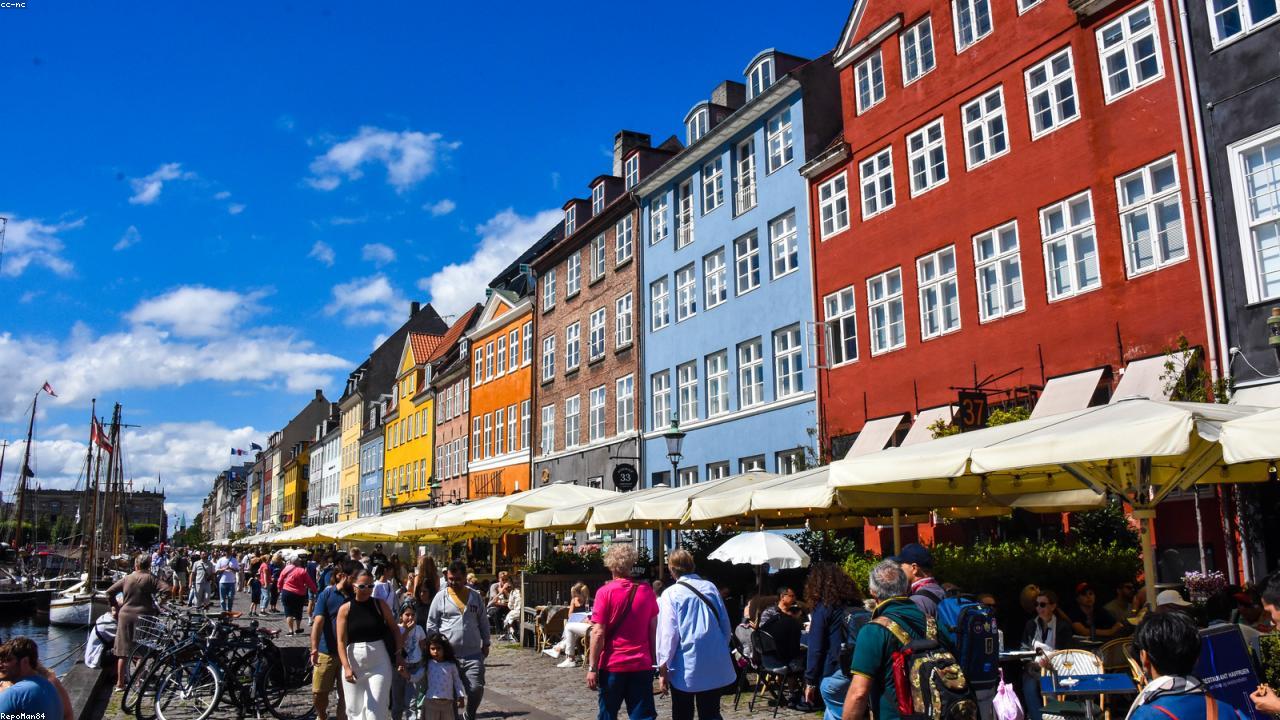
Photo: Ščenza
Copenhagen, Denmark · Europe
The short list, pulled out of the long essay. No opening hours, because they change and I would only get them wrong — just what is worth your morning, roughly when to turn up, and where I have wasted time so you don’t have to.
By Ščenza
Last checked
Humlebæk, about forty minutes north on the coastal Kystbanen lineA weekday. Closed Mondays
Louisiana is the one good reason to leave Copenhagen for a day, and the city takes it surprisingly well. The galleries thread through a garden that runs down to the Øresund, so you keep stepping outdoors between rooms — Calder and Giacometti on the grass, Sweden visible across the water. I have twice arrived intending to spend two hours and left after six, both times mildly irritated at the return train I had already booked.
Amager, on the harbour east of the centreYear-round — the piste is plastic, not snow
Skiing down the roof of a waste-to-energy plant is precisely as absurd as it sounds, and the Danes built it with a completely straight face: Bjarke Ingels wrapped 450 metres of dry piste around a working incinerator that burns the city's rubbish into heat for something like 150,000 homes. You don't have to ski it. The hiking path to the summit is free, and the view back over the harbour and out to the Øresund is the best the city offers.
Dantes Plads, behind TivoliRainy afternoons, of which Copenhagen supplies a generous number
Palm trees under a wrought-iron dome, inside a museum a brewer built to hold what he bought with beer money. Carl Jacobsen assembled Scandinavia's largest antiquities collection here, plus mummies out of Egypt and the biggest holding of Rodin outside France — the Burghers of Calais included. There is a café in the palm house and nobody minds how long you occupy a chair in it. I have used this building three times purely as shelter and only twice as a museum, and it forgave me on both counts.
Nørrebro, at the far end of JægersborggadeSpring, when the whole neighbourhood moves outdoors
Hans Christian Andersen and Søren Kierkegaard are buried a short walk apart in what functions, day to day, as the neighbourhood's main park. People picnic between eighteenth-century graves. Students revise on the grass. A band was rehearsing badly behind a hedge the last time I walked through and nobody present appeared to consider this disrespectful, myself included. Andersen's stone is signposted; Kierkegaard's takes some looking for, which he would probably have considered appropriate.
Søndermarken park, FrederiksbergAny season. It is cold and dripping down there regardless
Under Søndermarken park lies a drained nineteenth-century drinking-water reservoir, now a permanently damp exhibition space where the ceiling drips on you at unpredictable intervals. One artist gets the room each year, and the room does half the work — vast acoustics, air cold enough to see your breath in August, and a darkness that reorganises whatever has been installed in it. Take a jacket. I did not, and spent an excellent hour shivering at something I would otherwise have walked past in ten minutes.
Havneparken, Islands Brygge, across the water from the centreLate June through August for the water temperature
Copenhagen spent fifteen years cleaning its inner harbour to the point where swimming in the middle of the working port is unremarkable, and the harbour bath is the proof of it: free, busy, full of office workers doing lengths in their lunch hour. Split has Bačvice, which is a beach and therefore an easier problem. Our Gradska luka is still too oily to put a foot into, and every time I climb out of this water I get a little more annoyed about that.
The long version
Copenhagen doesn't try to impress you. The city's pleasures are small and structural — a bike lane that works, a harbour you can swim in, a city built at human scale and against the temptation to grow taller. Most great visits start by hiring a bike on day one.
Read the full essay →