Europe
Paris, France
Paris in the off-hour: the city that rewards stubborn patience
September 12, 2024
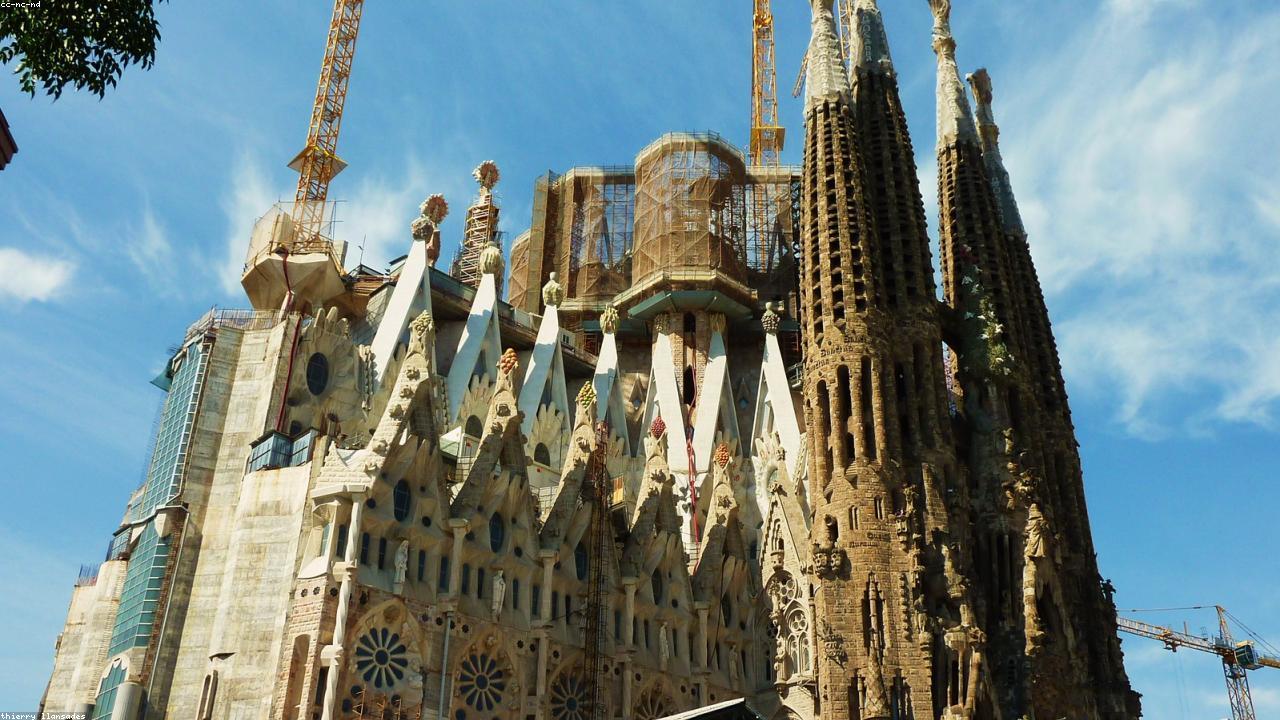
Photo: Ščenza
Barcelona, Spain · Europe
The short list, pulled out of the long essay. No opening hours, because they change and I would only get them wrong — just what is worth your morning, roughly when to turn up, and where I have wasted time so you don’t have to.
By Ščenza
Last checked
EixampleFirst entry slot of the day; book weeks ahead
In February 2026 the central Jesus tower topped out at 172.5 metres and the building still isn't finished, which is roughly the correct amount of finished for a church begun in 1882. Only the Nativity and Passion towers are open to visitors: lift up, narrow spiral staircase down. Take the Nativity side — the stone is older, the carving is Gaudí's own, and the morning light coming through the east windows is the whole argument for getting up. I once did the descent with a hangover and learned that a spiral staircase and a Catalan vermouth are not compatible technologies.
Carrer de les Carolines, GràciaWeekday mornings; allow about an hour and a quarter
Gaudí's first commissioned house, and the one that looks least like the Gaudí on the fridge magnets — marigold tiles, exposed brick, an interior that goes full orientalist and refuses to apologise for it. It opened as a museum in 2017 after being a private home for well over a century. I went expecting a warm-up act and came out convinced it was the best thing he built before he got famous enough to be interrupted. It's ten minutes' walk from the squares of Gràcia, where you can sit down afterwards and argue about it.
Palau Nacional, MontjuïcAfternoon; walk down through the terrace gardens after
Between 1919 and 1923, teams stripped the frescoes off the walls of abandoned Pyrenean churches — the Christ of Sant Climent de Taüll among them — and rebuilt them here inside reconstructed apses, partly to stop dealers shipping them to America. It is the greatest Romanesque collection anywhere and I have never queued for it, because everyone is across town looking at Gaudí. Two hours minimum. The Pantocrator's eyes follow you round the apse in a way that unsettled me, and I grew up in a cathedral that used to be an emperor's tomb.
Ten minutes uphill from the Sagrada FamíliaMorning; allow two hours for the pavilions and gardens
Domènech i Montaner built a hospital as a village of separate pavilions joined by underground tunnels, between 1901 and 1930, on the theory that sick people recover faster surrounded by gardens and coloured tile. You begin in the hypostyle hall — the old emergency department, more beautiful than most cathedrals — and finish wandering the grounds. It is a short uphill walk from the Sagrada Família and the crowd thins out to almost nothing over that distance, which tells you a great deal about how people plan their trips.
Passeig del Born, La RiberaGuided-visit slots only; check which language runs that day
Fourteenth-century, and the Born neighbourhood grew up around it. The guided visit takes you onto the roof terraces and through the restored tribunes, which were shut to the public until recently. From up there the medieval street plan below suddenly becomes legible — you can read the shape of the old city the way a pigeon does. It runs about seventy-five minutes. I booked the Spanish tour out of misplaced pride, followed maybe half of it, and would happily do the English one next time like an adult.
Carrer del Poeta Cabanyes, Poble SecWeekday lunch or early evening; shut Saturday and Sunday
Same family, four generations, a room roughly the size of a generous hallway with bottles stacked to the ceiling and nowhere at all to sit. You order montaditos across the counter and eat them standing with your elbows tucked in. There are no reservations and there never will be. Twice I have arrived to find it already wedged full and walked away again. It closes at weekends, which catches out almost every visitor who has read about it — including me, once, in 2011, on a Saturday, with a hungry friend.
Parc de Collserola; funicular up from Peu del FunicularEarly morning, any season
A flat gravel road, close to nine kilometres of it, cut along the flank of Collserola to service the city's water pipes and now full of Barcelonans running off their weekend. It is level the entire way, which after three days of Gothic Quarter stairs feels like a personal favour. The whole city lies below — Sagrada Família, Torre Glòries, the sea past it. Turn around whenever you like; nobody is monitoring your progress. Dogs are allowed, and there are a very great many of them.
About an hour north by commuter trainWeekdays; September for warm sea and an empty beach
Trains on this line run so close to the water for most of the way north that the sea fills the right-hand windows. Sant Pol is white houses stacked up a hill above a small beach, and there is essentially nothing to do there, which is the entire proposition. I swam, ate grilled fish, misread the timetable, sat on the platform for forty minutes watching the light go off the water, and it stayed one of my better days in Catalonia. Sit on the right going out.
The long version
Barcelona is a city that has been loved nearly to death and is, slowly, recovering. You can still have a beautiful week here. You just need to skip half of what the guidebooks insist on, and learn the names of three or four streets that aren't on the tourist map.
Read the full essay →