Europe
Lisbon, Portugal
Lisbon, the city I came back to live in
February 14, 2025
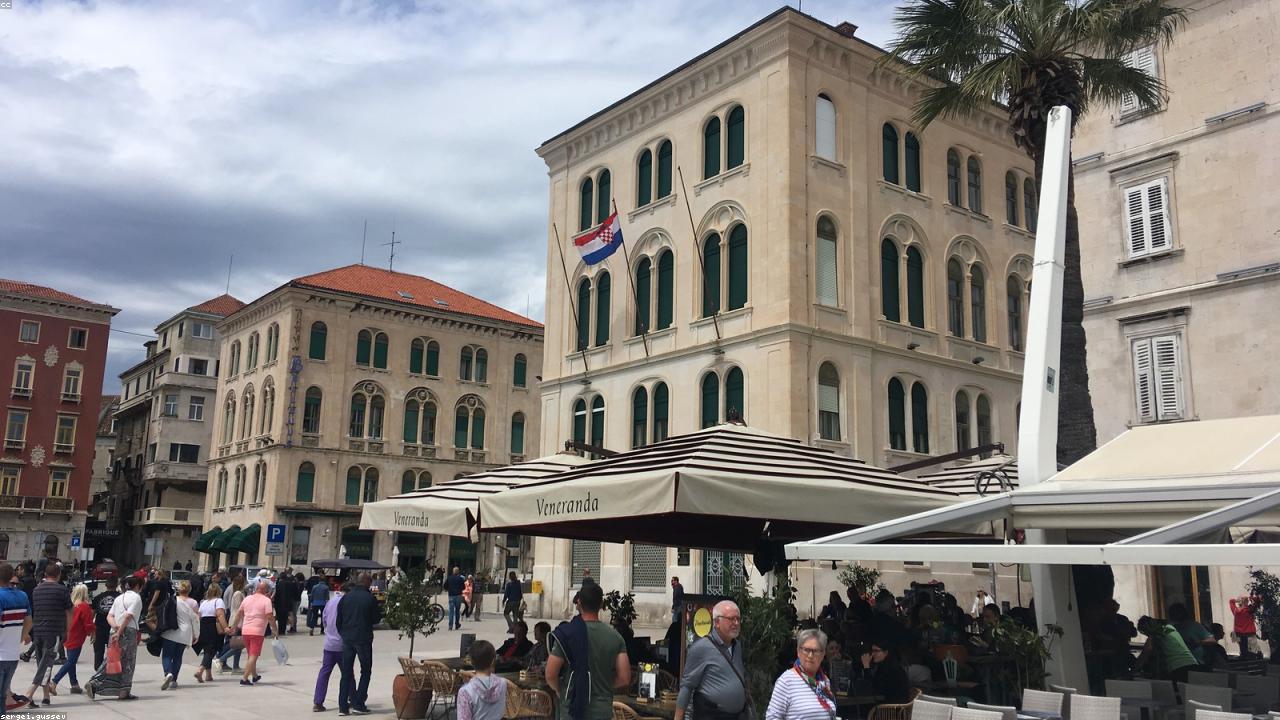
Photo: Ščenza
Split, Croatia · Europe
The short list, pulled out of the long essay. No opening hours, because they change and I would only get them wrong — just what is worth your morning, roughly when to turn up, and where I have wasted time so you don’t have to.
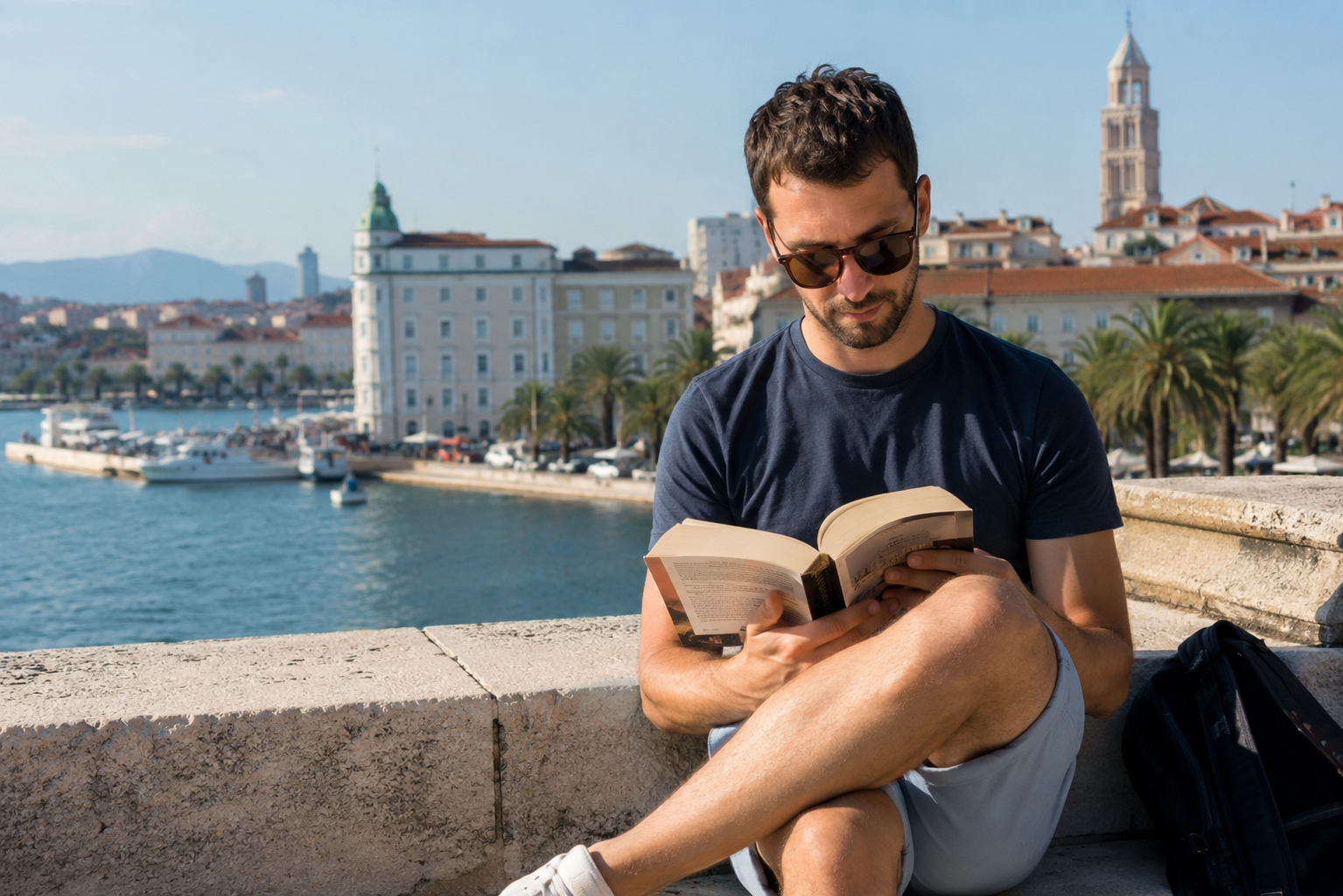
By Ščenza
Last checked
The centre of Diocletian's PalaceBefore 8 a.m., any day of the year
Three thousand of us live inside this palace. At seven in the morning the Peristyle belongs to a postman, two coffee drinkers and whoever is sweeping, and it is one of the finest surviving pieces of late-Roman architecture in Europe. By ten it is a river of raised phones. Afterwards go down into the cellars beneath the imperial apartments — among the best-preserved late-Roman vaulted halls anywhere, and blessedly cool when the town is at thirty-four degrees. One request: do not drag a wheeled suitcase over the limestone at dawn. We can hear it in Lučac.
Peristyle, Diocletian's PalaceLate afternoon into sunset; not for the claustrophobic
Fifty-seven metres of Romanesque-Gothic tower, begun in the thirteenth century and not finished for three hundred years, bolted onto the mausoleum of the emperor who persecuted Christians most enthusiastically — a building the Christians then converted into our cathedral, having first removed him from it. The stairs are an enclosed spiral and unkind to anyone in a hurry. From the top: the palace grid below, Marjan west, Mosor east, Šolta and Brač out at sea. I have taken every visiting friend up there and exactly one of them enjoyed the climb.
Start at the top of Veli VarošMorning, all year; February is the best month for it
Our hill: 178 metres, pine-covered, with a paved path from Veli Varoš up to the first viewpoint, then the small chapels cut into the rock, then the second viewpoint, then a couple of kilometres more to the lighthouse at the western end. Seven kilometres if you do the whole loop. Locals walk it before work, after work, and again after dinner, and the correct etiquette is a nod and nothing else. Do not attempt it at two in the afternoon in July. I did that once at nineteen and have never entirely recovered my dignity.
The sandy bay just east of the ferry portAny warm evening; also New Year's Day, if you are that sort of person
Invented right here in 1908 by students home from Prague who found the bay too shallow for water polo, protected since 2008 as Croatian intangible cultural heritage, and played properly nowhere else on earth. Five people standing in shin-deep water, a small stripped ball, palms only, no catching, no points, no winners — the single obligation is that the ball never touches the water. Walk up to any circle and join in. You will be dreadful, they will laugh, and it is not unkind laughter. It is the fastest way into this town there is.
Šetalište Ivana Meštrovića, the sea side of MarjanTuesday to Sunday; shut on Mondays
Meštrović built himself a villa here in the 1930s and later gave the lot to the country: eighty-six sculptures indoors, eight bronzes out in the garden, the sea below the terrace. Then walk a few hundred metres west to Crikvine-Kaštilac, a small fortified chapel holding his wood-carved life of Christ, which is the quietest room in Dalmatia and where I take people when I want them to stop talking for ten minutes. Croatia's greatest sculptor, and most visitors never find either building. I am content for that arrangement to continue.
North of the centre, twenty minutes on footHome fixtures; check the calendar before you book flights
Torcida was founded on 28 October 1950 and is the oldest organised supporters' group in Europe, a fact you will be told within four minutes of meeting any of us. The stadium went up for the 1979 Mediterranean Games, holds a shade under thirty-four thousand, and the noise off the north stand does something odd to the back of your skull. Wear white. Do not wear red — red is Dinamo Zagreb, and while nobody will lay a finger on you, several hundred people will look at you in a way you will remember. We win less than we should. That is part of the deal.
Car ferry from the Split port, about an hour each wayOut on a weekday morning, back late afternoon
Everyone goes to Hvar. Šolta is the island sitting directly in front of the city that almost nobody bothers with, which is the argument for going. Rogač is the ferry port; head west to Maslinica, all fishing boats and a sheltered bay, or east to Stomorska. The island grows Dobričić, an old black grape that DNA work identified as a parent of Zinfandel, so you can drink the ancestor of California on a terrace with nobody else on it. The crossing out through the working port is half the pleasure of the day.
6 km and 11 km inland; local bus from the centreMorning; Klis keeps short hours outside summer
Salona was the capital of Roman Dalmatia, with an amphitheatre for fifteen thousand people, long before Diocletian built his retirement house down the road — the largest archaeological park in Croatia, and you will share it with lizards. Then up to Klis, on the pass at 360 metres between Mosor and Kozjak, where Petar Kružić held out against the Ottomans for more than twenty-five years before it fell in 1537. Yes, it was Meereen. The man selling tickets has heard that one. Please arrive with one other question ready.
The long version
I have left Split a hundred times in twenty years. Every single time the plane banks over the Brač channel on the way back, I tremble. This is the only city in the world I do that for. Here's what to do with mine.
Read the full essay →