Photo: Ščenza
Hanga Roa, Chile · Oceania
Easter Island: Rapa Nui and the moai at the world's most remote inhabited place
Easter Island — Rapa Nui in the local Polynesian — is the most isolated inhabited island on earth, 3,500 km from the nearest continental coast. The 900 moai are the iconic image; the contemporary Rapanui community living among them is the deeper experience.

By Ščenza
· updated · 4 min read
It’s 6:42 a.m. at the Ahu Tongariki — the great ceremonial platform on the southeastern coast of Rapa Nui — and the fifteen restored moai are catching the first sunlight of the morning, silhouetted against the Pacific. The platform was destroyed by a tsunami in 1960 and the moai re-erected by archaeologists between 1992 and 1995. The platform itself is a thousand years old. There are perhaps a dozen visitors at this hour, mostly with cameras. By 9 a.m., the tour buses arrive from the hotels. The first hour, however, is mine and the silence of the Pacific is the dominant sensation.
Why I keep coming back
Easter Island — Rapa Nui to the indigenous Polynesian inhabitants — is roughly 3,500 km west of the Chilean coast and 2,000 km east of the nearest other inhabited island (Pitcairn). It is the most isolated inhabited place on earth and one of the most archaeologically consequential.
The Polynesian colonisation of the island happened approximately AD 1200, after one of the longest known navigational migrations in pre-modern history. The 900 moai — stone statues, the largest 21 m tall and 270 tonnes — were carved between roughly AD 1250 and 1500. The ecological collapse of the island (likely related to the harvesting of trees for moai-moving sledges, combined with rat infestation introduced by the settlers) is one of the canonical cases studied in the literature on environmental collapse.
The Rapanui community — about 4,000 indigenous islanders today, of a total island population of 7,500 — has, since the 1990s, gradually recovered political autonomy and is increasingly the central voice in managing the island’s archaeological heritage.
Where to base yourself
Hanga Roa is the only town. Most accommodations are within or just outside its small grid. Choose any guesthouse or small hotel; the island is small enough that location matters less.
What to actually do
Visit Rano Raraku. The quarry where the moai were carved out of volcanic tuff; 397 moai are still on the slopes of the quarry in various stages of completion. The sense of an abrupt halt to the carving — figures half-buried, never moved — is one of the island’s most moving experiences.
Visit Ahu Tongariki at sunrise. The fifteen-moai platform on the southeast coast.
Visit Anakena Beach. The white-sand beach on the northern coast (one of the only sand beaches on this otherwise volcanic island), with two restored moai platforms behind it.
Climb Rano Kau. The southwest volcanic crater, with the Orongo ceremonial village on its rim. The ‘birdman’ (Tangata Manu) cult site, used in the late centuries of pre-contact Rapanui culture.
Take a guided tour with a Rapanui guide. The island’s archaeology is contested and the interpretations significant. Rapanui-led tours offer a substantially different reading from the standard international-archaeological narrative.
Walk the south coast. From Hanga Roa east along the coast to Ahu Vinapu (with the famous fitted-stone wall) and beyond. A full day’s hike.
Where to eat
Food on the island is limited (most imported by air or sea); seafood is the local strength.
Te Moana — Reliable mid-range; the fresh tuna and grilled fish. Au Bout du Monde — French-Polynesian; the more refined option. Te Moai Sunset — Sunset views with grilled fish. Empanadas at any of the small local shops — Chilean staple, often filled with seafood.
When to come
November through March is the southern summer; warmer (22–28°C), longer days; peak tourist months.
April–May and September–October are shoulder seasons; pleasant temperatures, lower crowds.
The Tapati Rapa Nui festival in late January / early February is the major cultural event; two weeks of music, dance, and traditional sports competitions.
Practical notes
- Visa: Chile is visa-free for most Western passports; the island is part of Chile.
- Money: Chilean peso; some shops also accept US dollars.
- Transport: One flight a day from Santiago, Chile (LATAM), approximately 5.5 hours. The flight is the main expense. Once on the island, a rental car, bike, or scooter is the practical option.
- National park entry: Around US$80 for non-Chilean visitors, valid for up to 10 days. Required for almost all archaeological sites.
- Rapanui language: A Polynesian language related to Maori; Spanish is widely spoken; English in tourism.
- The visitor cap: As of recent years, Rapa Nui has limited the duration of tourist stays (currently a maximum of 30 days for most visitors) and requires a pre-arrival registration; check current rules.
- The 2022 fire: A March 2022 wildfire at the Rano Raraku quarry damaged some moai; restoration work continues.
A final thought
Rapa Nui is one of the most extraordinary and contested archaeological landscapes on earth. The visit, properly done, involves engagement with both the moai themselves (which are genuinely awe-inspiring) and the Rapanui community’s contemporary relationship to its own past — a relationship complicated by the 19th-century slave raids, the late-19th-century Chilean annexation, the long suppression of the indigenous language, and the ongoing political negotiations over autonomy.
The island is small enough to see thoroughly in 4–5 days. Stay at least that long. Use Rapanui guides where possible. Don’t climb on the moai or the platforms (a real and unfortunate visitor offence). Buy local crafts. The story of Rapa Nui is, in many ways, the story of human travel itself — the people who got the furthest east in their canoes, the place they built, the difficulties that came of it. The reflection is the trip.
If you only have a few days
5 ideal things to do in Hanga Roa
Rano Raraku, the moai quarry
Southeast of the island, near Ahu TongarikiEarly morning, ahead of the vans from Hanga Roa
Almost every moai on Rapa Nui came out of this one crater's compacted ash, and hundreds are still here: finished figures buried to the shoulders on the slope, unfinished ones lying in the rock face with the chisel marks on them, and one enormous piece never cut free of the bedrock at all. The carving stopped and nobody tidied up afterwards. Walking the path between them is the nearest the ancient world comes to letting you into an abandoned workshop at the end of a shift.
Ahu Tongariki at sunrise
Southeast coast, about 20 km from Hanga RoaBefore first light; you will need a vehicle
Fifteen moai stand on the island's largest platform, the heaviest of them 86 tonnes, all of it swept inland by the 1960 Chilean tsunami and put back between 1992 and 1995 by a Chilean team using a crane the Japanese manufacturer donated. They face inland, so at dawn you get fifteen silhouettes with the Pacific behind them and the light coming up over your shoulder. Bring a coat; the wind out on that point is doing serious work and takes no interest in your plans.
Rano Kau crater and the Orongo village on its rim
Southwest tip, above Hanga RoaMorning, while the crater is still clear of cloud
The crater is roughly a kilometre across with a reed-covered lake in the bottom and one wall eaten open by the sea, and along the rim sit fifty-odd low stone houses you would have to enter on hands and knees. This is where the birdman contest was settled: men climbed down a three-hundred-metre cliff, swam out to Motu Nui through shark water, and waited for a sooty tern to lay. The winner's sponsor ruled for the year. It makes the Hajduk–Dinamo derby look like a polite exchange of views.
Anakena beach and Ahu Nau Nau
North coastAfternoon, after a morning at the quarry
White coral sand, imported coconut palms, and a row of moai on Ahu Nau Nau standing directly behind the beach with their backs to the water — one of only two sandy beaches on an island otherwise made of black rock. Rapanui tradition puts Hotu Matu'a's landing canoe right here. It is the one spot on the island where you can swim, eat an empanada and look at thousand-year-old sculpture without moving your towel, and I decline to be superior about that.
Ahu Tahai at sunset, on foot from town
Ten minutes' walk north of Hanga RoaThe last hour of daylight, any evening
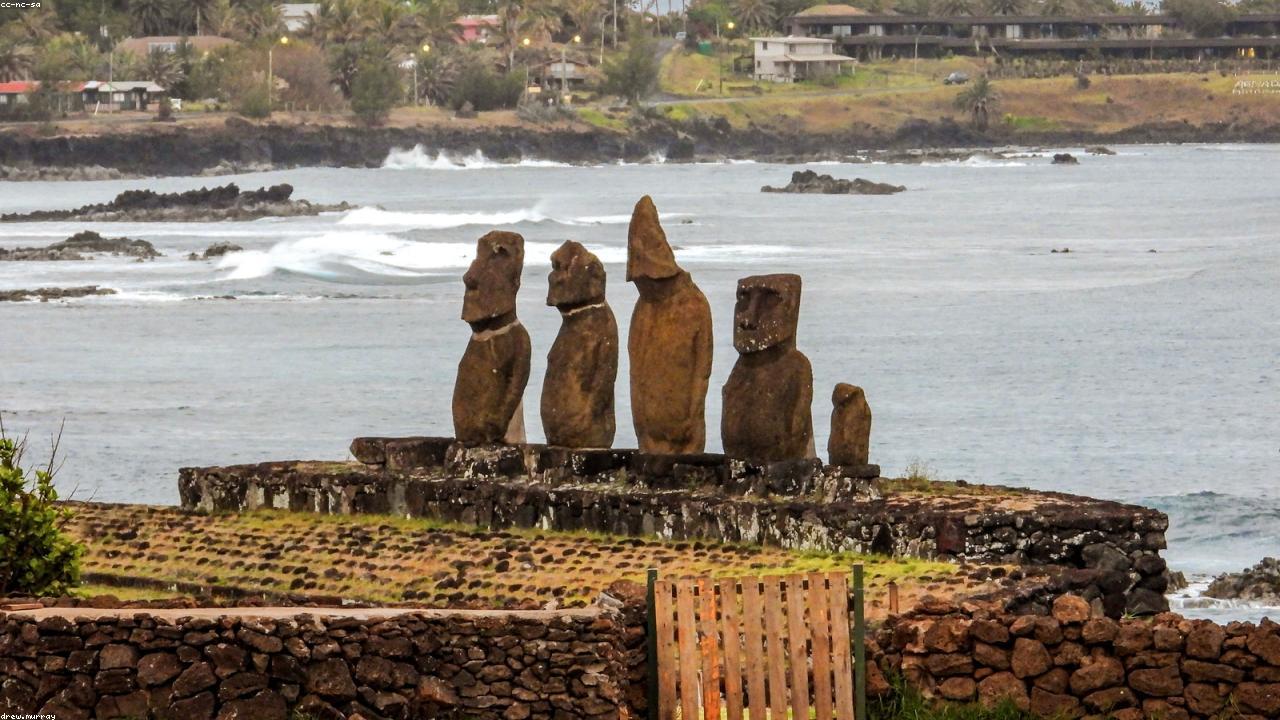
Three platforms, restored in the 1970s by the archaeologist William Mulloy, who is buried beside them — including Ko Te Riku, the one moai on the island wearing both its topknot and its white coral eyes, which turns the face from a monument into somebody looking back at you. It faces the west coast, so the sun goes down into the sea behind it. Half of Hanga Roa turns up, sits on the grass and says very little. Keep it for your last evening.
From a Split boy’s notebook
The Split lens
What reminded me of home
A small remote island with a singular archaeological heritage and a tight indigenous-community management. Easter Island is what Lastovo is, at a vastly more remote location and with a more dramatic ancient legacy. Both small islands punch above their weight in cultural depth.
What Split could borrow
Easter Island has imposed a 30-day maximum visitor stay and a strict daily-arrival cap to protect the island's carrying capacity. Our outer islands have no such caps; in high season Vis and Hvar are at saturation. A daily-arrival cap on the smaller islands (Lastovo, Šolta, the inner Hvar villages) is a tool we should be debating.
Who can take you
Tour operators & guides to try
A short, opinionated starter list — just my humble opinion. Verify before booking.
Adventure Lifesmall groupwww.adventure-life.com →
Adventure Life handles Easter Island as a Chile-extension component within larger Latin America itineraries — typically 3–4 nights on the island, with a Rapanui guide for the archaeological visits and the more obscure sites. Mid-to-upper-tier pricing. Caveat: the Chilean Park permit fee changed recently; verify current rates at booking.
Wild Frontierssmall groupwww.wildfrontierstravel.com →
Wild Frontiers' Easter Island trips are usually within longer Chilean or Polynesian itineraries — 3–4 nights, with the Rapanui guide expectation built in. Group size 8–12. Higher cost than Adventure Life. Caveat: the island's tourism cap (currently a 30-day maximum visitor stay) is strict; any operator must work within it. Verify your booking is within the cap.