Photo: Ščenza
Istanbul, Turkey · Europe
Istanbul: the city of two continents, and the patience it asks of you
Istanbul cannot be done in a long weekend. The city is fifteen million people, two continents, two thousand years of capital-city memory, and a Bosphorus that runs straight through the middle of all of it. Plan for a week. Plan, also, for the ferries.
By Ščenza
· updated · 6 min read
It’s 5:30 a.m. on the Galata Bridge and the fishermen are already in their positions, rods extended over the water, one to a railing-section, like a row of standing reeds. The call to prayer has been moving across the city for several minutes — first from the Sultanahmet side, then echoing back from Beyoğlu, then from Üsküdar across the Bosphorus. The fishermen don’t look up. They’ve heard this sound at this hour for forty years.
Why I keep coming back
Istanbul is the city I have visited most often and understood least. I came first in 2006, on assignment for a magazine that mostly wanted a story about the bazaars; I came back in 2008 to write something about post-secularist Turkey; in 2012 and 2014 for travel essays; in 2019 and 2022 and 2024 just because I missed it. The city resists being known.
It’s too large. It contains too many neighbourhoods that function essentially as their own small cities. It moves between Asian-side calm and European-side intensity. It has been the capital of three different empires and the unwilling capital of none. The historical Byzantine layers are buried under the Ottoman layers, which are buried under the Republican-era layers, which are now layered under a global-city tourism boom that has its own architectural fingerprint.
What I keep coming back for is the ferries. The Bosphorus ferries are, frankly, the most beautiful daily commute in Europe.
Where to base yourself
Karaköy or Galata, on the European side just north of the Golden Horn. Old port neighbourhood, hip cafés, walkable to Beyoğlu and a tram to the historic peninsula.
Cihangir or Cukurcuma, a 15-minute walk up from Karaköy. Cobblestone streets, antiques shops, the writer Orhan Pamuk’s old neighbourhood; quiet for Istanbul, which means it’s still alive.
Kadıköy on the Asian side, across the Bosphorus by ferry. Where Istanbul’s young creative class actually lives now. The Tuesday market is the largest in the city. The seafood at Çiya Sofrası alone is worth a base here.
Avoid Sultanahmet as a base for more than two nights. It’s the tourist epicentre, food is mediocre and overpriced, and the call-to-prayer at 4 a.m. from the Blue Mosque next door is its own form of jet-lag.
What to actually do
Visit Hagia Sophia. It is now a working mosque again (since 2020), and a partial museum during non-prayer hours. The ground floor is free. The dome is the dome. Stand under it. Most of the great Byzantine mosaics are now obscured by Islamic geometric panels but a few remain visible.
Then the Chora Church (Kariye Mosque). Less famous, smaller, but its Byzantine mosaics and frescoes are the most preserved of any pre-Ottoman monument in the city. Also returned to mosque status in 2020. Take the bus or a taxi out — it’s in Edirnekapı, a 25-minute ride from the centre.
Spend an afternoon on a Bosphorus ferry. The cheap commuter ferries — yellow boats from Eminönü, Karaköy, or Üsküdar — cost a euro or two and are far better than the tourist Bosphorus cruise. Take the Eminönü–Anadolu Kavağı boat which goes the entire length of the Bosphorus to a small fishing village at the entrance to the Black Sea, where you can have lunch and walk to a Byzantine fortress on the hill. Six hours round trip, including lunch.
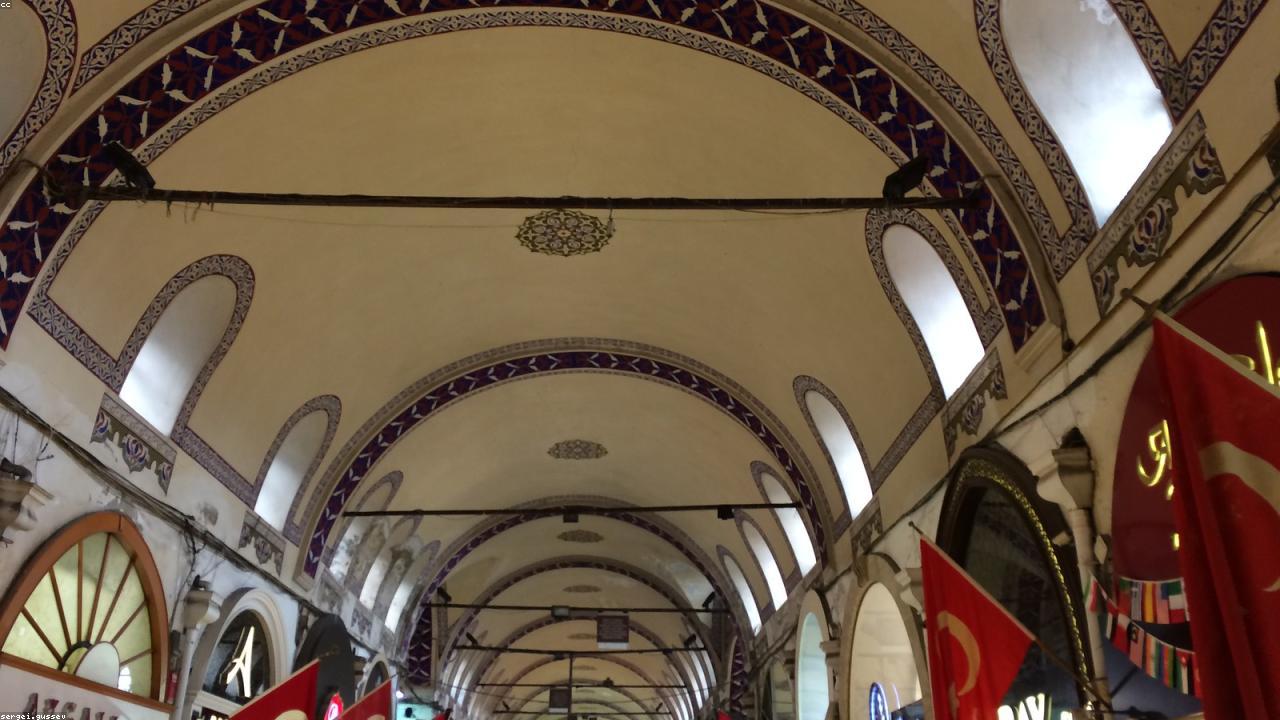
Wander the Grand Bazaar without buying anything. Four thousand shops, sixty-one covered streets, in continuous operation since 1461. The trick is to walk it slowly, learn the layout, ignore the persistent invitations to come look at carpets. The smaller Egyptian Bazaar (Spice Bazaar) at the foot of Galata Bridge is more compact and arguably more rewarding.
Drink a Turkish coffee in a meyhane. The meyhane — Greek-Turkish wine-and-meze tavern — is the great institution of nights out in Istanbul. Lokal Meyhane in Cihangir, Asmalı Cavit in Beyoğlu. The cold meze, the raki, the long evening.
Visit a hammam. Çemberlitaş Hamamı, built in 1584, is the classic. Two hours: heat, scrub, soap, rinse, mint tea. Don’t expect privacy; do expect humility.
Where to eat
Turkish cuisine in Istanbul is a vast, regional thing — kebabs from the southeast, fish and meze from the Aegean and Black Sea, Anatolian peasant food from the inland.
Çiya Sofrası (Kadıköy) — Musa Dağdeviren’s project of recovering near-extinct Anatolian regional dishes. Order whatever the day’s specials are.
Karaköy Lokantası (Karaköy) — Modern Turkish, blue-tiled dining room, the daily lokanta lunch is the simplest and best meal in the city for the price.
Mikla (Beyoğlu) — Mehmet Gürs’s flagship, rooftop, modern Anatolian. The view of the city is the most extraordinary in the city.
Bambi Café — A take-away sandwich place near Taksim. The chicken döner sandwich is two euros. Eat it standing up.
Karaköy Güllüoğlu — The baklava reference standard. Pistachio, cut by weight, eaten over the box, with a Turkish coffee.
When to come
Late April to early June, or mid-September to early November. Pleasant temperatures, the city in its better mood.
July and August are hot, humid, and the historic peninsula is crowded. Winter (December–February) has cold rain and short days but very few crowds and the city’s grey beauty in full.
Avoid Ramadan if you don’t want to plan around fasting hours — restaurants in conservative neighbourhoods will be largely closed during the day.
Practical notes
- Visa: Most Western passports need an e-visa (online, easy, around US$30) before arrival.
- Money: Turkish lira; inflation has been high and prices change quickly. Pay in lira; some places quote in euros which is usually a bad rate. Card is widely accepted but cash is useful in markets and small restaurants.
- Transport: The İstanbulkart is the universal travel card, refillable, used on trams, buses, metro, ferries. Buy one at any station. The ferries are the joy of the city.
- Scams: The shoe-shine boy who drops a brush in front of you and tries to charge you to clean your shoe. The ‘friend’ who invites you to a bar where the bill turns out to be €500. Both real, both predictable.
- Language: Turkish; English is spoken in tourist areas and is patchy elsewhere. A few words go a long way.
- Dress code at mosques: Shoulders and knees covered for everyone; a head scarf for women (often loaned at the door).
A final thought
Istanbul is the city I have most often been wrong about, in print. I’ve called the Bosphorus the city’s soul, which is sort of true and sort of a writer’s reach. I’ve called the call to prayer mournful, which I now think is a Western misreading of an entirely matter-of-fact daily call. I’ve described the Grand Bazaar as a maze, which is true if you’ve never been there twice; if you’ve been there ten times, it has the legibility of any other large building.
What the city actually requires of you is time and attention, in roughly equal measure. A week is the minimum. Two weeks is better. Spend the long mornings at the historical monuments; the afternoons on ferries; the evenings in meyhanes; the late nights, if you’re up for it, on the rooftops of Beyoğlu. Drink raki only when you have nothing the following morning. Walk more than you plan to. Trust the city to be older and stranger than you can fully take in. Come back. The city has been there for two thousand years. It can wait.
If you only have a few days
8 ideal things to do in Istanbul
Basilica Cistern (Yerebatan Sarnıcı)
Sultanahmet, a minute from Hagia SophiaFirst entry of the day, or late, once the queue has gone
Justinian's sixth-century water tank, entered by walking down into a forest of secondhand Roman columns holding up a brick ceiling. It shut for five years and reopened in 2022 with fourteen hundred cubic metres of twentieth-century concrete taken out of it, so you are now standing above the original Byzantine floor. The two Medusa heads in the far corner are reused blocks, one laid on its side, one upside down, and nobody can tell you why. The lighting has gone a little theatrical since the works. The columns are unbothered.
Süleymaniye Mosque and the terrace behind it
Third hill, above the Golden HornBetween prayer times; the terrace is best late in the day
Sinan built the whole complex on a stepped terrace running down the hillside, partly for the engineering and partly, I suspect, because he knew exactly what the view would do to people. Come out of the north door and the Golden Horn is laid out below you with Galata on the far side. Süleyman and Hürrem lie in tombs in the garden. Sinan is in a small one at the corner of the enclosure wall, roughly the size of a bus shelter, which is the most Ottoman piece of self-editing I know of.
Rüstem Pasha Mosque
Hasırcılar Çarşısı, behind the Spice BazaarMid-morning, outside prayer
You get to it up a staircase wedged between market stalls, and that is deliberate: Sinan put the prayer hall on the roof of a row of shops so the rents would pay to run it. Inside is İznik tile from the moment the workshops had cracked the sealing-wax red — walls, piers, mihrab, everything. It was closed for restoration for years and reopened to a standard people still argue about. Two hundred metres away is a bazaar where I have now been sold expensive saffron twice by the same smile.
Fener and Balat on foot, ending at the Iron Church
Golden Horn, west of the Atatürk BridgeA weekday morning; churches keep their own Sunday hours
Steep lanes with Greek, Jewish, Armenian and Bulgarian layers stacked on one hillside, and the red brick bulk of the Phanar Greek Orthodox College of 1881 sitting above the lot like a town hall for a town that has largely left. St Stephen's down on the water was cast in iron in Vienna in 1896 and bolted together here in 1898; it reads as stone until you are close enough to count rivets. The lanes have been photographed into a weekend coffee circuit lately. Go midweek and it is a neighbourhood again.
Topkapı Palace, Harem included
Sultanahmet, on the point above the BosphorusClosed Tuesdays. Harem first, courtyards afterwards
The palace is four courtyards of increasing exclusivity and most people walk them in order and run out of attention somewhere in the third. Do the Harem first, while you still have some: a warren of tiled corridors where the dynasty actually lived and where the politics were actually done. Then come out to the Fourth Court for the Baghdad Kiosk, put up to celebrate Murad IV retaking Baghdad in 1638, whose painted ceiling has defeated every camera I have ever pointed at it.
Büyükada by commuter ferry
Princes' Islands, ferries from Kabataş or BostancıA weekday. On a summer Sunday half the city has your idea
Carriage horses were retired from the islands in 2020 after a glanders outbreak killed eighty-one of them, and the place now runs on bicycles, feet and small electric shuttles, which is an improvement for everyone concerned including the island. Wooden Ottoman summer houses in every state between collapse and restoration, and the hill path up to Aya Yorgi at the top. Take the earliest boat you can face — I once took a late one back and stood the whole ninety minutes, which taught me something durable about planning.
The Museum of Innocence
Çukurcuma, downhill from İstiklalClosed Mondays. Give it two hours, not one
Orhan Pamuk wrote a novel and then built the thing the novel describes: a wooden house holding eighty-three display cases, one for each chapter, filled with the accumulated objects of an obsessive love affair. One case contains four thousand two hundred and thirteen cigarette butts. It won European Museum of the Year in 2014 and, unusually for a museum attached to a book, it is genuinely about looking rather than reading. I went in sceptical and left having bought the novel for a second time.
The Tünel, then walk back down
Karaköy to Beyoğlu, 573 metresAny time. The ride is over in about ninety seconds
Opened in January 1875, the second-oldest underground urban railway anywhere after London's, dug so that European merchants would not have to walk up the hill from the port. Five hundred and seventy-three metres, and the trip ends before you have finished sitting down. Then walk back down through Galata for the version with the staircases and the cats and the instrument shops. In Split we complain about the climb up to Marjan; the Ottomans tunnelled under a slope half as steep.
From a Split boy’s notebook
The Split lens
What reminded me of home
Ferry-based city built around the water rather than on it. The yellow Bosphorus commuter ferries are our Jadrolinija boats with better breakfast. The Kadıköy fish market is a bigger Peškarija. Both cities work because the sea is the spine, not the obstacle.
What Split could borrow
Istanbul has fifteen Bosphorus ferry routes running at near-bus frequency. Split has ferries to Brač, Šolta, Hvar, and Vis — but the schedules are tourist-paced, not commuter-paced. Hourly passenger-only catamarans within the inner Split-Brač-Šolta triangle would change how many of us live and work.
Who can take you
Tour operators & guides to try
A short, opinionated starter list — just my humble opinion. Verify before booking.
Context Travelspecialistwww.contexttravel.com →
Context's Istanbul program is the strongest single offering in their global network in my opinion — Byzantine Constantinople walks with classicists, Ottoman-history walks with social historians, the Bosphorus from a small boat with a city historian. Six-person cap; three to four hours. Worth the price. Caveat: Hagia Sophia and the Topkapı entrance dynamics changed in 2020; check current access rules before booking; some Context routes had to be re-engineered.
Intrepid Travelsmall groupwww.intrepidtravel.com →
Intrepid's Turkey itineraries do Istanbul as one chapter in a longer loop (Cappadocia, Ephesus, the Aegean). The Istanbul portion is competent rather than deep — three nights, the standard sights, a sunset Bosphorus cruise. Group size 12–16. Best for a first-time visitor doing 10–14 days in the country. For Istanbul-only with depth, choose Context. For Cappadocia, Intrepid is the right backbone.