Photo: Ščenza
Rome, Italy · Europe
Rome on the fourth day: when the city finally stops shouting
Rome is a city that asks you to surrender, and the surrender takes about three days. On day one you fight it. On day two you photograph it. On day three you eat too much. On day four, if you're lucky, you simply walk in it. This piece is for day four.
By Ščenza
· updated · 5 min read
The first time I crossed the Tiber on foot at six in the morning, in 2007, I stopped in the middle of the Ponte Sisto because the light coming up the river was the colour of weak tea and I had nowhere I had to be. A Roman in a tailored grey suit walked past me carrying a single rose wrapped in tissue and didn’t look at the river once. He had things to do. I had nothing. This is the correct ratio in Rome.
Why I keep coming back
I’ve been to Rome maybe twenty times. I’ve never managed to leave without something to admit to, a small piece of myself I dropped or revised. The food humiliated me at twenty-two — I ordered cappuccino at dinner like a barbarian — and it humbled me again at thirty-eight when I realised that the gnocchi I’d been eating for years was a Thursday thing and that ordering it on a Saturday marked me as a person who couldn’t read a Roman week.
The city is a living municipal calendar. Giovedì gnocchi, venerdì pesce, sabato trippa — Thursday gnocchi, Friday fish, Saturday tripe — and even in 2026 you can still find this rhythm in the older trattorias, particularly the ones with paper tablecloths and a handwritten daily.
Where to base yourself
Monti if it’s your first time. Steep cobbled streets, a single neighbourhood square that becomes a living room in the evenings, the Colosseum a ten-minute walk south. The rents have risen but the neighbourhood itself hasn’t yet tipped into Disneyfication.
Trastevere for the cliché reasons that are actually all true, with the caveat that the central streets after 9 p.m. are mostly stag parties and pricing has gotten dishonest. Stay on the southern side, behind Piazza San Cosimato.
Testaccio if you’ve been before. Working-class Rome, the best market in the city, the great offal trattorias, and a hill made of broken amphorae that nobody outside the neighbourhood has heard of.
The Aventine if you want to feel slightly removed. Quiet, residential, the Knights of Malta keyhole, the Orange Garden at sunset. You will walk more, but you will walk in trees.
What to actually do
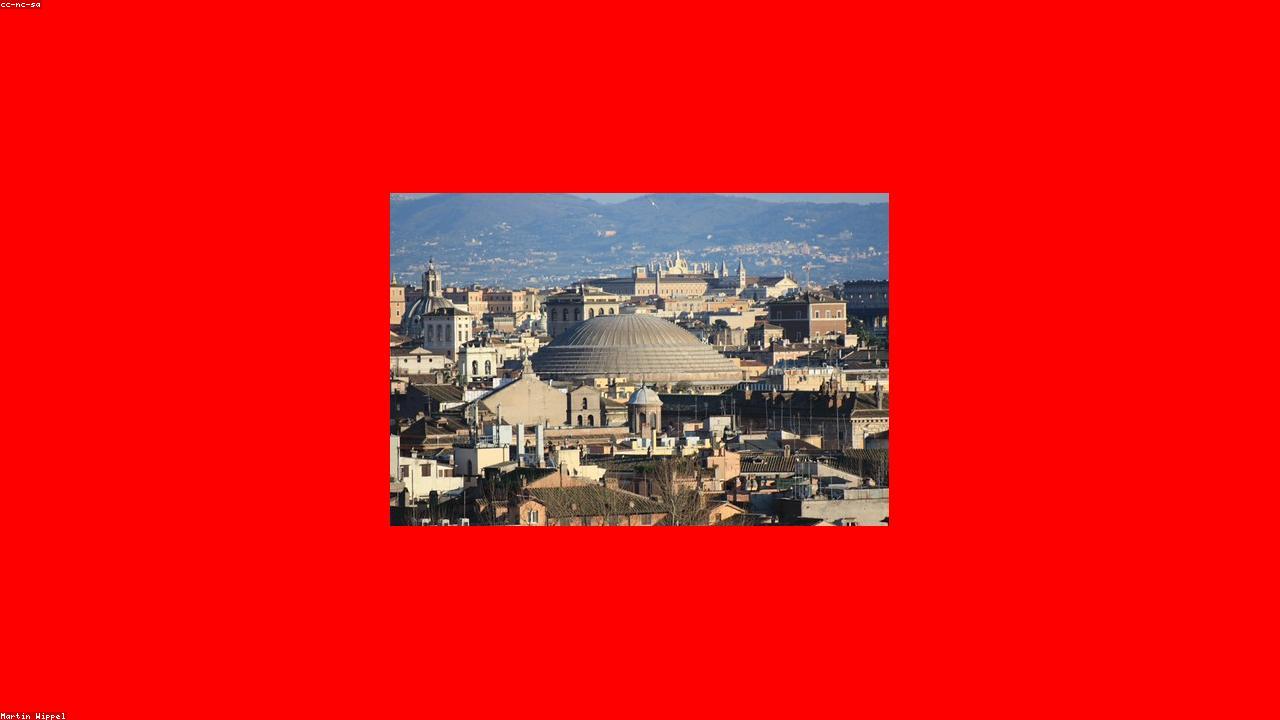
Go to the Pantheon at 8 a.m. It still costs nothing to enter most days when you arrive before the queues, and the morning light is what the building was engineered for. Stand under the oculus. Don’t take a photo for at least two minutes. The room is two thousand years old; you can spare the time.
Walk the Aventine to Testaccio on a Sunday morning. Start at Santa Sabina, drop down past the Pyramid of Cestius (yes, there’s a pyramid in Rome — Augustus-era), and arrive at the Mercato di Testaccio before noon. There’s a stall called Mordi e Vai that makes a beef-and-chicory roll that has, on at least three occasions, made me consider postponing my flight.
See one Caravaggio. Not all of them. One. The three at San Luigi dei Francesi are free and almost always crowded. I prefer the single one at the Galleria Doria Pamphilj — Mary Magdalene, alone in a small room — because you can sit on a bench and look at it for half an hour without anyone asking you to move.
Climb the Janiculum at sunset. Not the Pincian, which is full. The Janiculum, behind Trastevere, has a cannon that fires at noon and a view that catches the dome of St Peter’s exactly when the sun lights it up. Take a bottle of something and a friend, or a book.
Get lost on purpose in the Ghetto. The Jewish quarter is small, kosher, and serves the best fried artichoke (carciofi alla giudia) on earth between roughly November and April. The Portico of Octavia, the ancient porticoed market, is right there. Old Rome and new Rome layered on top of each other, the way the whole city is.
Where to eat
A Roman trattoria is not a destination. It’s a function. The good ones cook five things very well, often the same five things their grandmother cooked, and they will not be impressed by you. Embrace this.
Armando al Pantheon — A landmark, deservedly. Reserve a month out. Cacio e pepe and saltimbocca, both perfect.
Da Cesare al Casaletto (Monteverde) — A schlep out of the centre but worth a tram ride. The tonnarelli with cacio e pepe is the version the others are imitating.
Trattoria Da Enzo al 29 (Trastevere) — Hand-written menu, no reservations after the first sitting; queue at 7 p.m. or eat late.
Pizzarium (near the Vatican) — Gabriele Bonci’s pizza al taglio. Eat standing up. Order the potato-and-mozzarella one and trust me on it.
Roscioli — The deli, the bakery, and the salumeria are three different shops on three different corners and you should go to all of them. The carbonara at the salumeria is the carbonara every other restaurant in Rome is trying to make.
Gelato note: avoid anything with vivid colours piled high. Real pistachio is the colour of olive oil. Otaleg and Fatamorgana are still the standards.
When to come
Late March through May, or late September through early November. The summer is now genuinely punishing — thirty-eight is normal in July — and the historic centre becomes a kind of slow-moving riot of cruise excursions. Christmas week is beautiful but cold and short on daylight.
If you must come in summer: be a Roman about it. Lunch at 2, riposo until 5, dinner at 9, walk at midnight.
Practical notes
- Visa: Schengen, ninety days in one-eighty.
- Money: Card almost everywhere. The smallest trattorias may insist on cash. Carry a few twenties.
- Transport: The Metro is small but useful. Tram 8 is your friend. Walk where you can — the historic centre is barely four kilometres across.
- Pickpockets: Real, but predictable. Buses 64 and 40 to the Vatican are infamous. The Termini station concourse, also. Carry a money belt or front-pocket wallet. Don’t carry the passport.
- Sundays: Some churches are off-limits to tourists during morning Mass. Plan around the noon hour.
A final thought
Rome is a city that refuses to be efficient. It is layered in the way a wedding cake is layered, except instead of frosting between the tiers there are eras: Etruscan, Republican, Imperial, Medieval, Baroque, Fascist, post-war, present. They don’t take turns. They coexist, often within a single block, sometimes within a single wall.
The Romans I know best — Massimo, who runs a wine shop in Monti; Chiara, an architect; old Paolo, who taught me to fold a pizza slice properly — all describe the city the same way when I ask. They use the verb resistere. To resist. Rome resists. It resists improvement. It resists explanation. It resists, especially, the modern desire to optimise. After twenty years of trying to write about it, I think this is right. You don’t visit Rome. You let it survive you.
If you only have a few days
8 ideal things to do in Rome
Basilica di San Clemente, all three floors of it
Via Labicana, between the Colosseum and San GiovanniMid-morning, before the Roman lunch shutter comes down
At street level the church is twelfth-century, which in Rome barely qualifies as old. Underneath it is a fourth-century basilica, and underneath that a first-century house with a Mithraeum in it, altar and all, the god still knifing the bull. You go down two staircases and thirteen hundred years, and at the bottom you can hear water running through a channel nobody has fully traced. I took a friend from Split down there who pours concrete for a living and he spent the entire visit knocking on the walls.
Centrale Montemartini
Ostiense, Metro B to GarbatellaA weekday afternoon
In 1912 this was a thermoelectric power station; it stopped generating in 1963 and since 1997 it has held about four hundred Roman marbles arranged among the turbines and diesel engines. A colossal Fortuna stands in front of a boiler the size of a house. It ought to be a gimmick and it isn't — the black machinery kills the glare that makes museum marble look like soap, and you finally see the carving. I had the second hall to myself on a Tuesday, a luxury the Vatican Museums cannot sell you at any price.
Via Appia Antica and the Catacombs of San Callisto
South from Porta San Sebastiano; bus from Circo MassimoSunday or a public holiday, when the road is shut to cars
Sunday is the day, because private traffic is banned and the road goes back to being basalt paving worn into cart ruts, umbrella pines, and the tombs of people nobody remembers. UNESCO added it to the list in 2024, which changed nothing about the walking. San Callisto runs underneath: four levels, twenty kilometres of tunnel, something like a hundred and seventy thousand graves. I hired a bike at the park gate with the saddle set for a much taller man and pushed it the last kilometre.
The garden room from the Villa of Livia, Palazzo Massimo alle Terme
Beside Termini stationClosed Tuesdays. Go straight up to the second floor
Livia painted the walls of an underground dining room at Prima Porta around 30 BC with a garden running the whole way round — quinces, pomegranates, birds, no horizon and no people in it. The room was lifted out and rebuilt on the second floor here, and standing in the middle of it is as close as anyone gets to a two-thousand-year-old room that is not a ruin. The museum holds roughly a third of Rome's ancient art, four minutes from a station where thousands of people a day are waiting for a train and looking at their phones.
Baths of Caracalla
Via delle Terme di Caracalla, below the AventineLate afternoon. On a few summer nights it opens after dark
Imperial plumbing at a scale that makes the Pantheon look restrained: brick vaults still standing thirty metres up with every scrap of marble stripped off them, so what you walk around inside is the structural honesty of the thing. On a handful of evenings between July and October they open after sunset and take you into the service tunnels and the Mithraeum, the largest in the city. I came three times in daylight and only understood the place underground, which is roughly my record with Rome in general.
Quartiere Coppedè and the Fountain of the Frogs
Piazza Mincio, between Via Salaria and Via NomentanaTwenty minutes, on the way to something else
Twenty-six small palaces and seventeen detached houses put up in the 1920s by Gino Coppedè, who took medieval, baroque and classical motifs and used them the way a child uses a costume box. There is an arch with a chandelier hanging under it. There are twelve frogs on a fountain the Beatles jumped into in 1965 after playing the club up the road. People live here, so keep your voice down. It takes twenty minutes and rearranges what you thought Rome's twentieth century looked like.
Ostia Antica
45 minutes from Piramide on the Lido lineClosed Mondays. Go early; there is no shade in the insulae
Rome's port, abandoned rather than buried, so you get streets, apartment blocks with staircases you can still climb, a theatre, bars with the marble counter in place, and a public latrine with twenty seats and no partitions between them. Pompeii without the coach parks and without the ash. Your ordinary metro ticket covers the whole journey out. I once spent four hours there and counted eleven other people, three of whom were custodians eating lunch under a pine.
The Non-Catholic Cemetery behind the Pyramid of Cestius
Testaccio, at PiramideLate morning, before the Testaccio market winds down
Keats is in the old corner under a stone that does not carry his name, Shelley's ashes are up the slope, and Gramsci is a plain block a short walk from both, which is a strange set of neighbours to have arrived at by accident. Cypresses, cats, the Aurelian wall on two sides, and it runs on donations. Half an hour is enough. I have gone in on every visit for fifteen years and I still cannot find Keats without taking the same wrong turn at the same holly bush.
From a Split boy’s notebook
The Split lens
What reminded me of home
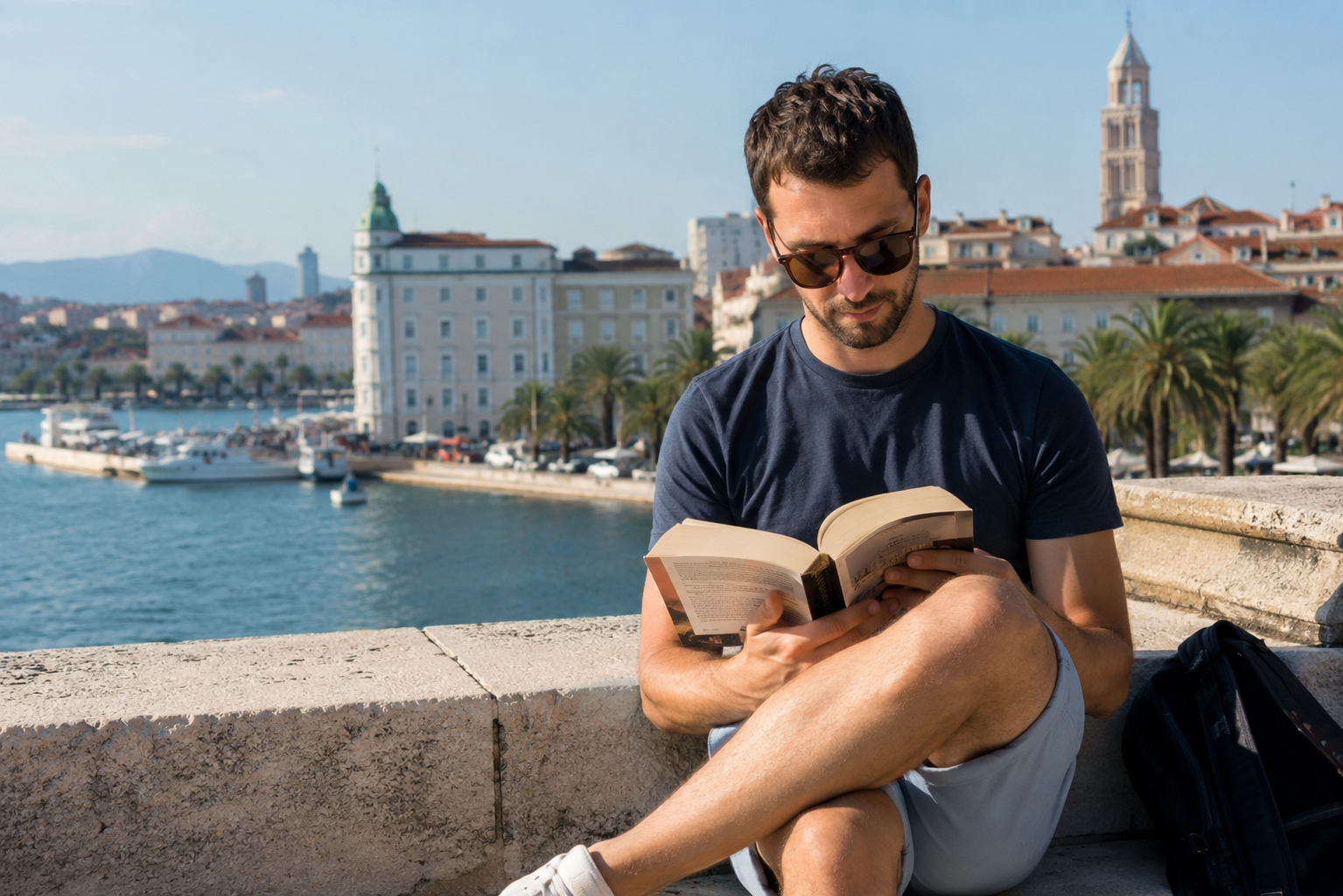
Diocletian built his palace in Split using craftsmen from Rome — we are, architecturally, a small Roman city that never stopped being Roman. Walking Trastevere I kept thinking of Veli Varoš: same lime-stained walls, same laundry on the lines, same grandmother yelling at a cat.
What Split could borrow
Rome's historic centre has, in patches, banned private cars entirely. Our old town inside Diocletian's walls is supposedly pedestrian but delivery vans run through it all morning. A real ZTL-style camera system would protect the limestone from another generation of exhaust soot.
Who can take you
Tour operators & guides to try
A short, opinionated starter list — just my humble opinion. Verify before booking.
Context Travelspecialistwww.contexttravel.com →
Context's Rome catalogue is, in my opinion, the strongest in their network — the Forum and the early-Christian-Rome walks in particular. Their archaeologists know what's been re-excavated since the 2010s and what's still under debate. Six-person cap; long walks (three hours minimum). Pick the dawn Vatican over the standard Vatican; the early entry is worth the early start. Watch for: they're not the operator for a casual half-day. If you want skim-the-highlights, Take Walks is better priced and lighter on context.
Take Walksspecialistwww.takewalks.com →
Take Walks (formerly Walks of Italy) has Rome largely solved at the highlights tier — skip-the-line at the Colosseum, early-morning Vatican, after-hours Sistine. Groups are bigger than Context (typically 12–18) and the guides are professional rather than academic, but they manage flow well and the skip-the-line access is genuine. The Colosseum Arena Floor walk is the one to book if you can. Skip the food tours here; the city has better operators for that.