Photo: Ščenza
New Orleans, United States · North America
New Orleans: the city that runs on jazz, gumbo, and the slow Mississippi
New Orleans is the rare American city that is structurally not American. The Creole, French, Spanish, African, and Caribbean inheritances combine into a culture — and a cuisine, and a music — that exists nowhere else on the continent. Skip the French Quarter early in the day; the city is bigger than its postcard.

By Ščenza
· updated · 5 min read
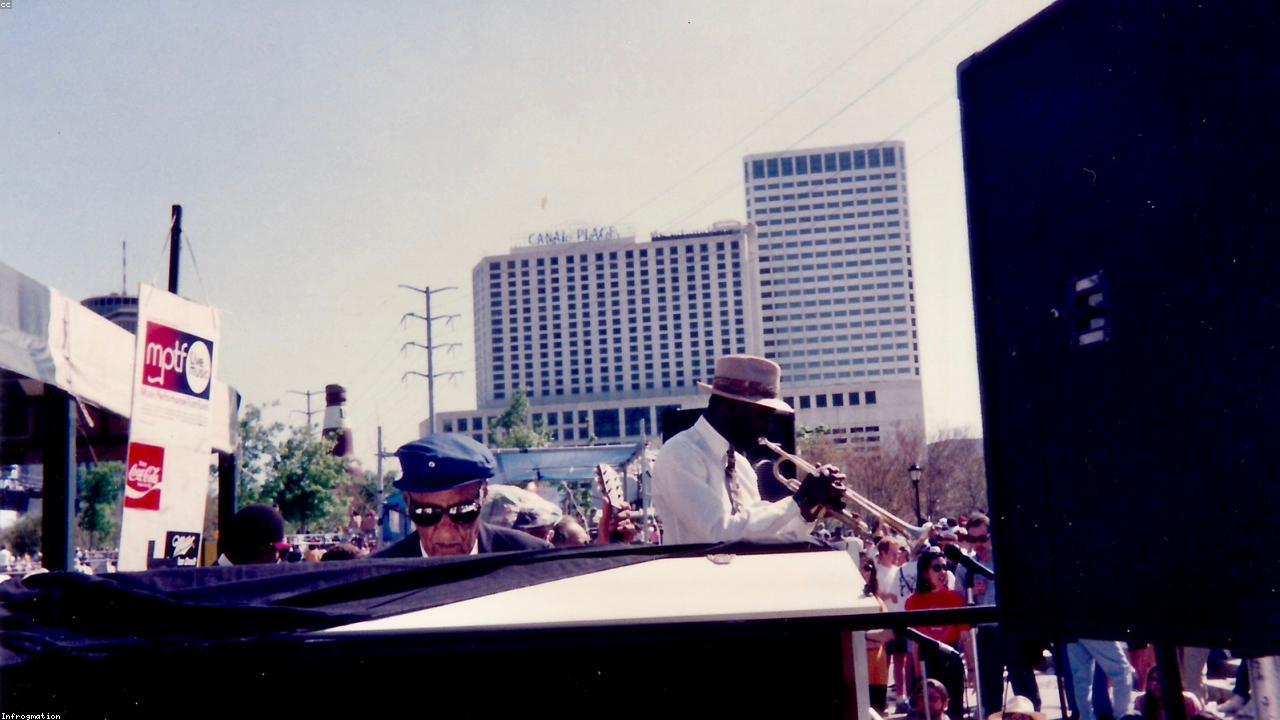
It’s 7:14 p.m. on a Tuesday in the Bywater neighbourhood and a five-piece brass band is playing on the corner of Royal and Piety, in front of a small bar called the Hi-Ho Lounge. The sousaphone player is sweating through his shirt. The bar’s door is propped open. A woman on a bicycle has stopped to listen; the cyclist next to her is dancing with her bicycle. The band’s hat is on the pavement and full of small bills. This is the New Orleans I keep coming back for, and it is not, mostly, in the French Quarter.
Why I keep coming back
New Orleans is one of the most unusual cities in the United States. The French colonial founding (1718), the Spanish administration (1762–1801), the brief return to France, and the 1803 Louisiana Purchase produced a city that has a French Quarter (technically Spanish-built — most of the original French structures burned in the 1788 and 1794 fires), a Creole culture rooted in the African, Caribbean, French, and Spanish mix, and a cuisine that synthesises all of it.
The city is also the birthplace of jazz. Louis Armstrong was born here in 1901. The music is not a heritage museum; it is a living tradition. There is live music at any hour of the day or night in this city.
New Orleans was, in 2005, devastated by Hurricane Katrina. The recovery has been long, uneven, and is still ongoing. The visitor today sees a substantially restored city; many of the social and demographic shifts caused by the storm continue to play out.
Where to base yourself
The Marigny (Faubourg Marigny) — Just east of the French Quarter; Creole cottage architecture, the central live-music corridor (Frenchmen Street), more residential energy.
The Bywater — Further east still; younger, hipster, smaller-scale, very walkable.
The Garden District / Uptown — The grand antebellum mansions, the streetcar line, a residential pace.
The French Quarter — Convenient for first-timers but loud, particularly in the Bourbon Street perimeter. Choose the quieter Royal Street or Esplanade end if you stay here.
What to actually do
Listen to live music every night. This is the city’s reason for being. Frenchmen Street in the Marigny is the central live-music corridor; the Spotted Cat, d.b.a., Snug Harbor (the serious modern-jazz room), the Maison. Preservation Hall in the French Quarter has the traditional New Orleans jazz performances — short, intense, no drinks, multiple shows per evening; queue.
Walk the French Quarter at 7 a.m. Before the Bourbon Street crowds wake up; the wrought-iron balconies, the Creole townhouses, the Café du Monde at the river end, the Saint Louis Cathedral on Jackson Square. Have coffee and beignets.
Take the St. Charles streetcar. The 1923 streetcar that runs the length of St. Charles Avenue through the Garden District; the mansions, the cathedral oaks, the Audubon Park at the end of the line. About $1.25.
Visit the National WWII Museum. Unexpectedly excellent. Allow half a day.
Spend an afternoon in City Park. Larger than Central Park, with the New Orleans Museum of Art, the Besthoff Sculpture Garden (free), and one of the oldest stands of live oak trees in the country.
Take a swamp tour. Honey Island Swamp or the Atchafalaya Basin; small boats with naturalist guides; alligators, herons, cypress trees. Half a day.
Where to eat
Creole and Cajun are different: Creole is city food with French and Spanish influences and dairy; Cajun is country food with French-Acadian origins and no dairy. The city does both.
Commander’s Palace (Garden District) — White-tablecloth Creole; the institutional choice. 25-cent martinis at lunch. Cochon (Warehouse District) — Cajun-Southern from chef Donald Link. Bywater American Bistro — Modern New Orleans cooking; smaller and walk-friendly. Cafe du Monde (French Quarter) — Beignets and chicory coffee; 24-hour service. Mosquito Supper Club — Cajun home-cooking, set menu, family-style. Reserve. Coop’s Place (French Quarter) — Casual; the rabbit and sausage jambalaya. Mother’s (CBD) — Po’boys (the New Orleans sandwich), particularly the debris po’boy. Willie Mae’s Scotch House (Treme) — Fried chicken, no nonsense; the best in the country in many opinions. Anywhere serving a Sazerac (rye whiskey, absinthe rinse, sugar, bitters) — the city’s drink, invented here.
When to come
February to May for the most comfortable temperatures and the festival season (Mardi Gras in February/March, Jazz Fest in late April / early May).
October and November for the second pleasant window.
June through September is brutally hot and humid (35°C+ with high humidity).
December is mild and pleasant.
Practical notes
- Visa: ESTA for most Western passports.
- Money: Card; cash for tips and brass-band tip jars.
- Transport: Walkable in the central neighbourhoods. The streetcar (St. Charles, Canal, Riverfront lines) is excellent for longer hops. Uber and Lyft for late nights.
- Drinking outdoors: Legal in the French Quarter and many central areas in plastic cups; do not carry glass outside. The ‘go-cup’ is part of the city’s culture.
- Safety: New Orleans has higher-than-average crime rates; specific areas to avoid, particularly at night, and the standard precautions apply.
- Mardi Gras: A major event. Book a year ahead; expect significantly elevated prices and dense crowds; participate in or avoid as you prefer.
- Tipping the band: Tip the brass bands on the street. They are working musicians. A few dollars per song you stop to listen to is appropriate.
A final thought
New Orleans is, in my view, the most culturally distinct American city and the one I have most enjoyed returning to over twenty years. The combination of the food, the music, the architecture, the river, and the slightly weathered, post-Katrina, slowly-rebuilding character of the place produces something genuinely irreplicable.
Four or five nights minimum. Listen to music every evening. Eat your way slowly through the Creole canon. Take the streetcar. Walk in the Garden District. Walk in the Bywater. Eat the beignets. Drink a Sazerac. Talk to the bartender. The city earns the affection it earns; respect the post-Katrina realities; spend money locally; tip generously. The brass band on the corner of Royal and Piety, when I last saw them, looked like they would still be there next time. I expect they will be.
If you only have a few days
7 ideal things to do in New Orleans
The French Quarter at dawn, ending at Café du Monde
Vieux Carré — Royal, Chartres, Esplanade endThe first two hours after it gets light
Royal and Chartres before seven belong to delivery vans, street sweepers and a few people finishing a night rather than starting a day. The balconies read differently with nobody underneath them, and you notice that most of the Quarter is Spanish, rebuilt after the fires of 1788 and 1794, which is the fact almost everybody gets wrong. Finish at Café du Monde, going since 1862 and open around the clock, where the beignets arrive under enough icing sugar to end a dark shirt. Wear a light one. I did not.
Ride the St. Charles streetcar end to end
Canal Street to Carrollton, via the Garden DistrictLate afternoon; sit on the left going uptown
Running since 1835, which makes it the oldest street railway still working anywhere, in mahogany-and-brass cars built in the early 1920s. The windows push up. There is no air conditioning, and in July that is a fact you wear rather than observe. Six and a half miles past the Garden District mansions, Tulane and Audubon Park — and the correct way to do it is to ride the whole line, get off, and ride it straight back, same seat, opposite light.
An early set at Preservation Hall
726 St Peter Street, French QuarterTake the first set; the queue forms before the doors
Since 1961 the room has had no bar, no air conditioning worth the name, cushions on the floor and benches for the fortunate. Sets are short and run back to back, so queueing outside is part of the design rather than a failure of it. The band plays traditional New Orleans jazz to about a hundred people with nothing plugged in, and the trombone slide will be roughly a metre from your face. My knees have never forgiven those floor cushions and I would sit on them again tomorrow.
Follow a Sunday second line
Tremé, Central City, the Seventh Ward — the route movesSunday afternoons through the season; not high summer
Social aid and pleasure clubs — mutual-benefit societies going back to the 1880s, when insurers would not cover Black New Orleanians — parade behind a brass band, and everyone walking along behind is the second line. It is not staged and it is not put on for you, which is exactly why it is worth going: buy from the drinks cart, tip the band, dance badly at the back, stay out of the club's way. WWOZ publishes where they are. I once followed one for two hours in entirely the wrong shoes and would do it again this Sunday.
The National WWII Museum
Warehouse District, on Andrew Higgins DriveHalf a day at the absolute minimum
It sits in New Orleans because Andrew Higgins built the landing craft here, and it has grown into several pavilions and one of the better history museums in the country. The Liberation Pavilion, which deals with what the war cost and what came afterwards, is the part that quietly takes people apart. Allow far longer than you have planned. I went in for two hours before dinner, missed dinner, and sat in the lobby afterwards not saying anything.
The Besthoff Sculpture Garden in City Park
City Park, beside the New Orleans Museum of ArtFirst hour after it opens, or the last of the day
Ninety-odd sculptures set under live oaks around two lagoons, free to walk into, and hardly ever crowded. City Park holds some of the oldest live oaks in the country and they behave the way old oaks do — whole limbs lying along the ground because the tree could not be bothered to keep holding them up. Come here after the WWII Museum. The city offers nowhere better for saying nothing for an hour.
Whitney Plantation, up River Road
Wallace, Louisiana — about an hour west of the cityWeekday morning; check the day before you drive out
Most of the great houses along River Road tell you about the family who owned the place. Whitney tells you about the people they owned — by name, by age, through the Federal Writers' Project interviews, and through the sugar kettles standing in the yard. Sugar was the worst work in the American South and the memorials here say so without softening it. You will not enjoy the visit; that is not what it is for. It is the most necessary thing to do near this city. Go in the morning and leave the rest of the day empty.
From a Split boy’s notebook
The Split lens
What reminded me of home
Port city with a strong music identity threaded through daily public life. The corner brass-band tradition in NOLA, where the music finds you on the pavement rather than the other way around, is what our klapa singers used to do on the Riva on summer evenings without an organised performance — just a few singers, a few listeners, the harmony rising at dusk.
What Split could borrow
NOLA's brass-band buskers are tip-supported but the city formally protects the right to busk in specified zones. Our Riva and Peristyle are excellent acoustic spaces and informal klapa or chamber-music busking is currently discouraged. A licensed busking framework in the old town would bring music back to the public space without the heavy-handed concert-stage format.
Who can take you
Tour operators & guides to try
A short, opinionated starter list — just my humble opinion. Verify before booking.
Context Travelspecialistwww.contexttravel.com →
Context Travel's New Orleans program is well-grounded in the city's distinct cultural history — the Creole and free-people-of-colour history walk, the music-history walk through Tremé, the Voodoo and Afro-Caribbean religious traditions walk. Specialist-led; six-person cap. Caveat: not the right operator for the standard French Quarter ghost-tour or pub-crawl experience; choose locally-owned operators for those.
French Quarter Phantomsspecialistfrenchquarterphantoms.com →
French Quarter Phantoms is the long-running NOLA walking-tour outfit — ghost tours, the licensed-access cemetery tours at St. Louis No. 1, Voodoo history walks, the Garden District. Groups can run 25, which is large, but the guides are theatrical-but-substantive rather than pure novelty. Pick the cemetery tour over the ghost tour if you have to choose. Caveat: not the right operator for the city's music or food scenes; pair with Devour or a music-specific outfit.
If you liked this, try these
New York, United States
New York City, slowly: the case for staying put in one neighbourhood
May 23, 2024
Mexico City, Mexico
Mexico City: the high-altitude metropolis that took a decade to be discovered
November 30, 2023
Havana, Cuba
Havana: the most photographed city in the Caribbean, and the hardest to know
October 19, 2021