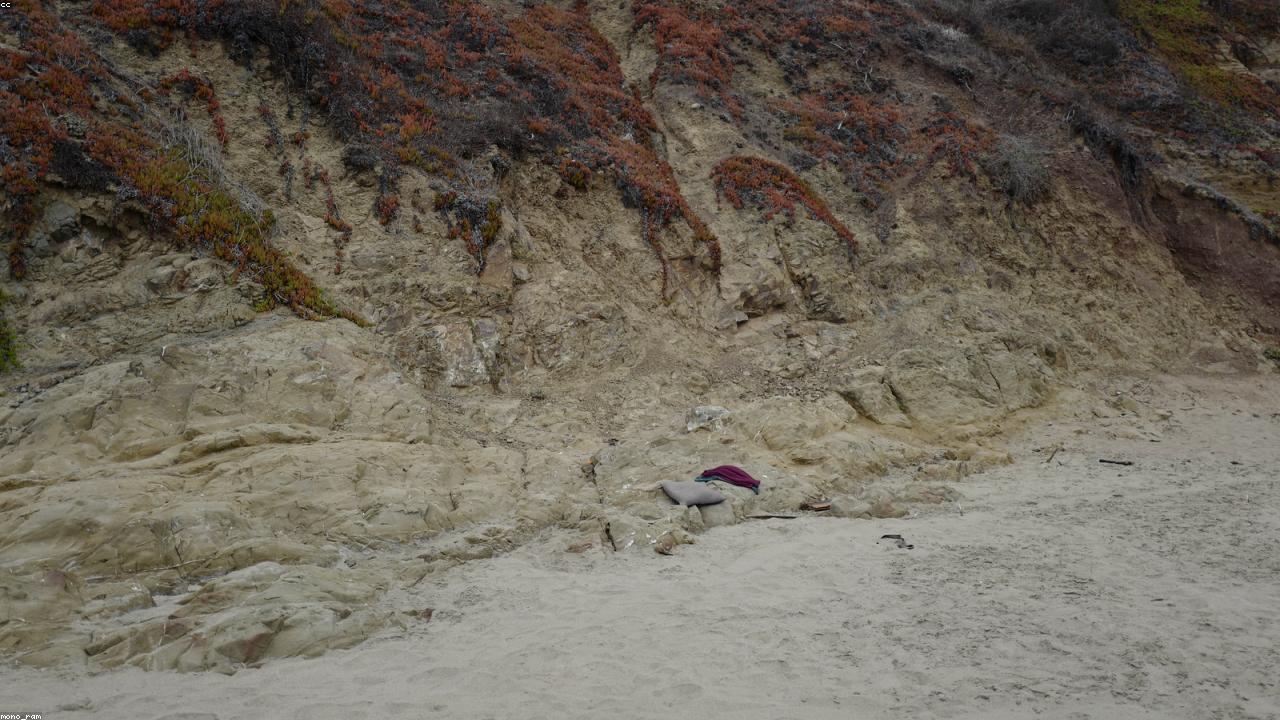
Photo: Ščenza
San Francisco, United States · North America
San Francisco at the fog line: the small American city on the hills
San Francisco is geographically tiny — 7 miles by 7 miles — and topographically intense. The city's gift is that almost every walk involves climbing a hill, and almost every hill ends at a view.
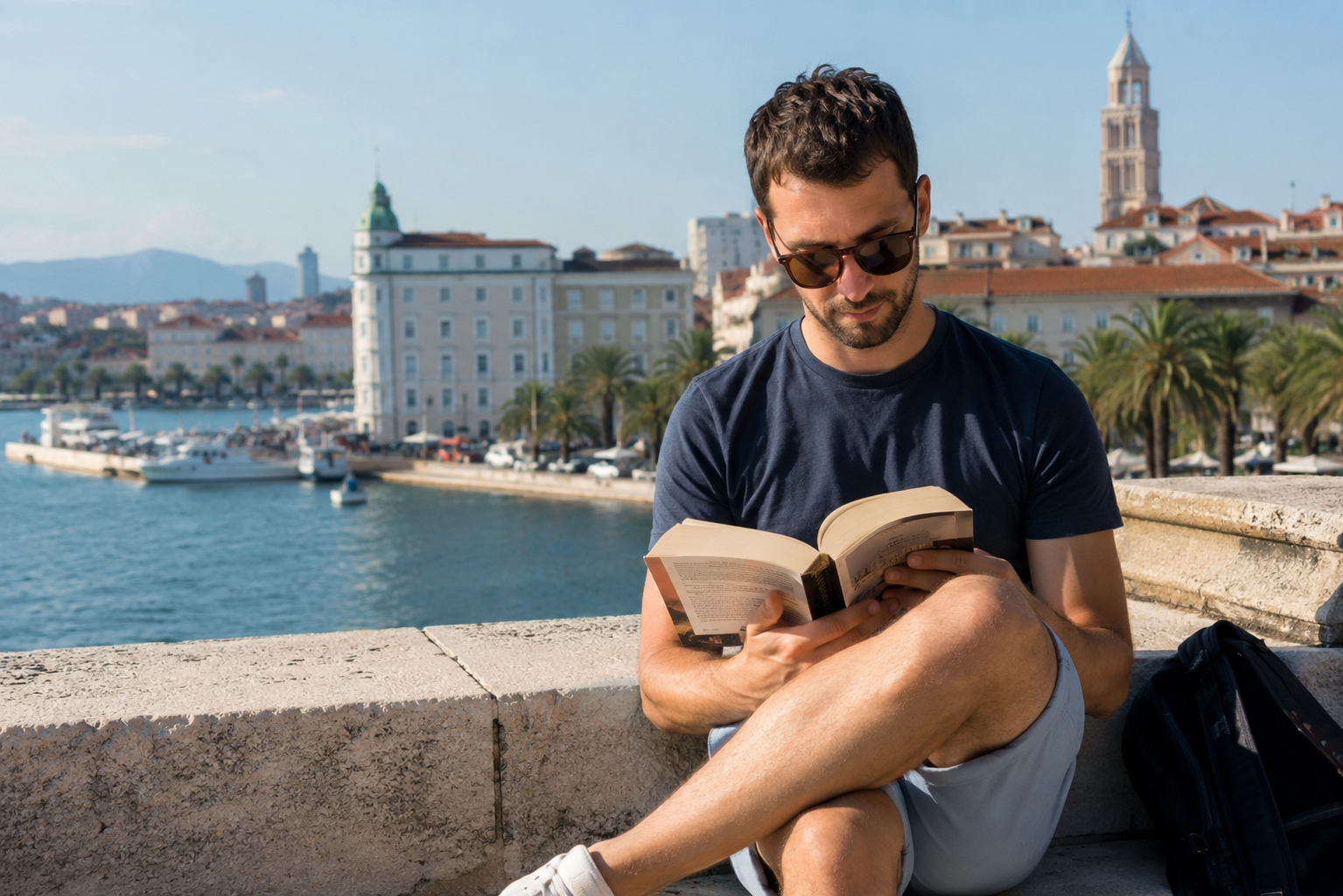
By Ščenza
· updated · 4 min read
It’s 6:52 a.m. on the Land’s End trail at the northwest tip of San Francisco, and the fog is doing what San Francisco fog does in June — sitting in the bay, completely covering the Golden Gate Bridge except for the top of one tower poking through, like a small red lighthouse in a sea of grey. Two seals are barking somewhere offshore. The Pacific is grey-green and cold. A jogger overtakes me; she has been running this trail every morning for fifteen years, she will tell me when we end up at the same coffee place at the bottom.
Why I keep coming back
San Francisco is the small, hilly, fog-bound, food-rich, architecturally weird city at the tip of the peninsula that has, over twenty years, been simultaneously the centre of the global technology industry and the centre of various American urban crises. The visible city — the cable cars, the Victorian houses, the Golden Gate, the rolling fog — has been more or less stable. The political and economic conversations around it have changed considerably.
I keep coming back for the geography. Few cities concentrate so much terrain into so small a space. The walk from the top of Nob Hill down to the Embarcadero is a 180-metre vertical drop. The view from Twin Peaks, on a clear evening, is one of the great urban panoramas.
Where to base yourself
The Mission for the central food-and-coffee neighbourhood energy.
Hayes Valley or Lower Pacific Heights for the calmer central residential walking.
The Marina for the bay-side, slightly preppy waterfront.
The Sunset for the cool, foggy, beach-adjacent residential, classic city version.
Avoid Tenderloin and adjacent areas for accommodation; well-known and ongoing urban issues.
What to actually do
Walk the Land’s End trail. Free, on the western edge, with the bridge views and the wave-cut cliffs.
Walk across the Golden Gate Bridge. 2.7 km each way; the pedestrian sidewalks are on the east (city) side. Best in the morning before the wind comes up.
Visit SFMOMA. The expanded contemporary collection is one of the great Western American museums; allow half a day.
Spend an afternoon in Golden Gate Park. The 4-km park west of the city; the Japanese Tea Garden, the de Young museum, the Conservatory of Flowers, the buffalo paddock (yes, there are bison).
Take the cable car once. The Powell-Hyde line ends at Ghirardelli Square; the route up Hyde Street is the famously steep section. US$8 single, cash-tolerant.
Eat dim sum in Chinatown. Yank Sing is the upscale option; Good Mong Kok Bakery the cash-only walk-up.
Visit the Ferry Building Market. The renovated 1898 ferry terminal at the Embarcadero; Saturday morning farmers’ market is the largest in the city.
Walk Telegraph Hill and climb Coit Tower. The 1933 tower at the top of Telegraph Hill, with murals inside and the view of the bay; the climb up the Filbert Street steps is a city signature.
Where to eat
San Francisco’s food culture is in many ways the most influential in the US over the past 30 years.
State Bird Provisions — Dim-sum-cart-style serving of Californian small plates; reservation required. Tartine Bakery — Bread and pastries; the institution. Mister Jiu’s — Modern Cantonese in a heritage Chinatown building. The Slanted Door — Modern Vietnamese, the original of an East-Asian-California genre. Zuni Café — The roast chicken with bread salad; old-school SF. Foreign Cinema — Reliable Mediterranean-California; movie screens in the courtyard. Burma Superstar — Burmese, the tea-leaf salad; cash and queue. Coffee at Sightglass, Saint Frank, or Ritual.
When to come
September and October are the warmest, clearest months — the famous late-summer Indian summer in the Bay Area.
April–June is the green spring, occasionally foggy.
July–August is the foggiest summer — the famous Mark Twain (apocryphal) line about San Francisco summer being colder than its winter is essentially correct.
Practical notes
- Visa: ESTA.
- Money: Card universally.
- Transport: Walkable in the central city. The Muni system (cable cars, streetcars, buses) plus BART for longer hops. Uber and Lyft were both founded here and are dominant.
- The hills: A San Francisco walking day involves significant climbing. Wear shoes.
- The weather: Layers. The fog comes in fast and the temperature can drop 5°C in 15 minutes when it does. A windproof shell is non-negotiable.
- Public safety: The city has had visible challenges around homelessness, drug crisis, and property crime in recent years. The standard urban precautions apply, particularly around the Tenderloin, parts of SoMa, and the Mission’s outer edges at night.
A final thought
San Francisco is the small American city that has, in this decade, become a recurring case study in the American urban-policy conversation. The technology wealth, the housing crisis, the post-pandemic downtown emptying — all are visible to a thoughtful visitor and all are ongoing.
What I have continued to find rewarding is the city’s particular combination of small-scale geography, large-scale Pacific views, weird-and-specific food culture, and the residential fabric of Victorian-painted houses on impossible hills. The cliché image of the city is mostly correct. The harder realities of contemporary urban life sit alongside it.
Four nights minimum. Pick neighbourhoods to walk. Eat at the small places. Take the cable car once. Walk the bridge. Watch the fog come in over the bay at 6 p.m. Stand on Twin Peaks at dusk. The city is small enough to know after a week, large enough to keep returning.
If you only have a few days
7 ideal things to do in San Francisco
The Lands End Trail and the Sutro Baths ruins
The northwest corner, above the Golden Gate straitEarly morning in June, when the fog is in and doing its work
Sutro's enormous glass swimming palace burned down in the 1960s, and what remains is a set of concrete tanks slowly filling with seawater at the foot of the cliff — a better ruin, probably, than the building ever was. The trail runs east from there along the wave-cut coast through cypress, with the bridge appearing and vanishing in the fog on a schedule of its own. Free, and the best three kilometres in the city. Our Marjan path does the same job with worse signage and considerably better light.
Walk across the Golden Gate Bridge
East sidewalk, city sideMorning, before the afternoon wind gets organised
Walk it on the east sidewalk — the west side belongs to cyclists during the day — and commit to the full 1,280-metre main span instead of turning back at the first tower like everyone who came only for the photograph. It is loud. Traffic passes a metre away and the deck moves under you. The suicide-deterrent nets, finished in early 2024, are visible below the railing and they change the character of the crossing in a way I did not anticipate and would not want undone.
Alcatraz
Ferry from Pier 33 on the EmbarcaderoBook far ahead; summer sailings go weeks in advance
Book it before you book the flight, which sounds like an exaggeration until you try to get a July sailing. The cellhouse audio tour is the best I have used anywhere, and it declines to oversell the material, which on this subject is a decision worth noticing. What stays with me is not the cells but the distance: the city sits a mile and a half off, lit, audible across the water on a still night, and completely out of reach.
Coit Tower's 1934 murals and the Filbert Steps
Telegraph HillWalk up. Driving to the top is how you lose an afternoon
In 1934 a group of twenty-five painters on a federal relief programme covered the base of this tower in Social Realist fresco — dockworkers, farmhands, a newsstand carrying radical headlines — and the politics in them delayed the opening. They are free to look at. Then take the Filbert Steps down the east slope: some four hundred wooden stairs through private gardens, with the feral parrots of Telegraph Hill overhead making a noise like a car alarm holding a grudge.
The Cable Car Museum on Mason Street
Nob Hill, at Washington and MasonTwenty minutes, on the way to something else
Free, and not really a museum at all but the working powerhouse: four enormous winding wheels hauling the cables that drag every cable car in San Francisco, running while you stand over them, at a volume that makes conversation a waste of effort. A lower gallery lets you watch the cables routed out under the street junction on sheaves the size of a dining table. It is the only place in the city where the transport system stops and explains itself to you.
The Hamon Observation Tower at the de Young
Golden Gate ParkA clear afternoon. In thick fog it is a glass box in a cloud
Ninth floor, no museum ticket required — take the lift beside the admissions desk and step out into a glass room with 360 degrees of Golden Gate Park, the Pacific, the Marin Headlands and the bridge. Herzog & de Meuron wrapped the building in perforated copper that has weathered green and streaky exactly as intended, to a decade of local complaint. Go down and pay for the museum, or don't, and walk to the Japanese Tea Garden instead. Nobody at the desk will judge you either way.
Balmy Alley and Clarion Alley murals
Inner Mission, Balmy between 24th and 25thDaylight. It is a working alley with people living along it
One block of garage doors and back fences, painted continuously since the early seventies and repainted many times since. The 1985 PLACA project alone put twenty-seven murals in here at once, most of them about United States policy in Central America, and the walls have gone on arguing ever since. Clarion Alley, a mile and a half north, is the younger and angrier descendant of the idea. Walk both. People live behind those fences, so keep the camera aimed at the paint and not through anyone's kitchen window.
From a Split boy’s notebook
The Split lens
What reminded me of home
Small city on hills meeting the sea, with a strong neighbourhood-by-neighbourhood character. SF's Mission, North Beach, and the Marina are roughly equivalent in distinctness to our Lučac, Veli Varoš, and Bačvice. Both cities feel like a collection of villages glued together by topography.
What Split could borrow
SF's Land's End coastal trail — and the broader effort to keep coastline publicly walkable — is exactly the discipline our coast needs. Our shoreline from Stobreč to Marjan is broken by private hotels, sealed-off marinas, and private beaches. Reclaiming continuous public-coastline access via a formal coastal-access law would be a generational improvement.
Who can take you
Tour operators & guides to try
A short, opinionated starter list — just my humble opinion. Verify before booking.
Context Travelspecialistwww.contexttravel.com →
Context Travel's San Francisco walks lean cultural-history — the Chinatown walk with a Chinese-American historian, the Mission walk on the city's Latino and Mission District activist history, the architectural-history walk through Pacific Heights. Six-person cap. Caveat: San Francisco's natural starting point is genuinely walking-self-guided; reserve Context for the depth days rather than as a general first-day orientation.
Wild SF Walking Toursspecialistwildsftours.com →
Wild SF leans into the counter-cultural and labour-history narratives the standard tours skip — the Castro queer-history walk, the Mission mural walk, the Beat-Generation North Beach walk, the Chinatown labour-history walk. Tip-based format with groups sometimes running to 25. The guides are serious. Caveat: the tip model means the guides depend on cash at the end; budget USD 15–25 per person and tip well, particularly in the rain.
If you liked this, try these
New York, United States
New York City, slowly: the case for staying put in one neighbourhood
May 23, 2024
Mexico City, Mexico
Mexico City: the high-altitude metropolis that took a decade to be discovered
November 30, 2023
Vancouver, Canada
Vancouver: the rainforest city between the sea and the mountains
August 8, 2023