Photo: Ščenza
Vancouver, Canada · North America
Vancouver: the rainforest city between the sea and the mountains
Vancouver is a small, wet, west-coast Canadian city with a serious mountain range starting two kilometres north of downtown. The city's gift is the immediate access — you can be in old-growth rainforest within twenty minutes of a downtown apartment.
By Ščenza
· updated · 4 min read
It’s 6:42 a.m. on the Stanley Park seawall and the harbour seals are visible in the water off the rocks below me. The North Shore mountains opposite — Grouse, Seymour, Cypress — have the morning cloud caught half-way up; the snow is still on the upper slopes. A great blue heron is fishing in the kelp. A man on a bicycle passes me in the dedicated bike lane. The 9.5-km Stanley Park seawall is the most generous urban walking infrastructure I’ve used in North America, and at this hour, it is mostly the city’s commuters, joggers, and herons.
Why I keep coming back
Vancouver is, geographically, one of the most fortunately sited major cities on earth. The city sits on a peninsula between the Pacific Ocean and a coastal mountain range; the mountains rise sharply 1500 m within sight of the downtown. Twenty minutes by car from the city centre brings you to old-growth coastal rainforest at sea level or to ski runs at 1200 m elevation. The seawall around Stanley Park gives the downtown a ring of urban park 4 km wide.
The city is also one of the most culturally Pacific Rim of any in North America — significant Cantonese, Hong Kong, Mandarin, Filipino, Japanese, and Korean communities give the food culture an east-Asian density unusual outside of the West Coast.
Where to base yourself
Downtown / Coal Harbour — convenient for the seawall and the central walking.
Yaletown — converted warehouse-loft neighbourhood on False Creek; restaurant-dense, walkable.
Mount Pleasant / Main Street — the hipster-and-coffee neighbourhood; further from the seawall.
Kitsilano — beach-side residential; further from downtown.
What to actually do
Walk the Stanley Park seawall. The 9.5-km perimeter of the downtown peninsula’s huge urban park. Bicycle or walking; do the full loop in 2.5 hours walking. Allow longer for stops.
Ride the Grouse Mountain Gondola. From the base of the North Shore mountains, the gondola takes you to 1100 m. Excellent for the city view on a clear day; in winter, this is the closest urban skiing in the world.
Walk Lynn Canyon or Capilano Suspension Bridge. Lynn Canyon is the free, less touristed option; both have suspension bridges over rainforest gorges. Lynn Canyon is in the North Shore mountains, 25 minutes from downtown.
Cycle the seawall to False Creek. A 30-km circuit from Stanley Park, around False Creek, and back. Easy.
Visit the Museum of Anthropology at UBC. The Pacific Northwest indigenous art collection — totem poles, masks, the Bill Reid sculptures — is the most important in Canada.
Take a day trip to Tofino or Whistler. Tofino is a 5-hour drive plus ferry — a Pacific surf town on Vancouver Island, with old-growth forest and wild Pacific beaches. Whistler is 2 hours north — the famous ski resort, also excellent in summer for hiking and mountain biking.
Eat dim sum. Sun Sui Wah and Kirin are the long-running upper-tier; the smaller places in Richmond (a Vancouver suburb that is around 50% ethnic Chinese) are where to find the deepest Cantonese food in North America.
Where to eat
Vancouver’s food scene is east-Asian-influenced and seafood-rich.
Vij’s — Modern Indian; James Beard-recognised; no reservations, but the bar approach is the trick. Ask for Luigi — Italian pasta; reservations. Phnom Penh — Cambodian; the butter beef and the chicken wings. Anh and Chi — Modern Vietnamese in Mount Pleasant; reliable. Hawksworth (downtown) — The fine-dining option, in the Rosewood Hotel. Sushi at Tojo’s or Miku — The Pacific salmon at a serious sushi restaurant is the local highlight. Burdock & Co — Modern West Coast tasting menu. Coffee at Revolver, 49th Parallel, or Prado.
When to come
Late June to early September for the dry, mild, sunny summer. Daytime highs around 22–26°C.
May and October are the shoulder seasons.
November through March is the famous rainy season — 160+ days of rain per year, mostly concentrated in the winter. The city is genuinely grey and wet; the skiing is the consolation.
Practical notes
- Visa: eTA for most Western passports.
- Money: Canadian dollar. Card universally.
- Transport: The SkyTrain (light rail / metro) is excellent and runs to the airport. Buses are reliable. The city is walking-and-cycling friendly.
- The rain: Real, daily, autumn through spring. A waterproof shell is non-negotiable.
- Outdoor gear: Vancouver has more outdoor-gear shops per capita than most cities. MEC (Mountain Equipment Co-op) is the Canadian REI; the flagship store is on Broadway.
- Wildlife in the city: Coyotes, raccoons, and (occasionally) bears are visible in the urban parks. Don’t approach, don’t feed.
A final thought
Vancouver is the rare major city where you can be in a serious wilderness within 25 minutes of an espresso. The juxtaposition is the experience. The Stanley Park seawall, walked at dawn in the summer, is one of the most consistently pleasant urban experiences in North America. The mountains across the harbour are the city’s permanent backdrop. The food is among the most interesting on the continent.
Stay at least four nights. Walk the seawall. Take the gondola up at sunset. Eat dim sum. Drive to Squamish or Whistler for a day. The city is small enough to know quickly and to keep returning to.
If you only have a few days
6 ideal things to do in Vancouver
Museum of Anthropology at UBC
Point Grey, at the western end of the cityAllow a half day; the bus out takes longer than the map suggests
Arthur Erickson put the Great Hall behind a wall of glass facing the water, so the house posts and canoes stand in daylight against sea and mountains rather than under gallery spots, and it is the best single decision made by any museum I have walked into. Bill Reid's Raven and the First Men, carved out of laminated yellow cedar in 1980, has its own rotunda. The collection is Northwest Coast first and global second. Go on a grey day — the light through that wall is better in rain, which in this city is not a demanding condition to satisfy.
Granville Island Public Market, arriving by mini-ferry
Under the Granville Street Bridge, on False CreekMorning; it is a working market before it is a lunch destination
Industrial land dredged out of False Creek in 1915, which kept its sheds and became a public market in 1979 — the rare regeneration scheme that did not end up as a shopping centre with exposed brickwork. Come across on one of the tubby little False Creek ferries instead of walking in past the car park; the approach is half of it. Salmon, absurd loaves, produce, and a seagull population with a professional grasp of misdirection. I lost a pastry to one and was told by a vendor, very kindly, that everybody loses one.
The Grouse Grind
North Shore, at the base of Grouse MountainSummer and early autumn; the trail closes over winter
Eight hundred and fifty metres of gain over two point nine kilometres, 2,830 steps, and a nickname — Mother Nature's Stairmaster — doing no exaggerating whatsoever. It runs one way, uphill only, so at least nobody can come down past you while you are quietly dying in the ferns. Ninety minutes is a normal time. Local twenty-somethings do it in half that and are insufferable. You take the gondola back down. My own time was not good and I have never disclosed it to anyone, including here.
Dr. Sun Yat-Sen Classical Chinese Garden
Carrall Street, ChinatownA quiet weekday hour; the courtyards get loud the moment a group arrives
Fifty-odd artisans came over from Suzhou for Expo 86 and built this with Ming methods and no power tools — the first full-scale classical Chinese garden made outside China. It is small on purpose, since the entire discipline is about making a walled quarter-acre feel unbounded, and it works by never letting you see the whole of itself at once. Vancouver's winters are close enough to Suzhou's that most of the planting is authentic. Sit by the pond and let a leaking window frame do its work on you.
The SeaBus to Lonsdale Quay
Waterfront Station across Burrard Inlet to North VancouverA clear evening — out at dusk, back after dark
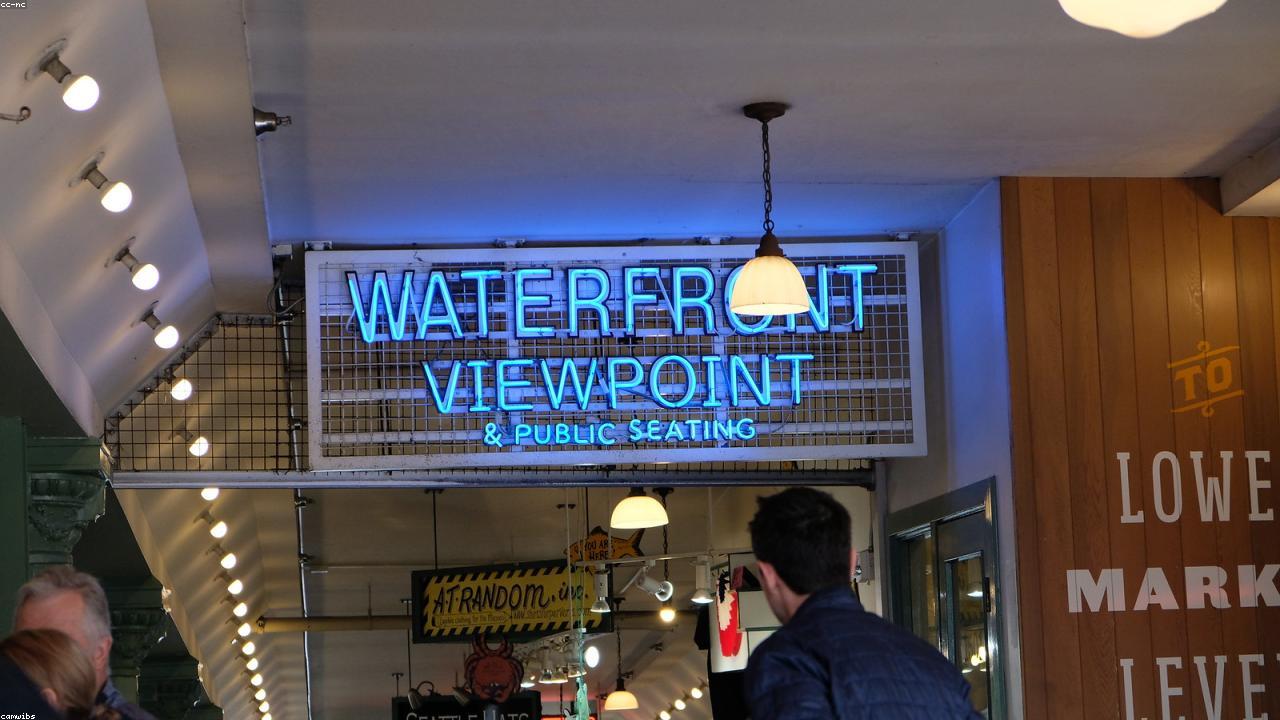
Twelve minutes across the inlet on an ordinary commuter ferry, on an ordinary transit fare, past container cranes and grain terminals with the North Shore mountains going pink behind them. It is the best cheap view in the city and it is not sold as a view at all; everyone aboard is looking at their phone. Split runs ferries too, but ours take four hours, go to islands, and somebody is always eating a burek. Get off at Lonsdale Quay, walk the pier, ride back.
Emily Carr at the Vancouver Art Gallery
750 Hornby Street, downtownLate afternoon on a wet day, which narrows it down very little
Housed in the old provincial courthouse, so you look at paintings in rooms built for sentencing people, and the Emily Carr holdings are the reason to make the trip. Her forests are painted as weather rather than as scenery — green in motion, trunks leaning, the whole canvas mid-verb. Walking straight out of that into an actual Vancouver drizzle is the closest thing to a controlled experiment this city offers, and the drizzle comes off worse.
From a Split boy’s notebook
The Split lens
What reminded me of home
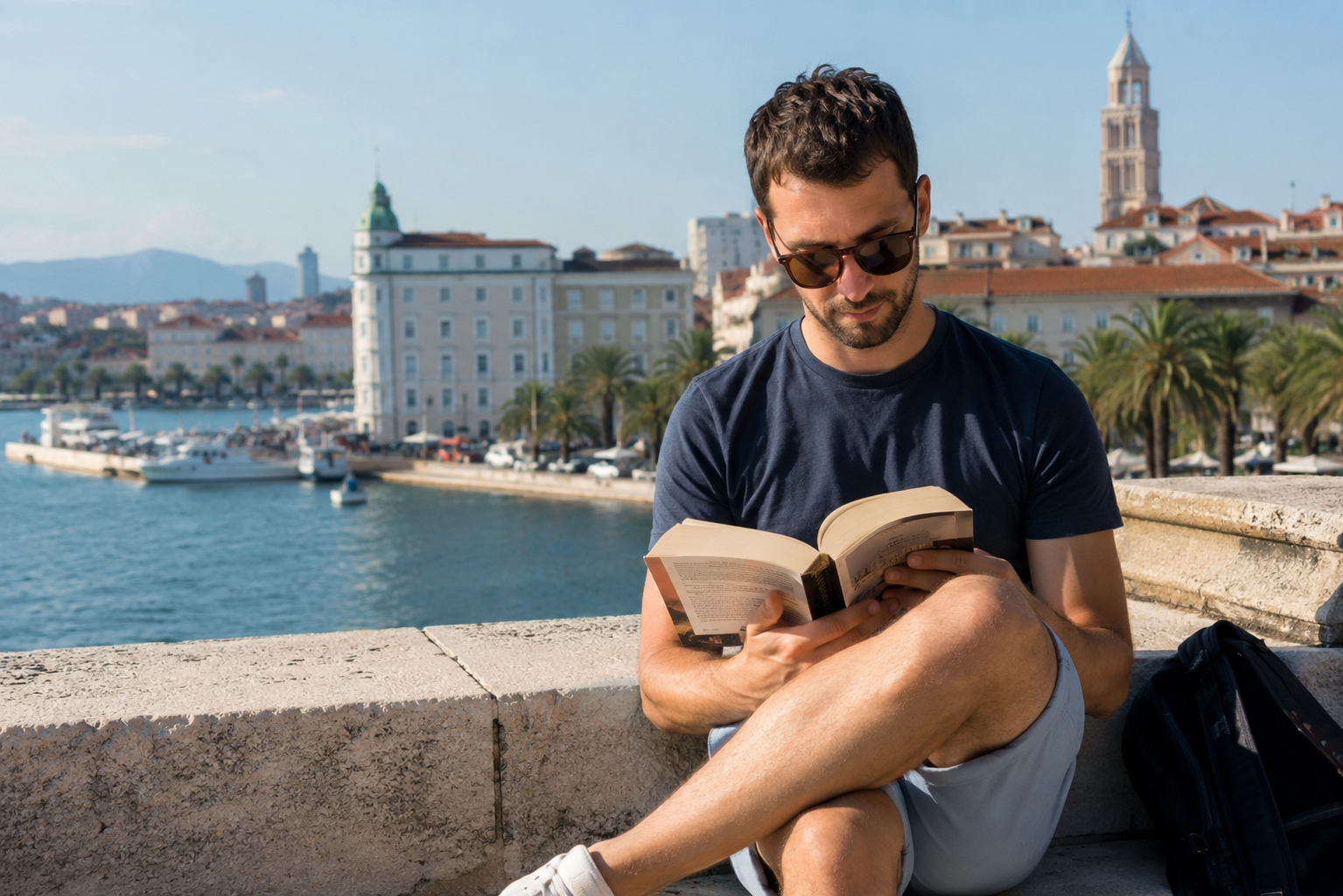
Mountain-meeting-sea city with a serious outdoor culture and a strong Asian-immigrant culinary layer. Vancouver's Stanley Park seawall is structurally what our Marjan peninsula walking path is — except theirs is paved, signposted, fully accessible, and used by ten times more people. Same geographic idea, completely different execution.
What Split could borrow
Vancouver's Stanley Park seawall is a 9.5-km continuous paved walking-and-cycling loop around an urban park. Our Marjan peninsula could support exactly the same thing — a 7-km loop combining the existing forestry trails, the southern coast paths, and the harbour-side promenade. Currently it's a fragmented set of trails. A continuous Marjan Loop would be transformative.
Who can take you
Tour operators & guides to try
A short, opinionated starter list — just my humble opinion. Verify before booking.
Intrepid Travelsmall groupwww.intrepidtravel.com →
Intrepid's Western Canada itineraries treat Vancouver as a 2-night gateway in or out of a Rockies trip. Group size 12–16. The Vancouver portion handles the Stanley Park seawall, Granville Island, and a Capilano-area day well. Caveat: Vancouver is structurally easy to self-guide; reserve Intrepid for the longer Rockies trip rather than as a Vancouver-only operator.
Forbidden Vancouver Walking Toursspecialistforbiddenvancouver.ca →
Forbidden Vancouver runs the city's best dark-history walks — Prohibition-era Gastown, the Komagata Maru, the city's pre-1980s opium-trade narrative, sex-work history. Groups around 20. The guides are theatrical and well-researched; the city is much weirder than the postcard suggests. Pick the Lost Souls of Gastown evening over the daytime walks. Caveat: not the right operator for the outdoors-and-mountains side of Vancouver; pair with a self-guided North Shore day.
If you liked this, try these
San Francisco, United States
San Francisco at the fog line: the small American city on the hills
April 20, 2023
New York, United States
New York City, slowly: the case for staying put in one neighbourhood
May 23, 2024
Mexico City, Mexico
Mexico City: the high-altitude metropolis that took a decade to be discovered
November 30, 2023