Photo: Ščenza
Oia, Greece · Europe
Santorini after the cruise ships leave: a defence of the obvious island
Santorini between 6 p.m. and 9 a.m. is a different island. The cruise ships are at sea. The day-trippers are on the ferry. The whitewashed villages, which spend the daylight hours being photographed, finally exhale. This is the island worth flying to.
By Ščenza
· updated · 5 min read
The first time I came to Santorini was in 2007, on a slow ferry from Piraeus, eight hours of Aegean blue, and the boat docked at Athinios with a fishing village’s amount of noise. I climbed up to Fira on a bus that smelled of diesel and oregano and slept on a roof terrace for nine euros a night. Twenty years later, the island has changed considerably, and the conversation about it has changed even more.
Most of what you’ve read is true: it’s crowded, it’s expensive, the cruise ships disgorge thousands of day visitors, the sunset at Oia is a slow-moving photograph queue. All of it. But: the island is still genuinely extraordinary. The trick is knowing when, where, and how long.
Why I keep coming back
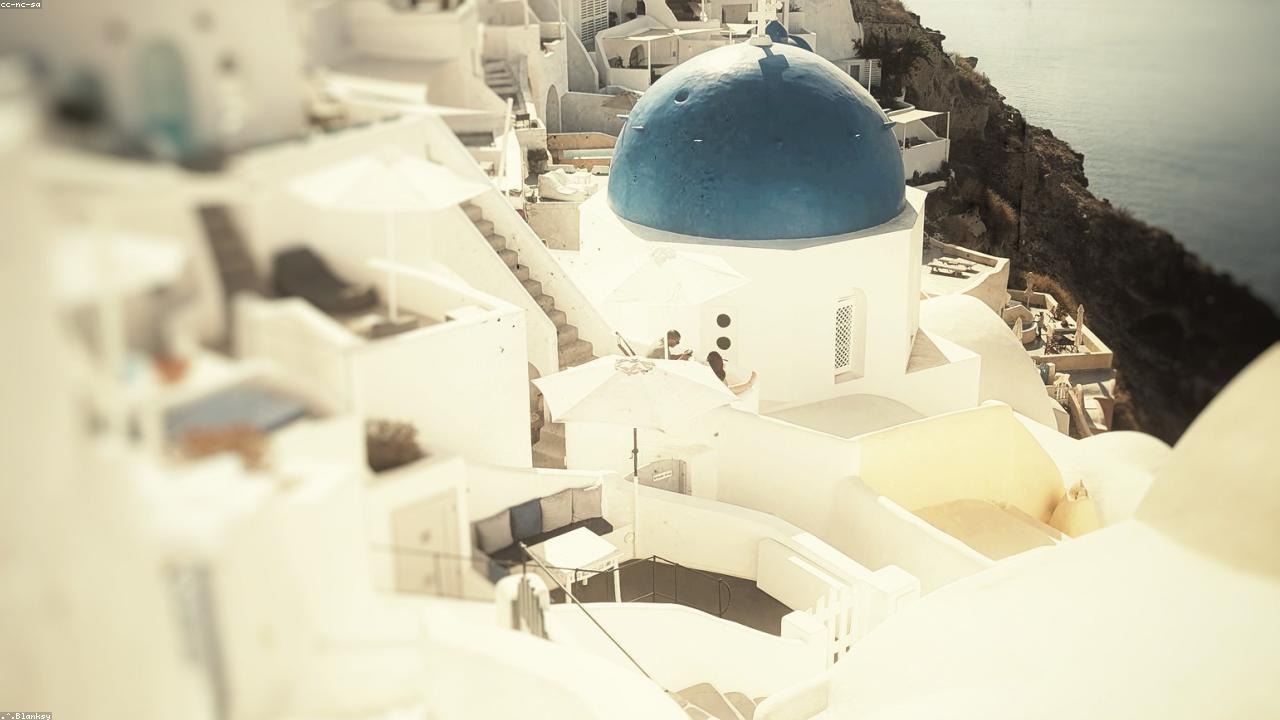
The caldera. There is no other island in the Mediterranean shaped like Santorini — a sunken volcanic crater, the cliffs falling 300 metres into a perfectly round bay, the whitewashed villages spilling along the rim. You can stand at the edge of a road in Imerovigli and look across two kilometres of empty water at the island opposite. The light is harder and more exact than it is anywhere else I’ve travelled. It is, simply, beautiful.
I also keep coming back for the wine. The Assyrtiko grape, grown on basket-pruned vines low to the ground to survive the wind, produces some of the most singular white wines on earth — mineral, salty, cellar-worthy.
Where to base yourself
Imerovigli, the village between Fira and Oia. The same caldera view, a third the price, and a calmer evening atmosphere. Walkable to Fira.
Pyrgos, in the centre of the island. Inland, a hilltop village around a Venetian castle, no caldera but excellent restaurants, no crowds, and the highest point of the island for sunsets without the queue.
Vothonas or Megalochori, both inland villages, both quieter, both authentic.
Avoid Fira itself (loud, crowded, geared to day-trippers) and Oia itself (beautiful but the rents are now obscene and the streets impassable after 4 p.m.).
What to actually do
Watch sunset from anywhere except Oia. The crowds at the Oia castle viewpoint now run to three thousand people. The walk along the caldera path from Imerovigli to Oia, started at 5 p.m., gets you the same sunset from a series of empty viewpoints. Skaros Rock, the ruined Venetian fortress on a promontory below Imerovigli, is the spot I keep returning to. Bring a blanket, a bottle of Assyrtiko, and a friend.
Hike the caldera path. Ten kilometres, from Fira to Oia, along the cliff. Start at 7 a.m. in summer or any time in spring. It takes three to four hours with stops. You’ll have the path largely to yourself.
Visit Akrotiri. The Minoan-era town buried in 1600 BC by the volcanic eruption, dug out by archaeologists, partially restored under a giant roof. The frescoes were moved to museums in Athens and Fira — see those at the Museum of Prehistoric Thera in Fira — but the streets and houses, two-storeyed, with drainage systems and indoor plumbing, are extraordinary. Greek Pompeii without the bodies.
Do a wine tour at Domaine Sigalas or Gavalas. Skip the big ones with bus tours. The smaller estates do walk-in tastings. Assyrtiko, Vinsanto (the local dessert wine, dried-grape, aged in barrel for years), and the rarer Athiri and Aidani.
Take the small boat to Therasia. Tiny island opposite Santorini, in the caldera, with a handful of houses and one excellent tavern. Local boat from Ammoudi Bay, returns the same afternoon. Almost nobody goes.
Where to eat
The Greek tavern has been pushed upmarket on this island, but the good ones still exist.
Selene (Pyrgos) — Long the island’s flagship contemporary Greek restaurant. Tasting menu, Greek wines, the food sourced almost entirely from Santorini and the surrounding islands.
Metaxi Mas (Exo Gonia) — A taverna of the old kind, an oak tree, an open grill, the village locals as well as the tourists. The tomato-keftedes (fritters made with the small Santorini tomatoes) are the dish.
Aktaion (Firostefani) — A neighbourhood taverna, paper tablecloths, the moussaka and the fava (the yellow split-pea purée).
Lauda (Oia) — Inside the Andronis Hotel. Worth the price for the contemporary tasting menu and the caldera view at sunset. Reserve far in advance.
Ammoudi Fish Taverns (below Oia, on the rocks at sea level) — Touristy, expensive, but the setting is genuinely the most beautiful dinner table in Greece. The grilled octopus, drying on the line outside the restaurant, is real.
When to come
Late April through early June, or late September through October. The summer months (July, August) are now genuinely uncomfortable: high heat, packed villages, cruise-ship crowds.
The shoulder months give you the same light, half the people, and the wineries are open and the sea is swimmable (just) from mid-May.
November to March is closed-up Santorini — many restaurants shut, the cliff walks have a wild Aegean feel — and a useful option if you want a quiet island and you don’t mind that some hotels are closed.
Practical notes
- Getting there: Direct flights to Santorini airport (JTR) from Athens and many European cities. The slow ferry from Piraeus (eight hours) is the romantic option; the fast ferry (five hours) the practical one.
- Visa: Schengen.
- Money: Card universally; carry euros for smaller tavernas.
- Transport: A small rental car is the move. The island is twelve kilometres long, the bus network is functional but slow. Parking in Oia is impossible after 9 a.m.; park in Finikia and walk down.
- Beaches: Black sand from the volcanic rock; surprisingly hot in summer (wear shoes); Vlychada Beach is the most photogenic (sculpted white pumice cliffs); Perissa is the long open beach; Red Beach has been closed for landslide risk in recent years (check before).
- The donkeys: The famous donkey-ride up the cliff to Oia is now widely criticised for animal-welfare reasons. The cable car is the right alternative.
A final thought
Santorini is on every list because it is, frankly, one of the most photogenic places on earth. The crowding is a symptom of its accessibility (a two-hour flight from most of Europe) and its single, irresistible photograph: the whitewashed Cycladic cube against the deep Aegean blue, in the magic hour, with a domed church and a bougainvillea.
That photograph is real. You can take it. The island is not ruined; it’s just oversubscribed in the middle of the day. The cure is mostly chronological: be where the cruise ships aren’t when they are there, and be at the postcard places when they aren’t. Walk the caldera at 7 a.m. Have lunch in Pyrgos. Eat dinner at Selene. Sleep where the buses don’t go.
The island, twenty years on, still gives me the same thing it gave me on the night ferry in 2007: a feeling that the world is more beautifully and improbably shaped than I had previously suspected. That, on a list of reasons to travel, remains close to the top of mine.
If you only have a few days
6 ideal things to do in Oia
The caldera path from Oia to Fira
Along the cliff rim, through Imerovigli and FirostefaniStart at first light; late April to May, or late September
Nine or ten kilometres along the rim, three to four hours with stops, and the direction matters — walking south out of Oia keeps the caldera on your right the whole way and the sun off your face. There is one long unshaded climb near Imerovigli that I have now underestimated on three separate visits. Carry more water than seems reasonable and set off before the day boats dock, because after that the last stretch into Fira turns into a corridor.
Skaros Rock at sunset
Imerovigli, ten minutes down and out from the villageAn hour before sunset, any month
Skaros is a ruined Venetian fortress on a promontory that was once the island's capital, reached by a rough path dropping out of Imerovigli. It is the same sun three thousand people are photographing over in Oia; here there were eleven of us and a goat with no interest in any of it. Wear proper shoes — the final section is loose stone, and I watched a man attempt it in resort sandals, which was gripping to observe and presumably less so to perform.
Akrotiri, under its roof
The southern end of the island, by Akrotiri villageMidday, when it is too hot to be outdoors anyway
Buried by the eruption in the sixteenth century BC and excavated since 1967: two- and three-storey houses, paved streets, drains and indoor plumbing, all of it now under a modern shelter, which makes this the one site here you can happily visit in the middle of an August afternoon. The wall paintings were lifted out to museums, so what remains is the town itself. No bodies have been found. Whatever else happened, they had the sense to leave in time.
The Museum of Prehistoric Thera
Fira, just behind the main squarePair it with Akrotiri, in either order
Everything portable that came out of Akrotiri is here — the wall paintings, the pottery, the tools and the imports that show how far these people traded, in a small, cool, thoroughly ignored building in the middle of Fira. Painted by people who were three and a half thousand years dead before anybody thought to build a cliffside hotel above them. Half an hour is enough. The coach tours mostly do not stop, which is their business and our luck.
Down to Ammoudi and across to Therasia
The bay below Oia; small boats cross the caldera from thereLate morning out, mid-afternoon back
Down the old stepped path from Oia — a few hundred steps, and the donkey question is one you can sidestep entirely by walking — is Ammoudi: red rock, clear water, a swimmable rock offshore. From the quay a small boat runs over to Therasia, the piece of the island the eruption cut off, where about two hundred and fifty people live up a staircase with a taverna or two at the top. It is what Santorini looked like before Santorini became famous.
The basket vines and a glass of Vinsanto
The inland villages — Pyrgos, Megalochori, Exo GoniaHarvest comes early, often August; tastings run spring to autumn
Santorini's vines are trained into low coiled baskets lying on the ground, ungrafted and often very old, because anything standing upright would be shredded by the wind and cooked by the sun. Assyrtiko grown that way comes out salty and hard and ages for years; Vinsanto is made from grapes left in the sun after picking. The estates inland will pour you all of it, and the ones without a coach park will also talk to you about the vines until the light goes.
From a Split boy’s notebook
The Split lens
What reminded me of home
Aegean limestone, the same blue-and-white coastal light, the same overtourism problem at a smaller scale. Oia at sunset is what Diocletian's Palace courtyard looks like in August — a slow-moving river of phones held above heads. Two beautiful places loved nearly to death.
What Split could borrow
Santorini caps cruise-ship passengers at 8,000 per day (officially). Split has had four ships in port simultaneously dumping 16,000 day visitors into the palace on the same morning. A daily cap is not radical — it's what serious heritage cities now do.
Who can take you
Tour operators & guides to try
A short, opinionated starter list — just my humble opinion. Verify before booking.
Intrepid Travelsmall groupwww.intrepidtravel.com →
Intrepid's Greek Islands itineraries are a sensible choice for Santorini if you're island-hopping rather than basing — they bundle Mykonos and Crete, use the fast ferries, and put you in mid-range accommodation. Group size 12–16. Caveat: Santorini-only is not really Intrepid's strength; for a single-island stay book your own boutique hotel and use Intrepid as the structural backbone for a 10-day Cyclades loop.
Caldera's Boatsactivitywww.calderasboats.com →
Caldera's Boats is the Santorini-based caldera-cruise operator running the wooden-yacht sunset cruises — smaller vessels (20–30 passengers) rather than the catamaran mass-tour fleet. Routes cover the volcanic islets, the hot springs, the Thirassia stop, and a dinner aboard. Caveat: in peak season (June–August) even the smaller wooden boats fill up; choose the early-morning departures rather than sunset for less crowded conditions and arguably better photography of the caldera walls.