Photo: Ščenza
Longyearbyen, Norway · Polar
Svalbard: the polar archipelago and the bears that live there
Svalbard is the High Arctic — a Norwegian archipelago at 78° north, with more polar bears than people, a small settlement at Longyearbyen, and a coastline accessible only by sea. The Arctic in its more genuine form, with the difficulties that implies.

By Ščenza
· updated · 4 min read
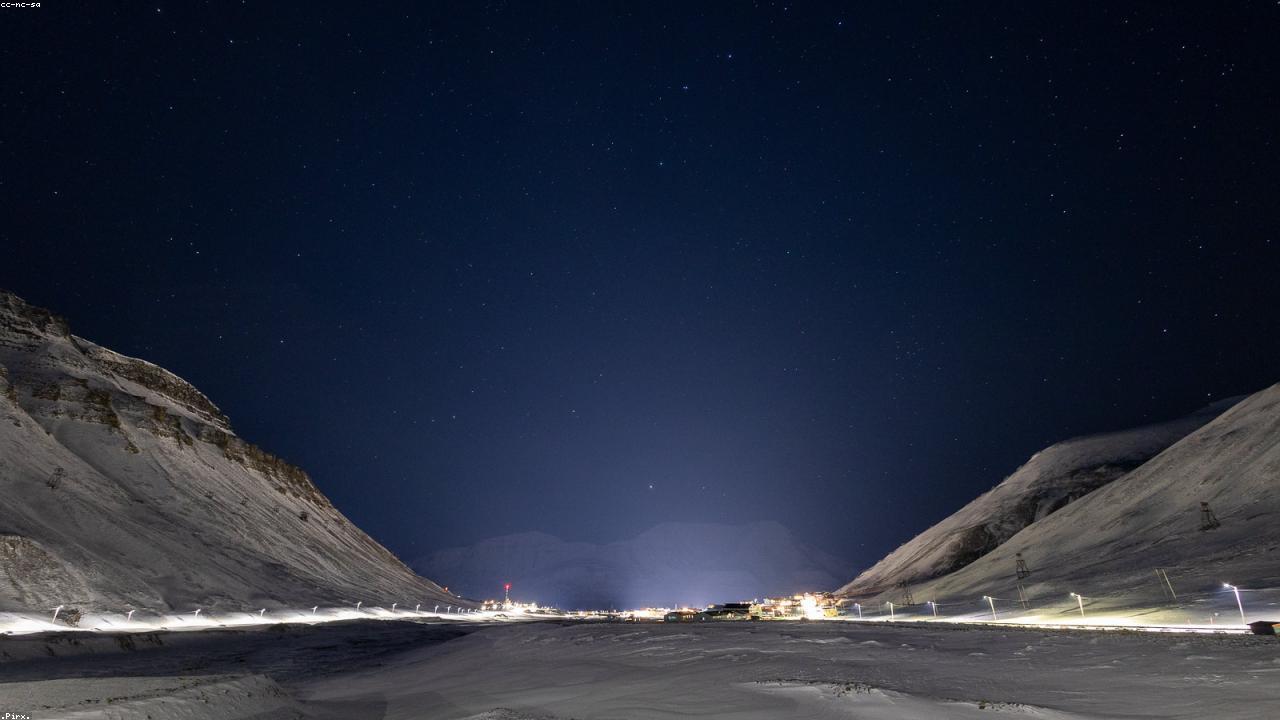
It’s 11:47 p.m. in mid-June in Longyearbyen, the main settlement of Svalbard, and the sun is still well above the horizon. The temperature is around 4°C. A pair of reindeer is walking slowly across the gravel street in front of me, completely unconcerned with the human settlement. The town is small — perhaps 2,400 people — and surrounded by mountains and glaciers on all sides. Above town, on the ridge, an old coal mine entrance is visible. The cruise ship in the small harbour is being loaded. Tomorrow I will be on it for ten days, heading north along the western coast of Spitsbergen toward the edge of the pack ice. This is Svalbard, the High Arctic, and one of the rarest forms of contemporary travel.
Why I keep coming back
Svalbard is a Norwegian archipelago at 78°–80° north — roughly the latitude of northern Greenland. The largest island, Spitsbergen, has the only sizeable settlement (Longyearbyen, 2,400 people, the world’s northernmost true town). The archipelago has been part of Norway since the Svalbard Treaty of 1925 (which uniquely allows nationals of the 46 signatory states to live and work in Svalbard without immigration formalities).
The land is 60% glaciated. Polar bears are present (more polar bears than people on the archipelago, around 3,000). The 24-hour daylight from late April to August and the 24-hour polar night from October to February are the climatic extremes.
The main way to see the archipelago is by expedition cruise — a 5-to-12-day small-vessel trip up the western coast of Spitsbergen, with daily landings (by Zodiac inflatable boat) at glaciers, bird cliffs, walrus haul-outs, and (with luck) polar-bear sightings.
Where to base yourself
Longyearbyen is the only practical land base. Several mid-range hotels — Funken Lodge, Radisson Blu Polar Hotel, Coal Miners’ Cabins.
For the high-end land option, Isfjord Radio Adventure Hotel at Kapp Linné — accessible only by snowmobile in winter or boat in summer.
Most meaningful Svalbard experiences are aboard an expedition cruise.
What to actually do
Take an expedition cruise. 5-day, 7-day, or 10-day options on small vessels (12 to 200 passengers). The smaller vessels (Hurtigruten’s Polarlys, Quark’s Ultramarine, or the smaller National Geographic / Lindblad ships) offer better landing access. The cruises start and end in Longyearbyen.
Watch for polar bears. From the cruise vessel, with binoculars. The bears are typically seen on the sea ice or on small islands. Landings are not permitted where bears are present nearby.
Visit walrus haul-outs. Several beaches on the northwestern coast host hundreds of walruses; landings are at a respectful distance.
See the seabird cliffs. Thousands of nesting Brünnich’s guillemots, kittiwakes, fulmars on the cliff faces of the northwest.
Walk on a glacier. With a licensed guide and rope team, glacier walks are possible from Longyearbyen.
Visit the Svalbard Global Seed Vault. The world’s repository of agricultural-crop seeds; not open for visitors inside but the exterior is a brief stop. A 15-minute drive from Longyearbyen.
Husky-sledding or snowmobiling in winter. Several operators in Longyearbyen.
Where to eat
Huset (Longyearbyen) — A refined Arctic dinner with extensive wine cellar. Funktionærmessen (Funken Lodge) — Reliable upper-mid-range. Gruvelageret — The old mine warehouse converted to a restaurant; the local-meat focus (reindeer, seal, whale — yes, all are legal in Svalbard within strict quotas, ethically complex). Stationen — More casual; the small-plate seal and reindeer preparations.
On cruises, meals are provided by the vessel.
When to come
Late May to early September is the navigable summer season; pack ice has retreated; midnight sun.
June is the time the bird cliffs are most active and the polar-bear chances are higher (the bears need ice).
Late August is when the sea ice is at its annual minimum and the cruises can reach the highest northern latitudes.
February through April is the polar-night-into-spring transition; aurora season; husky-sled and snowmobile season; some of the best photographic light of the year.
Practical notes
- Visa: The Svalbard Treaty allows all nationals visa-free; but most Western passports also need Schengen-compatible documentation since transit is typically through Oslo.
- Money: Norwegian krone; card everywhere.
- Transport: SAS and Norwegian fly daily from Oslo to Longyearbyen.
- Polar bear rule: Outside the small settlement, by law you must carry firearms (or be in the company of an armed licensed guide). All organised tours include this; do not wander out of Longyearbyen alone.
- Cost: Among the most expensive trips in this guide. Cruises are US$5,000–15,000+ per person depending on duration and vessel; land-only with day-trips is somewhat cheaper.
- Environmental impact: Be aware that Arctic cruise tourism is high-carbon and high-impact. Choose operators with serious sustainability programmes; offset emissions where possible.
A final thought
Svalbard is one of the most genuinely remote destinations accessible by commercial travel today and one of the most consequential as a witness to climate change. The Arctic sea ice has retreated dramatically in the past two decades; the polar bears are visibly stressed; the glaciers calve in significant amounts each summer.
The trip is, in some sense, the kind of trip that may not be reasonably available in the same form in another generation. The expedition cruise format gives access to landscapes that no other approach gives. Go now, with thoughtful operators, and pay attention. The Arctic has been there for millions of years. Whether it continues in its current form into the second half of the 21st century is the open question.
If you only have a few days
5 ideal things to do in Longyearbyen
Svalbard Museum
Inside the university centre building, central LongyearbyenYour first afternoon, before anything else
Do this on arrival rather than saving it for the end. It runs from whaling through trapping through coal to the present research-and-tourism economy, and it does not flinch about the stretch where whales and walruses were essentially mined out of the fjords. It won a European museum prize in 2008 and moves something like forty-five thousand visitors a year through one hall, which tells you the scale of everything up here. Afterwards the view out of the window reads completely differently, and that is worth an hour of anybody's trip.
The boat to Pyramiden
Up Billefjorden from Longyearbyen, roughly 50 kmBy boat in summer, by snowmobile in the frozen months
A Soviet coal town that stopped on 31 March 1998 and had emptied out by that October. The world's northernmost bust of Lenin stands in front of the culture house facing a glacier, which is either magnificent or bleak depending on the weather and how you slept. The hotel reopened in 2013 and between one and three people overwinter here in two heated buildings — a job description I have thought about far more than is healthy. You cannot enter buildings without permission, the guide carries a rifle throughout, and neither of those is theatre.
A day at a Longyearbyen dog yard
Kennels out in Adventdalen, just beyond townSled in winter, wheeled cart in summer
Harnessing your own team is the part nobody warns you about: eight dogs who understood what was happening long before you did, screaming with joy, and you standing on a brake attempting to look competent. In summer the same animals pull a wheeled cart instead. In winter it is a proper sled across Adventdalen in that blue polar light. These are working dogs rather than pets and the yards say so plainly; feeding them afterwards is part of the arrangement and is comfortably the best part of the day.
A guided ice cave beneath a glacier
Glaciers within reach of Longyearbyen by snowmobile or snowcatWinter and spring only, while the meltwater channels are frozen
These are meltwater channels running inside the glacier, which is why they only exist as a walkable thing in the frozen half of the year. You go down through a hole in the snow on a rope, then crawl and duck-walk along blue ice with air bubbles trapped in it from long before anyone thought of building a town here. It is cold in a way that finds your fingers through two pairs of gloves. Absolutely worth doing, and you will be noticeably quiet on the drive back.
The Global Seed Vault, from the outside
On the hillside between town and the airportTen minutes, any time; the brevity is the joke
You cannot go in. Nobody goes in except the people depositing seed, and that is the whole design. What you get is a concrete wedge protruding from a frozen hillside with an illuminated artwork along the roof and front face — mirror and prism catching the summer light, two hundred fibre-optic cables glowing greenish-white through the dark months. I drove out, stood in the wind, looked at a locked door for ten minutes and found it unexpectedly moving, which is not a sentence I planned to write about a warehouse.
From a Split boy’s notebook
The Split lens
What reminded me of home
Far-north archipelago with a single small settlement and a strict permit regime for activities beyond town. Our equivalent is not the Arctic but the Kornati national park — a remote archipelago with a small permanent population on Žut and a careful regime for visitor activity. Both regions have a fragile environment they're aware of.
What Split could borrow
Svalbard requires armed-licensed-guides for any travel outside the small settlement, and the system genuinely protects both visitors and the surrounding wildlife. The principle — that some places require local-guide presence by law — is transferable. Our Kornati and the marine reserves around Brijuni could similarly require licensed local guides aboard, both for safety and for environmental protection.
Who can take you
Tour operators & guides to try
A short, opinionated starter list — just my humble opinion. Verify before booking.
Quark Expeditionsexpeditionwww.quarkexpeditions.com →
Quark Expeditions runs Svalbard cruises (typically 8–12 days from Longyearbyen) on small expedition vessels with strong polar-specialist credentials. IAATO member; serious wildlife and ice-navigation protocols. Upper-tier pricing (USD 7,000–18,000). Caveat: the polar bear sightings are not on a schedule; the operator handles the safety protocols well but cannot manufacture wildlife.
Hurtigrutenexpeditionwww.hurtigruten.com →
Hurtigruten Expeditions also runs Svalbard cruises — typically on the MS Fram or MS Spitsbergen. Slightly cheaper than Quark for comparable cabin tier; the vessel quality is excellent. Caveat: their non-expedition coastal-Norway ferries do NOT go to Svalbard; verify you're booking the Expeditions arm rather than the regular Hurtigruten ferries.