Oceania
Hobart, Australia
Tasmania: Australia's island state and its wild Southwest
April 15, 2024
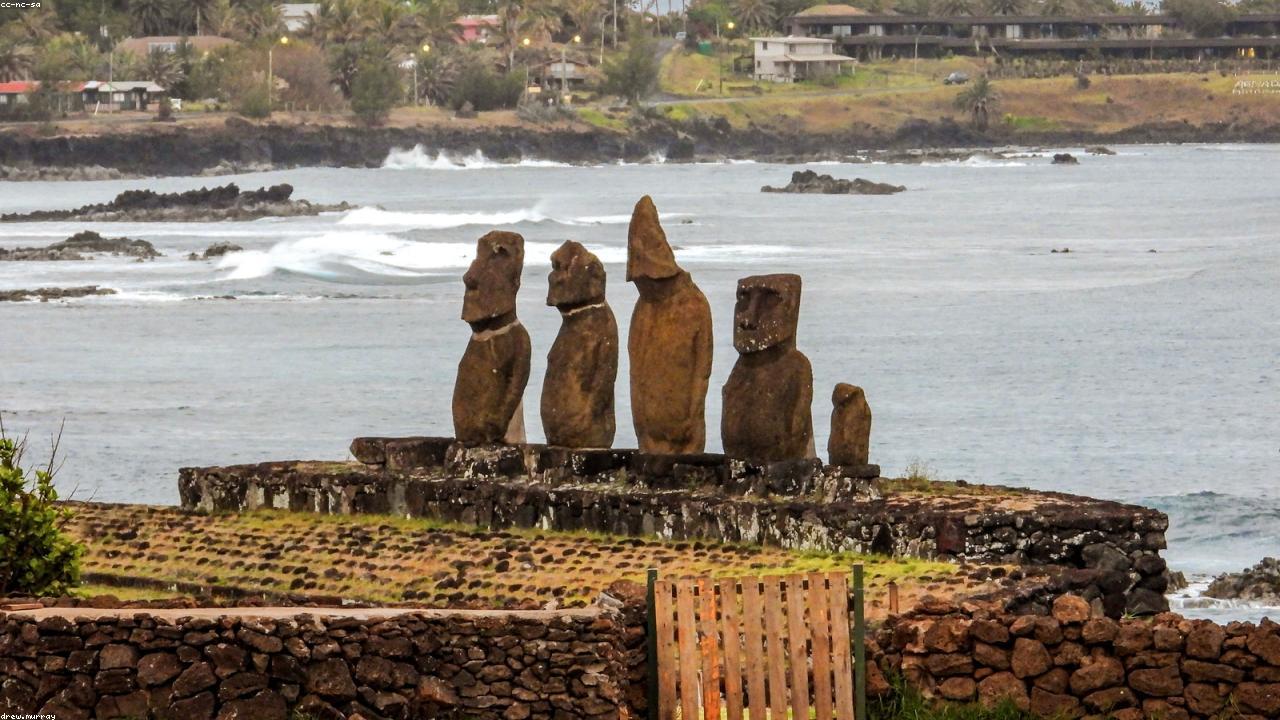
Photo: Ščenza
Hanga Roa, Chile · Oceania
The short list, pulled out of the long essay. No opening hours, because they change and I would only get them wrong — just what is worth your morning, roughly when to turn up, and where I have wasted time so you don’t have to.
By Ščenza
Last checked
Southeast of the island, near Ahu TongarikiEarly morning, ahead of the vans from Hanga Roa
Almost every moai on Rapa Nui came out of this one crater's compacted ash, and hundreds are still here: finished figures buried to the shoulders on the slope, unfinished ones lying in the rock face with the chisel marks on them, and one enormous piece never cut free of the bedrock at all. The carving stopped and nobody tidied up afterwards. Walking the path between them is the nearest the ancient world comes to letting you into an abandoned workshop at the end of a shift.
Southeast coast, about 20 km from Hanga RoaBefore first light; you will need a vehicle
Fifteen moai stand on the island's largest platform, the heaviest of them 86 tonnes, all of it swept inland by the 1960 Chilean tsunami and put back between 1992 and 1995 by a Chilean team using a crane the Japanese manufacturer donated. They face inland, so at dawn you get fifteen silhouettes with the Pacific behind them and the light coming up over your shoulder. Bring a coat; the wind out on that point is doing serious work and takes no interest in your plans.
Southwest tip, above Hanga RoaMorning, while the crater is still clear of cloud
The crater is roughly a kilometre across with a reed-covered lake in the bottom and one wall eaten open by the sea, and along the rim sit fifty-odd low stone houses you would have to enter on hands and knees. This is where the birdman contest was settled: men climbed down a three-hundred-metre cliff, swam out to Motu Nui through shark water, and waited for a sooty tern to lay. The winner's sponsor ruled for the year. It makes the Hajduk–Dinamo derby look like a polite exchange of views.
North coastAfternoon, after a morning at the quarry
White coral sand, imported coconut palms, and a row of moai on Ahu Nau Nau standing directly behind the beach with their backs to the water — one of only two sandy beaches on an island otherwise made of black rock. Rapanui tradition puts Hotu Matu'a's landing canoe right here. It is the one spot on the island where you can swim, eat an empanada and look at thousand-year-old sculpture without moving your towel, and I decline to be superior about that.
Ten minutes' walk north of Hanga RoaThe last hour of daylight, any evening
Three platforms, restored in the 1970s by the archaeologist William Mulloy, who is buried beside them — including Ko Te Riku, the one moai on the island wearing both its topknot and its white coral eyes, which turns the face from a monument into somebody looking back at you. It faces the west coast, so the sun goes down into the sea behind it. Half of Hanga Roa turns up, sits on the grass and says very little. Keep it for your last evening.
The long version
Easter Island — Rapa Nui in the local Polynesian — is the most isolated inhabited island on earth, 3,500 km from the nearest continental coast. The 900 moai are the iconic image; the contemporary Rapanui community living among them is the deeper experience.
Read the full essay →