Asia
Beijing, China
Beijing: the imperial city behind the smog and the headlines
July 7, 2023
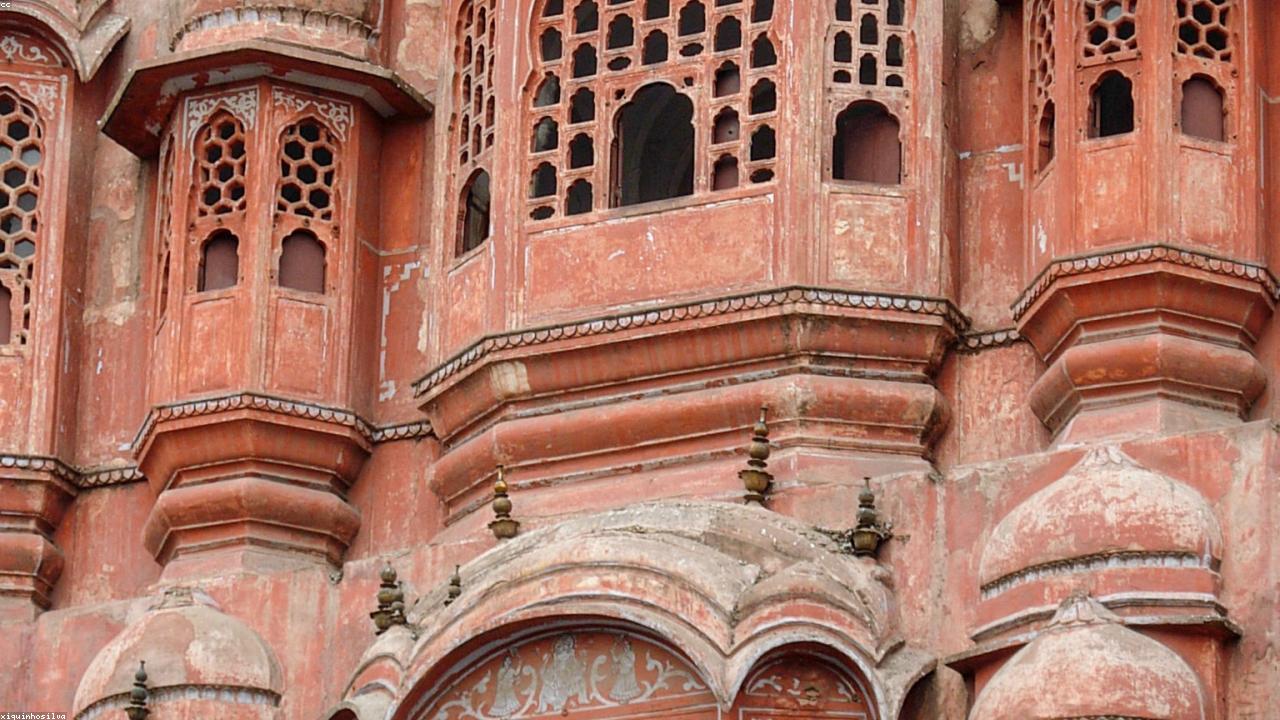
Photo: Ščenza
Jaipur, India · Asia
The short list, pulled out of the long essay. No opening hours, because they change and I would only get them wrong — just what is worth your morning, roughly when to turn up, and where I have wasted time so you don’t have to.
By Ščenza
Last checked
Old city; the entrance is on the City Palace side, not the famous facadeEarly morning, while the sun is straight onto the pink sandstone
Almost everyone photographs the honeycomb from the street and then leaves. The 953 windows were built in 1799 by Lal Chand Ustad so the women of the court could watch the processions without being watched back, and that idea only lands from the inside, where the whole five-storey wall becomes a screen with the bazaar moving behind it. The upper floors are reached by ramps rather than stairs, which was originally for palanquins and is now simply a kindness. The door is round the other side. I walked the length of the bazaar twice before working that out.
Beside the City Palace, inside the old cityAround noon on a clear day, when the instruments are actually doing their job
Masonry astronomical instruments, built between 1728 and 1734 by a maharaja who was a serious working astronomer, including a sundial the height of a seven-storey building that resolves time to a couple of seconds. Under cloud they are large abstract sculptures and nothing else, which is how most visitors experience them. Come when the sun is hard, find the shadow edge crawling visibly along the marble scale, and stand there until you have watched a full minute go past. That is the entire visit, and it has not stopped being unreasonable across three attempts.
Amer village, about a kilometre from the Amber Fort gateJust after sunrise, before the Amber Fort traffic starts moving
Staircases zigzag down three walls of this sixteenth-century stepwell in a pattern that reads as an optical illusion from the parapet and as a very serious drop from the edge. Going down them is not permitted any more, for reasons that become obvious the moment you look at the width of the treads. It sits minutes from Amber Fort and almost nobody bothers to walk over, so you can have it more or less alone in a town where nothing else is ever quiet.
On the ridge directly above Amber Fort, linked to it by a walled roadLate morning, after Amber, before the heat gets serious
Jaigarh guards Amber from the hill above it and holds the Jaivana, cast in the fort's own foundry in 1720: six metres of barrel, fifty tonnes, the largest wheeled cannon of its era. It was test-fired exactly once, with a hundred kilos of powder, and never fired in anger, because the Kachwahas kept on good terms with the Mughals for three centuries. An enormous weapon built by people with no intention whatsoever of using it is a very Rajput piece of statecraft, and I find it funnier on each visit.
Ram Niwas Garden, just outside the old city wallLate afternoon, then stay outside for the floodlighting at dusk
Indo-Saracenic pile from 1887 by Samuel Swinton Jacob, containing a collection assembled with no discernible editorial policy at all: Rajasthani armour, a Persian garden carpet of genuine importance, clay models of Indian trades, and an Egyptian mummy called Tutu who has been in Jaipur since 1883 and looks thoroughly settled. The pigeons treat the courtyard as their own jurisdiction. I liked the place far more than I expected to, which I put down entirely to the absence of curatorial theory.
About 10 km east of the old city, in the Aravalli hillsLate afternoon, when the macaques come down to the tanks
Pink sandstone pavilions built into a narrow ravine and fed by a spring that emerges from a carved cow's mouth and drops through a chain of bathing tanks. Pilgrims wash here, and so do a few hundred macaques, generally at the same time and with considerably more enthusiasm. Carry nothing in your hands — not a bottle, not a phone, not a bag with anything crinkly in it. I learned this the way everyone learns it, which is quickly and in front of an audience.
About 95 km east, roughly two hours by road on the way towards AgraA morning half-day; pair it with the Harshat Mata temple alongside
Thirteen storeys of steps folding into the ground in a double-triangle lattice — well over three thousand of them, cut more than a thousand years ago to reach water in a district that has never had enough. Standing on the rim is properly disorienting; the geometry keeps resolving into a different pattern depending on where your eye settles. The ruined Harshat Mata temple beside it is unroofed, half-carved, and gets almost none of the attention. It deserves more, and it will get it from you, because it is thirty seconds away.
The long version
Jaipur is the rare planned 18th-century Indian city — Maharaja Sawai Jai Singh II laid it out in 1727 on the Hindu Shilpa Shastra principles, with the famously rose-pink colour washed onto every building inside the old walls for an imperial visit in 1876 and never washed off.
Read the full essay →