Photo: Ščenza
Beijing, China · Asia
Beijing: the imperial city behind the smog and the headlines
Beijing is a city of axes — the great north-south central axis from the Bell Tower through the Forbidden City to the Temple of Heaven — and of pockets. The pockets are the hutongs, the grey-brick alley neighbourhoods, and they remain, in the surviving sections, one of the most distinctive urban textures on earth.
By Ščenza
· updated · 5 min read
It’s 5:53 a.m. in a hutong off Gulou East Street, the bell tower hutong, and the bell tower itself — the Gulou, a Yuan-dynasty drum-and-bell complex — is just emerging from the dawn haze. An old man in cotton-padded jacket is walking a bird in a bamboo cage (yes, that’s a thing; the birds get exercised by being carried in the open air). A woman is sweeping the front step of a courtyard house. A jianbing cart on the corner is firing up the griddle. Beijing in the hour before the city wakes is one of the most extraordinary urban experiences in the world.
Why I keep coming back
Beijing has been a capital, in various forms, since the 13th century. The Yuan, Ming, and Qing dynasties all built their imperial palaces here. The grand axes of the city — the central north-south spine, the surrounding ring roads — were laid out before any European capital was its current shape. The Forbidden City, the Temple of Heaven, the Summer Palace are some of the most consequential architectural complexes on earth.
And the hutongs — the grey-brick alley neighbourhoods, dating in their oldest sections to the Yuan dynasty — remain, in the surviving pockets around the Drum and Bell Towers, around Houhai lake, and in the southern Dashilan area, the most distinctive surviving urban-historical texture in any major Asian city.
Where to base yourself
Dongcheng (around the Drum Tower or Houhai) for the hutong access and a walking-friendly base.
Wangfujing for the central downtown, walking distance to the Forbidden City.
Sanlitun for the modern bar and restaurant district.
Avoid anywhere in the second ring road’s outer edges as a base — long taxi rides for everything.
What to actually do
Visit the Forbidden City early. Time-ticketed entry, book online a day or two ahead. The 8:30 a.m. opening is the only way to get the central courtyards before the tour groups. Allow three hours minimum.
Walk the hutongs. The Nanluoguxiang area is the most-touristed; the parallel alleys (Beiluoguxiang, Mao’er Hutong, Xijiang Hutong) are quieter and more authentic. Around the Bell and Drum Towers, the hutongs that radiate out are the heart of the old city.
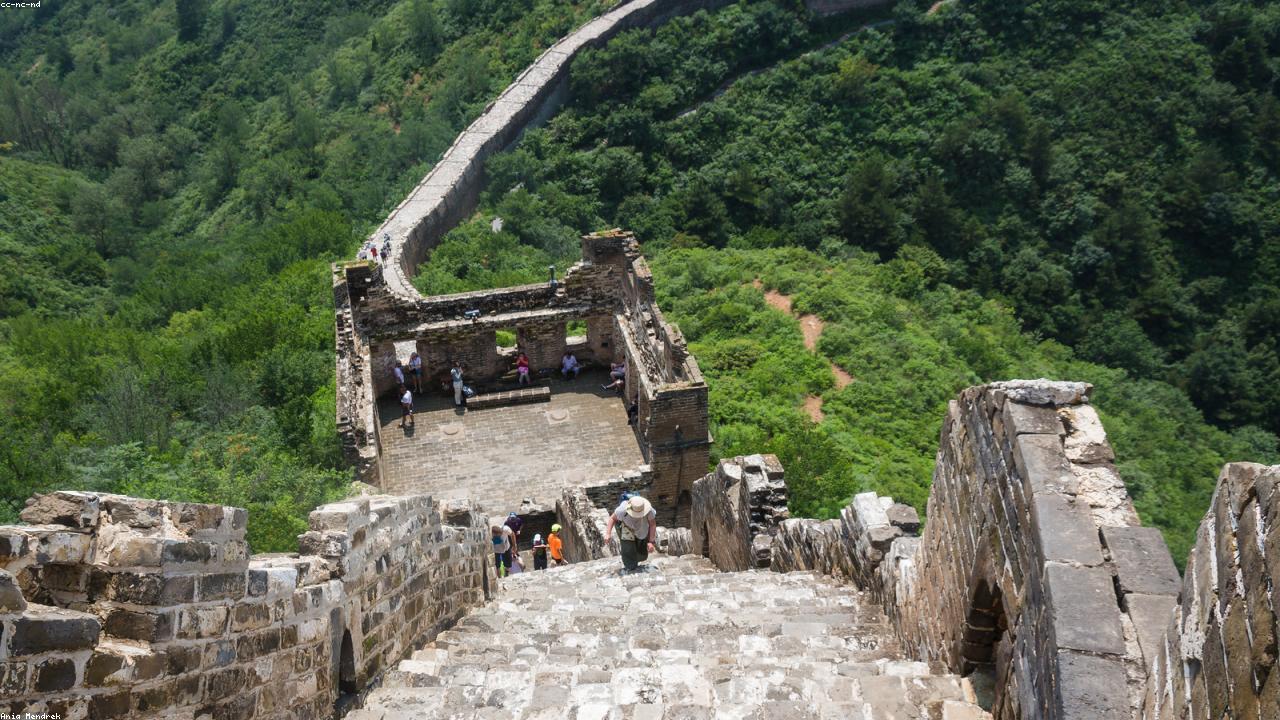
Walk the Great Wall at Jinshanling, not Badaling. Badaling is the closest section to the city and is permanently crowded. Jinshanling is three hours out, partially restored and partially wild; the hike from Jinshanling to Simatai (where it gets dangerous beyond the marked sections) is one of the great day hikes within reach of Beijing. Mutianyu is the compromise — closer, restored, but less crowded than Badaling.
Visit the Temple of Heaven at sunrise. The Ming-dynasty altar complex in southern Beijing; the morning is when locals do tai chi, ballroom dancing, and chess in the park around it.
See an opera at the Liyuan Theatre. Beijing opera (jingju) is acquired-taste but worth one performance. The Liyuan Theatre does an English-titled performance several evenings a week, around 90 minutes.
Walk the central north-south axis. From the Drum Tower south through Jingshan Park (the artificial hill north of the Forbidden City) through the Forbidden City and out the south gate, down through Tiananmen Square, and to the Front Gate (Qianmen) and the Temple of Heaven. The axis is 8 km. The full walk takes a full day with stops.
Where to eat
Da Dong (multiple locations) — Modernised Beijing roast duck; reservations. Siji Minfu — The local favourite for roast duck (Peking duck); lower prices than Da Dong. Najia Xiaoguan — Imperial Manchu-style cooking; the old yellow-curtained imperial recipe book. Mei Mansion (Mei Fu) — Refined Beijing-Huaiyang in a small Houhai courtyard. Yao Ji Chao Gan — The old-style stewed-pork-intestines noodle (chao gan); braver eaters only. Old Beijing dishes: zhajiang noodles (with the fermented soybean paste), jianbing (the crepe-pancake breakfast), mutton hot pot in winter. Coffee at Voyage Coffee or Soloist Coffee for the modern Beijing café scene.
When to come
Mid-September through October, or April through May. Pleasant temperatures, lower pollution.
May can have sand storms. Summer (June–August) is hot and the pollution can be heavy. Winter is cold (often –10°C) but dry and frequently clear.
Avoid the National Day Golden Week (first week of October) and Chinese New Year (January or February) when domestic travel saturates.
Practical notes
- Visa: As Shanghai — check current transit-without-visa rules; 240-hour transit is available for many Western passports.
- Money: As Shanghai — mobile payment is universal; the Alipay foreign-card linkage works in Beijing.
- Transport: Beijing Metro is excellent, signposted in English, and the cheapest of the world’s major capital subways.
- Pollution: Less of an issue than it was a decade ago but still variable. AQI apps are useful.
- The Great Wall touts: At Badaling and Mutianyu, there are now official sledge rides down (yes, a sledge), which are fun. Avoid the unofficial ‘private tour’ offers near the entrance.
- The Forbidden City: Tickets must be booked online with your passport details. Walk-up is not generally possible.
A final thought
Beijing is the most consequential historical capital in East Asia and one of the world’s deepest urban-historical experiences. Three dynasties’ worth of imperial architecture is concentrated within the inner ring road. The Great Wall sections within reach are some of the most extraordinary built objects on earth. The hutongs — the parts that survive — are a 700-year-old residential pattern still in active use.
The modern political conversation about China sometimes makes Beijing feel like an inadvisable trip. The visit itself, in my experience over twenty years, has been consistently rewarding. Visitors are welcomed; the tourism infrastructure works; the food is some of the best in China; the historical sites are extraordinary.
Go for at least a week. Stay in a hutong courtyard hotel. Walk the central axis. Spend a day on the Great Wall. Eat duck twice. Get up at 6 a.m. once, while the city is still emerging from the dawn haze, and walk to the Drum Tower as it opens for the morning’s drum strike. The empire is gone but the architecture — and the patient routines of the people who live around it — remain.
If you only have a few days
8 ideal things to do in Beijing
The Forbidden City, walked south to north
Dongcheng, on the central axisFirst entry slot of the day; closed Mondays outside public holidays
Tickets are online-only, sold in advance, and tied to your passport number — a rule I discovered while standing at the Meridian Gate with no ticket and a great deal of misplaced confidence. Book several days out and take the earliest slot. Three hours gets you the central axis halls and none of the side courtyards, which is the correct trade to make; the side courtyards are where the tour flags go to breed. Come out at the north gate rather than doubling back.
Wanchun Pavilion, Jingshan Park
Directly opposite the Forbidden City's north gateLate afternoon, straight after the palace
Jingshan is a spoil heap. Ming builders piled it out of the earth dug from the palace moat, and it is still the highest point on Beijing's central axis, which tells you everything about the flatness of this plain. Five minutes of steps gets you to the Wanchun Pavilion and the entire golden roofscape of the Forbidden City laid out below, plus the white pagoda in Beihai and the Drum and Bell Towers stacked away to the north. I have climbed it four times and photographed the same view four times.
The park at the Temple of Heaven, before the halls
Southern DongchengEarly morning, any day of the week
Buy the through-ticket, go early, and then ignore the monuments for an hour. The park around them is where retired Beijing conducts its morning: tai chi under the cypresses, ballroom dancing on the covered walkway, a man singing opera at a tree with total commitment, four separate card games running. I was beaten at a game involving a shuttlecock and the side of the foot by a woman of roughly seventy, in front of an audience. Then go in and look at the Hall of Prayer for Good Harvests — triple roof, triple marble terrace, no nails anywhere in it.
The Great Wall at Jinshanling
About 130 km north-east of the cityWeekday, spring or autumn; take the earliest bus out
Badaling is the section you have seen in photographs with six thousand people standing on it. Jinshanling is a hundred and thirty kilometres out and roughly half of it is unrestored — collapsed towers, loose brick, grass coming through the paving — which is precisely the reason to go. Four to six hours end to end at an honest pace. Do not build the day around continuing to Simatai; that connecting stretch runs through a buffer zone, opens and closes without much notice, and I have twice walked a long way to a padlock.
Yonghegong, the Lama Temple
North-east Dongcheng, on metro lines 2 and 5Book a morning slot about a week ahead; slots sell out
Yonghegong now runs on timed entry booked days in advance, and the morning slots go first. Worth the admin: this is a working Tibetan Buddhist monastery rather than a monument, and a good half of the people in the queue are there to pray. Incense is handed out at the gate and the courtyards are thick with it. The last hall holds an eighteen-metre standing Maitreya that cannot be photographed properly from any position in the building, a fact I established over twenty minutes of increasingly undignified crouching.
The Long Corridor at the Summer Palace
North-west Beijing, roughly an hour from the centreA clear weekday; skip weekends entirely
Seven hundred and twenty-eight metres of covered walkway along the foot of Longevity Hill, every beam painted with a different scene — over fourteen thousand of them, none repeated. I set out to find a duplicate, gave up somewhere past the middle, and spent the rest of the walk looking at Kunming Lake instead, which fills three-quarters of the park. On a Sunday the corridor moves at the pace of the slowest pram in it, and there is no overtaking lane.
The Drum Tower performance, then the alleys behind it
Gulou, the northern end of the central axisAny daytime performance; the hutongs at first light
Drummers in costume come out on the second floor several times a day and hit a wall of replica drums hard enough that you feel it in your ribs; the whole tower was restored and reopened in 2019, interactive displays and all. Do that, then leave by the north side and walk the alleys — Mao'er, Beiluoguxiang, the small unnamed ones. Grey brick, a cat on every wall, somebody's washing across the lane. At seven in the morning it has the exact texture of our Veli Varoš, only flatter, and with considerably better breakfast.
Panjiayuan Antique Market
Chaoyang, south-east of the third ring roadSaturday or Sunday, as early as you can face
Outdoor stalls only really run at weekends and the serious trading happens well before it is properly light. Jade, Cultural Revolution posters, Buddha heads, Mao badges sold by weight, and an unreasonable quantity of furniture. Almost none of it is old, nobody involved pretends otherwise, and that makes the haggling oddly restful — you are negotiating over a nice object, not an heirloom. I overpaid for a snuff bottle, it sits on my desk, and I know exactly what it is.
From a Split boy’s notebook
The Split lens
What reminded me of home
Capital city built around a single axis — the Forbidden City, the central north-south spine — with a deeper history than the visitor first appreciates. Walking Beijing's hutongs at dawn (when the older residents are sweeping the courtyards and the bird-cage walkers are out) is similar in feel to our Veli Varoš mornings.
What Split could borrow
Beijing's surviving hutongs around the Drum and Bell Towers are now formally protected with strict renovation rules and resident retention policies. Our equivalent — the small courtyards of the Diocletian Palace residential parts — are being sold off as luxury apartments. A formal protected-hutong-equivalent designation could keep families there.
Who can take you
Tour operators & guides to try
A short, opinionated starter list — just my humble opinion. Verify before booking.
Intrepid Travelsmall groupwww.intrepidtravel.com →
Intrepid's Beijing portion of a longer China trip handles the Great Wall well — they use Jinshanling or Mutianyu rather than Badaling, which is the right choice. Forbidden City, Temple of Heaven, hutong walks. Group size 12–16. Caveat: their Great Wall day involves a long bus transfer; if you can extend with an overnight at Jinshanling, the dawn walk on the wall is one of the great experiences in north China.
Wild Frontierssmall groupwww.wildfrontierstravel.com →
Wild Frontiers' Beijing visits are slower-paced and include the lesser-walked Mutianyu and the smaller hutong neighbourhoods, with longer stays in courtyard guesthouses rather than chain hotels. Group size 8–12. Caveat: pricing is significantly higher than Intrepid; the value is in the deeper engagement, which suits a longer 14-day-plus trip more than a 10-day China sample.