Photo: Ščenza
Ubud, Indonesia · Asia
Bali, twenty years in: the island that keeps re-introducing itself
Bali is several different islands depending on where you stay. The Bali of crowded south-coast resort beaches is real. So is the rice-terraced Ubud Bali. So is the surf-village Bali of the east. The trick is to pick the one you actually want.

By Ščenza
· updated · 5 min read
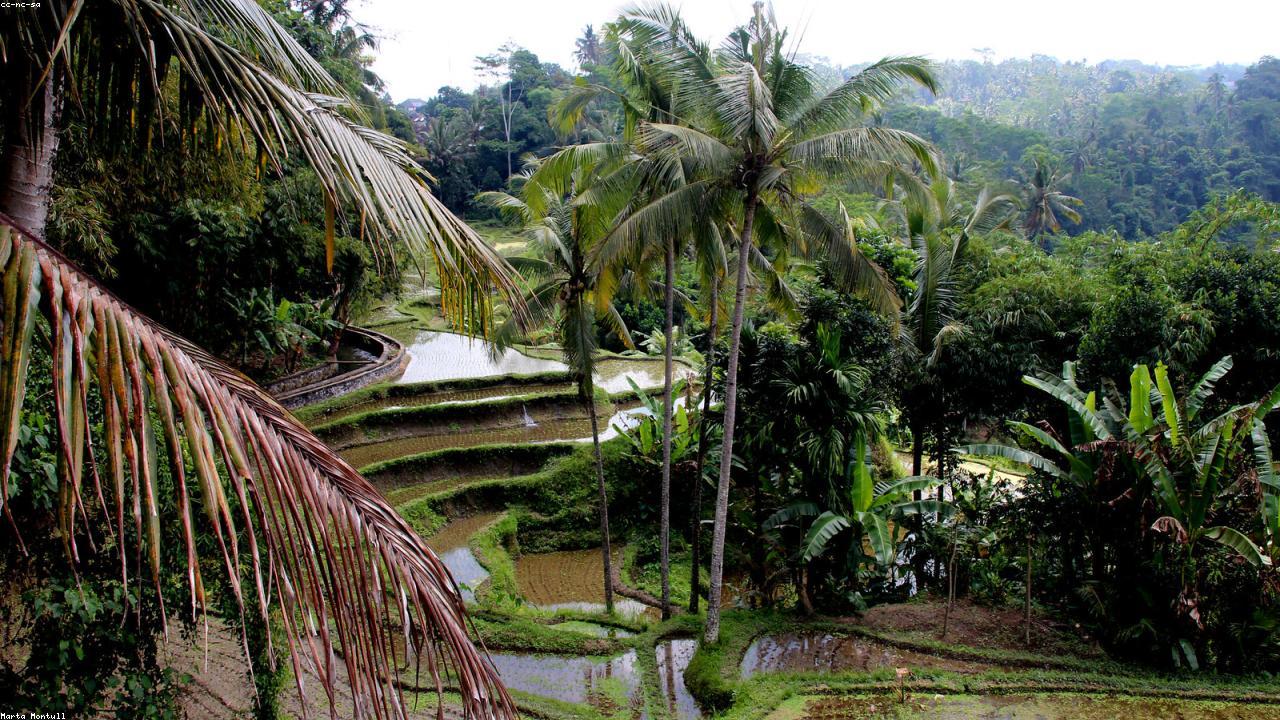
It’s 5:48 a.m. in Sidemen, on the eastern flank of Mount Agung, and the rice terraces are coming out of the dawn fog one tier at a time. A farmer in a sarong is already up to his ankles in mud, planting. A flock of ducks is being herded through the irrigated channels — eating insects and fertilising as they go, the way Balinese farmers have run this system for a thousand years. I’m on the porch of a small guesthouse with a coffee. There is no one else awake. This is the Bali that justifies the flight.
Why I keep coming back
My first Bali trip was 2008, when the south coast had been touristed for forty years but Ubud was still a small temple town and the east coast was virtually unvisited. The island has changed dramatically since — Ubud is now a yoga-and-cafe town that is overrun in high season; the south coast has expanded into a continuous beach-and-bar strip from Seminyak to Uluwatu; the digital-nomad influx of 2018–2024 reshaped Canggu entirely.
And yet. The Bali that drew the first foreign artists to Ubud in the 1920s — the rice-terraced river-valley landscape, the daily temple offerings (canang sari) on every doorstep, the Hindu-Balinese cosmology that pervades the visual culture — is still there if you go to the right part of the island. The Balinese themselves continue to live their ceremonial life with extraordinary commitment.
Where to base yourself
Ubud for the temples, the rice fields, and a slower pace. Avoid the central few blocks; choose accommodation a 5–10 minute drive out (Penestanan, Nyuh Kuning, Sayan).
Sidemen, Amed, or Munduk if you want the genuine quiet rural Bali — the eastern terraces, the diving coast, the northern lake region.
Canggu for the surf-and-cafe contemporary scene, if that’s what you’re here for. Crowded.
Uluwatu for the cliff hotels and the surf breaks of the Bukit peninsula.
Avoid Kuta and Legian unless you specifically want the noisy backpacker strip.
What to actually do
Walk the rice fields at dawn. The Tegalalang terraces north of Ubud are the famous and now somewhat over-photographed ones; the Jatiluwih terraces further west are larger and quieter. The fields around Sidemen and Sebatu are emptier still.
Visit a temple ceremony. Almost every day, somewhere in Bali, a temple ceremony is happening. Ask your guesthouse — they will know what’s local and what’s appropriate for visitors. Sarong required (often loaned at the temple); shoulders covered; do not enter the inner courtyard unless invited.
Surf or dive. The Bukit peninsula has world-class surf (Uluwatu, Padang Padang); the east coast at Amed and the small island of Nusa Penida have excellent diving. Tulamben, on the north-east coast, has the wreck of the USS Liberty in shallow water — a beginner-friendly dive.
Climb Mount Batur for sunrise. Two-hour pre-dawn hike up a still-active volcano in central Bali, returning by mid-morning. ฿250,000–500,000 with a guide (required by local ordinance). The view from the summit is the postcard view.
Take a cooking class. Balinese food is distinct from Indonesian generally — heavier on shrimp paste, lemongrass, kemiri (candlenut), and the bumbu base spice paste. Paon Bali in Ubud is the long-running classic; full-day with market visit around ฿400,000.
Where to eat
Local Balinese cooking is best in the small warungs (family-run shops). Avoid the resort restaurants for the most part.
Warung Babi Guling Ibu Oka (Ubud) — Balinese spit-roasted suckling pig; specifically the lunchtime sitting. Locavore (Ubud) — Modern Indonesian, ingredient-driven tasting menu; the closer Bali gets to fine dining. Warung Pulau Kelapa (Ubud) — Traditional rijsttafel-style sharing menu of Indonesian regional dishes. Sate Plecing Arjuna (Denpasar) — A working-class joint with grilled satay and the famous plecing kangkung (water spinach with chilli-tomato sauce). Sea Circus (Seminyak) — Casual Australian-Balinese fusion, good when you need a break from rice. Hujan Locale (Ubud) — The chef Will Meyrick’s modern Indonesian; reservations advised.
When to come
May, June, September — the shoulders of the dry season. Pleasant temperatures, fewer crowds.
April and October are the rainy-to-dry transitions; less reliable but usually fine.
July, August, and Christmas/New Year are full high season with significantly elevated prices and crowds.
The Nyepi (Balinese Day of Silence) in March (date varies with the Saka calendar) is the island’s most extraordinary day — total silence, no lights, no movement, even the airport closes. If you can plan a visit to overlap, it is unforgettable.
Practical notes
- Visa: Visa-on-arrival for most Western passports, 30 days (extendable). Apply for the e-VOA online to avoid airport queues.
- Money: Indonesian rupiah. ATMs are reliable; cash for warungs, card increasingly in restaurants.
- Transport: Renting a scooter is the freedom move but the roads are dangerous (driving is on the left, traffic is unpredictable, and helmets are sometimes lacking). Grab and Gojek (ride-hail apps) are the practical alternative. Drivers for the day are around ฿650,000.
- Health: Bali belly (food/water-borne stomach issues) is common; stick to bottled water, peel fruits, watch the ice in cheap drinks. Dengue is present, particularly in the rainy season.
- Temple etiquette: Sarong, sash, shoulders covered. Women should not enter temples during menstruation (a local convention). Don’t step on the small offering baskets on the ground.
A final thought
Bali is one of the over-discovered destinations of the modern era and remains, despite the saturation, an island of extraordinary beauty. The Balinese themselves continue to live a culture that is genuinely distinct from anywhere else in Southeast Asia — the daily offerings, the temple festivals, the cremation ceremonies, the gamelan music in the evening. The infrastructure of tourism has layered over but not replaced this. You can walk five minutes from a yoga-studio strip in Ubud and find yourself in a working temple courtyard during a ceremony, with the gamelan in the corner and the air thick with incense.
The choice of where to base yourself is the most consequential decision of the trip. The south coast and central Ubud are an essentially Westernised experience. Sidemen, Amed, Munduk, the small villages of the east and north — these are still the Bali of 1980, materially poorer, occasionally inconvenient, and the version of the island most likely to leave you changed.
Stay two weeks. Spend three nights on the south coast and the rest in Ubud or further east. Hire a driver for a day. Watch a temple ceremony. Get up before dawn at least once. The island earns the affection it provokes.
If you only have a few days
6 ideal things to do in Ubud
The Campuhan Ridge Walk, before the heat arrives
Ubud, starting at Pura Gunung LebahFirst light; be off it by eight
Paved path running along a grass spine between two river gorges, starting at the temple down in the ravine and going out a couple of kilometres before the cafés begin. Go at nine and you will spend it stepping around people photographing each other in white dresses. At six there were four joggers, a woman with a broom, and a man carrying a rooster under one arm. Short, easy, and it puts you above Ubud instead of in its traffic.
Museum Puri Lukisan
Central Ubud, just off Jalan RayaLate morning, when the streets turn unpleasant
Bali's oldest art museum, opened in 1956 by the ruling family of Ubud together with the Dutch painter Rudolf Bonnet, specifically so that the good work would stop leaving the island in other people's suitcases. Six pavilions set in a garden, mostly twentieth-century Balinese painting and woodcarving, and almost nobody in them. I walked past that gate on three separate trips assuming it was a hotel, which says more about me than about the signage.
Tirta Empul, the holy spring at Tampaksiring
About thirty minutes north-east of UbudAt opening, ahead of the coach groups
Water has been coming out of this spring since at least 962, and Balinese families still queue along the stone tank to pass under the spouts for the melukat cleansing. Visitors are welcome in the water, wearing the sarong, and are also correctly expected to know that you take the spouts in order and do not skip any. I skipped one. A grandmother behind me put a hand on my shoulder and moved me back, and she was entirely right to.
The rock-cut shrines at Gunung Kawi
Tampaksiring, in the Pakerisan valleyMorning; the stairs are unkind after eleven
Ten memorial facades, each about seven metres high, cut directly into the rock walls of a river gorge in the eleventh century — not built, carved, which takes a moment to land. You reach them down a long staircase through working rice terraces, which is delightful, and you leave by the same staircase, which is a different proposition entirely. Far quieter than anything else in the valley, largely because of that staircase.
The Sacred Monkey Forest Sanctuary
Padangtegal, southern UbudEarly, while the macaques are still eating
Roughly 1,260 long-tailed macaques live in a patch of forest at the bottom of Ubud, along with three temples dating to about 1350 and an enormous quantity of moss. The monkeys are wild and have no interest in your personal boundaries. Keep sunglasses in a bag rather than on your head — I learnt this in the usual way, at the usual price, watching a juvenile assess my prescription lenses from a branch six metres up.
The Jatiluwih rice terraces
Tabanan, about two hours west of UbudDry-season morning, ahead of the midday coaches
Six hundred hectares of terraces on the flank of Batukaru, farmed under the subak system — water councils that have been settling who irrigates when since roughly the ninth century, which is more governance than my building in Split can manage over a single shared meter. Marked trails run through the working fields rather than past them. It is a long drive, Tegalalang is far closer, and I would still do the drive.
From a Split boy’s notebook
The Split lens
What reminded me of home
Island culture with a daily ritual practice — Balinese offerings on every doorstep at sunrise — that I'd compare to our older island Catholic practice of small votive shrines at crossroads and on house corners. Both cultures keep their religion in the small daily acts more than the big Sunday performance.
What Split could borrow
Balinese tourism in the calmer parts of the island is village-based: you stay in a family compound, eat the family's food, walk the family's rice fields. Our island villages on Vis, Šolta, and inner Hvar have exactly this potential. The accommodation framework exists; the village-hospitality license to operate at small scale does not.
Who can take you
Tour operators & guides to try
A short, opinionated starter list — just my humble opinion. Verify before booking.
Intrepid Travelsmall groupwww.intrepidtravel.com →
Intrepid's Bali + Lombok itineraries are a sensible 8–12 day frame for a first visit — Ubud, the east coast (Sidemen or Amed), the islands. Group size 12–16. The guides are typically Balinese which makes the temple-visit context substantially better than the standard generic-Indonesian narrative. Caveat: their accommodation in Ubud is sometimes in the saturated central area; ask for the further-out alternative if you can.
Bali Eco Cycling Toursactivitybaliecocyclingtours.com →
Bali Eco Cycling is the original Ubud-based cycling-tour outfit running the downhill route through rice terraces and Balinese villages, with proper explanation of the subak irrigation system and the daily Hindu offerings. Groups around 12, mid-tier mountain bikes. The descent is comfortable rather than technical. Caveat: in high season the Tegalalang stretch is crowded; ask whether the route can be shifted to the quieter Pakerisan valley terraces for a small premium.