Photo: Ščenza
Chiang Mai, Thailand · Asia
Chiang Mai: the slow northern city of temples, noodles, and hills
Chiang Mai is what Bangkok was, possibly, before the expressways. A small grid of moated streets, three hundred temples within walking distance, the smell of charcoal and lemongrass in the evenings. It also has the best curry noodles in Thailand.
By Ščenza
· updated · 5 min read
There’s a small shop on the corner of Ratchaphakhinai Road, inside the old moated centre of Chiang Mai, where a Thai woman called Khun Aew has been making khao soi — northern Thai curry noodles, the dish you came north for — since 1989. She charges 50 baht. The broth is the colour of paprika. There’s a fried-noodle crown on top of the soft-noodle bowl, a small dish of pickled mustard, a wedge of lime, raw shallots. You sit on a plastic stool. The next stool over is a tuk-tuk driver having his second bowl of the morning. This is Chiang Mai.
Why I keep coming back
Chiang Mai is the rare Asian city of significant size that has resisted being remade by skyscrapers and expressways. The old city, a 1.5 km-square moated rectangle laid out in 1296 when the Lanna kingdom was founded, is largely intact at human scale. Three hundred Buddhist temples — the Lanna tradition is distinct from the central Thai tradition, gentler in its golden tones — are within walking distance of each other. The northern Thai cuisine is, in my view, the country’s most underrated food region.
The city is also Thailand’s slow-travel capital. It’s been a long-term-stay favourite of expats and digital nomads for fifteen years. The slow pace is part of what the city sells.
Where to base yourself
Inside the old city walls for the temples and the walking; small naga (dragon-headed) gates at each direction.
Nimmanhaemin (Nimman) west of the old city for the contemporary cafés, design shops, and student-area energy.
Wat Ket or the east bank of the Ping river for a quieter, slightly more residential base.
What to actually do
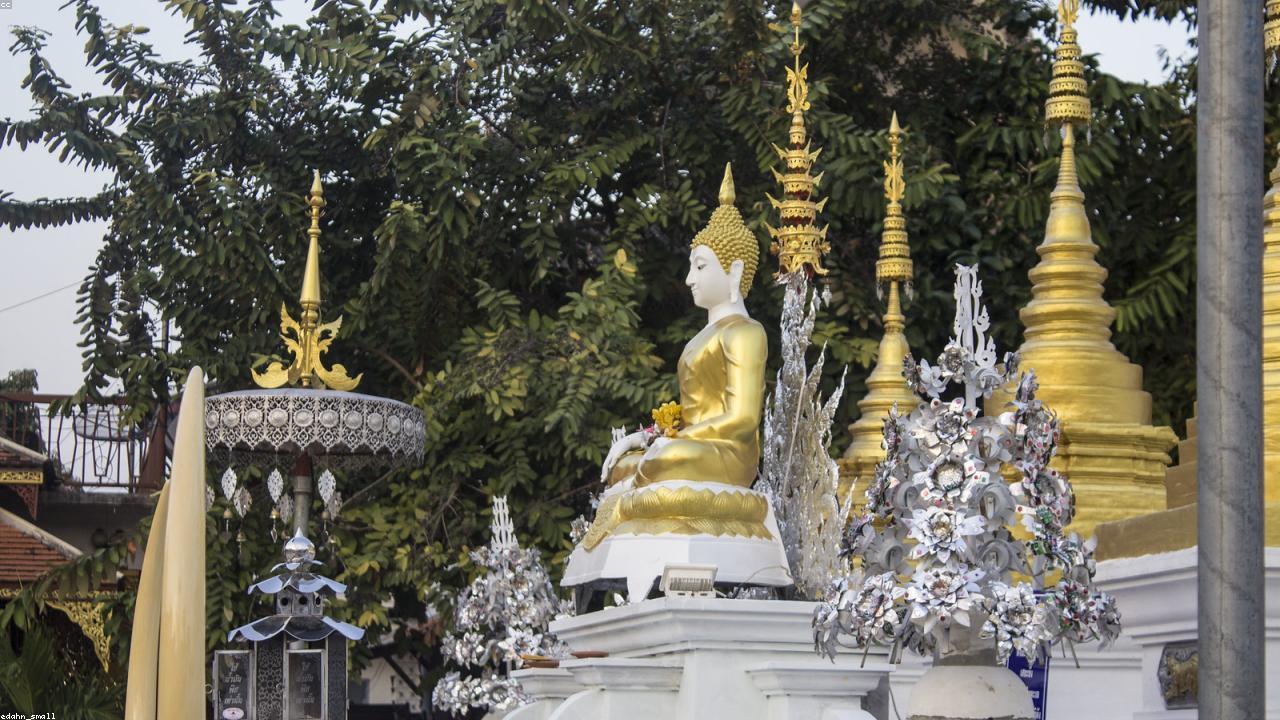
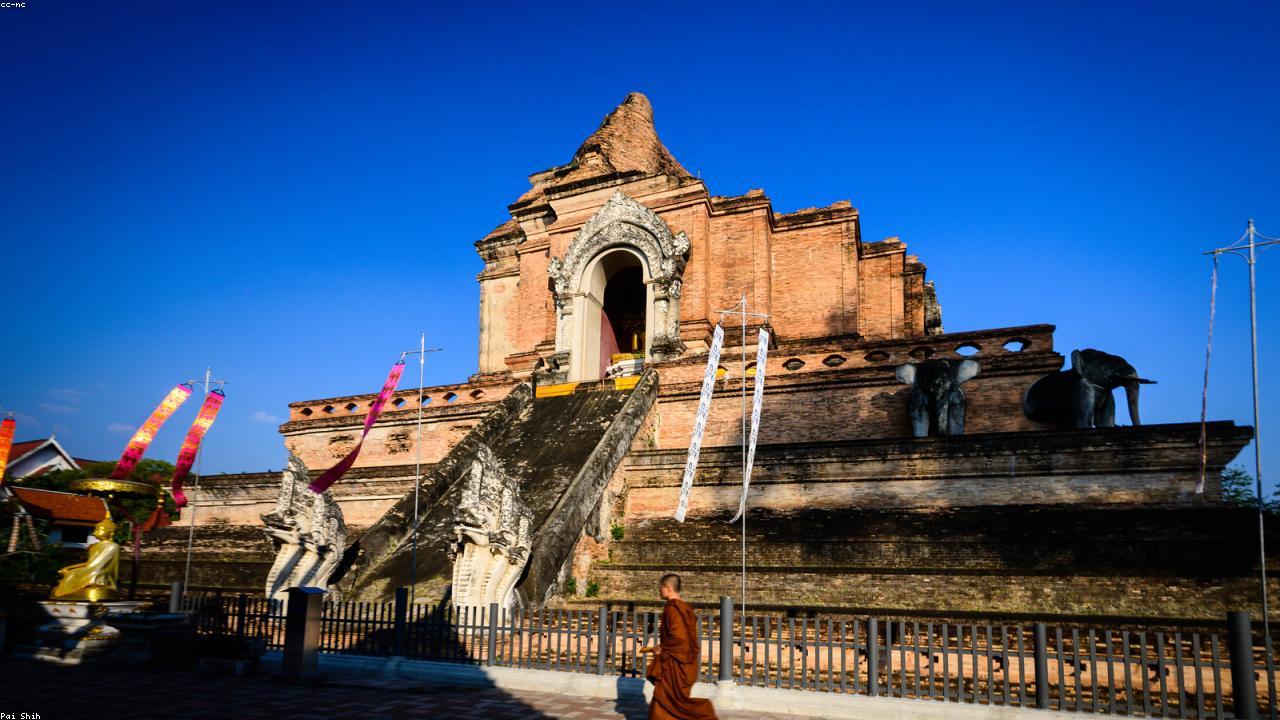
Walk the temples of the old city. The big three: Wat Chedi Luang (a vast partially collapsed 15th-century chedi at the centre of town), Wat Phra Singh (the most active temple, with the most exquisite Lanna-style viharn), Wat Chiang Man (the city’s oldest, founded with the city in 1296). Each can be done in 30 minutes; together in a single morning.
Climb to Wat Doi Suthep. The mountain temple above the city, accessed by a 305-step naga-balustrade staircase. The gilded chedi is the most important pilgrimage site in northern Thailand. Songthaew shared minibuses from the old city are the standard transport; the cab fare is about ฿200.
Take the Sunday Walking Street. From around 4 p.m. Sunday, Ratchadamnoen Road in the old city closes to traffic and becomes a vast night market. Excellent for street food, less interesting for shopping (largely tourist-tier). The Saturday Walking Street on Wualai Road is the older, more local version.
Visit an elephant sanctuary, not a riding camp. Elephant Nature Park in the Mae Taeng valley north of the city is the original ethical sanctuary that rescued working elephants from the logging and tourism trades. A full-day visit is around ฿2500 and supports the operation.
Hike or ride the hills. Day rides into the surrounding hill country — Mae Sa Valley, Doi Inthanon (Thailand’s highest peak), Pai (a small hippie town a winding three-hour drive away) — are easily arranged. Pai is overrun; Chiang Dao, two hours north, is the calmer alternative.
Where to eat
Northern Thai cuisine is distinct: less coconut, more fermented dishes, freshwater fish, sticky rice, mountain herbs.
Khao Soi Khun Yai — Famous khao soi, around ฿50; queue at 11 a.m. Tong Tem Toh — Northern Thai dining-room restaurant in Nimman, the nam prik ong (chilli-tomato dip) with crudités. Huen Phen — The traditional Lanna restaurant, the gaeng hung lay (Burmese-influenced pork belly curry). Kao Soy Mae Sai — Smaller, slightly more local khao soi. SP Chicken — Roasted spice-rubbed chicken (gai yang) and somtam papaya salad. Cheap, excellent. Lemontea & Lemongrass — Modern Thai-fusion in Nimman, the kind of place that does pad krapao with sous-vide pork. The morning markets at Warorot or Somphet for the best fresh fruit on earth.
When to come
Mid-November to February — the cool, dry season. Days 26–28°C, nights cool enough for a sweater.
Avoid March and April — the burning season (agricultural slash-and-burn in the surrounding hills), when air quality plummets to dangerous levels. Genuinely unpleasant.
May–October is rainy season; less disruptive than the burning season but with daily afternoon storms.
Yi Peng / Loy Krathong in November (date varies with lunar calendar) is the famous floating-lantern festival; book everything months ahead.
Practical notes
- Visa: Same as Bangkok — visa-free or visa-on-arrival for most Western passports.
- Money: Thai baht; ATMs everywhere.
- Transport: The old city is walkable. Songthaew shared minibuses (red trucks) are the local transport — flag one, tell the driver your destination, ฿30–50 for a ride. Grab is also available.
- Burning season: March–April. The PM2.5 readings in Chiang Mai during these months are routinely in the unhealthy range. Don’t come unless you have to.
- Cooking schools: Chiang Mai has more Thai cooking schools per capita than any other Thai city. Many are excellent. Half-day courses around ฿1000–1500.
A final thought
Chiang Mai is the Thai city that has, over twenty years of visits, changed least visibly. The old town is still the old town. The moat is still the moat. The 700-year-old temples are still 700 years old. The smaller streets — Nimmanhaemin Soi 9 in the morning, the lanes around Wat Phan Tao in the evening — still have the smell of charcoal and lemongrass that I remember from 2007.
What has changed is the city’s role in the global travel economy: from a brief stop on a backpacker circuit to a long-stay destination for remote workers and a culinary pilgrimage for serious Thai-food enthusiasts. The infrastructure has caught up — there are better coffee shops, more international restaurants, more co-working spaces. The street-level cooking has, against expectation, mostly survived.
Go for a week minimum. Eat khao soi every other day. Walk the temples in the early morning. Take a cooking class. Hire a scooter and ride into the hills. Come back. The northern Thai version of the country’s hospitality — quieter, slower, less performed — is one of Asia’s quiet pleasures.
If you only have a few days
7 ideal things to do in Chiang Mai
The Monk's Trail to Wat Pha Lat, then on up to Doi Suthep
Trailhead west of the city, behind Chiang Mai UniversityStart at first light; never during the March–April burning season
Roughly a mile of forest path, steep in stretches and shaded nearly all of it, used for generations by monks walking down into town. Forty-five minutes gets you to Wat Pha Lat, which sits over a stream with moss on every surface and almost nobody in it. Carry on another hour uphill and you reach the 306-step naga staircase to Wat Phra That Doi Suthep, where the songthaews have already delivered everyone else. I once did it downhill instead, out of laziness, and it is a distinctly lesser walk.
Monk Chat at Wat Chedi Luang
Old city, Phra Pokklao RoadDaily through the daytime; tables on the north side of the grounds
The chedi was finished in 1441, lost its upper section to an earthquake, and is still enormous — a brick mountain sitting in the middle of a walled town. Over in the northern corner of the grounds, novice monks sit at tables to practise English with whoever turns up. Ask them something real; they field 'what do you eat' about forty times a day. I asked a nineteen-year-old what he found hardest about the robes and he said mosquitoes, then asked me what Croatia was, and I made a poor job of explaining it.
The Lai Kham viharn at Wat Phra Singh
Western end of Ratchadamnoen Road, old cityEarly morning, before the first groups arrive
Visitors come for the big gold buildings at the front and walk straight past the small one at the back, which is where the good material is. The Lai Kham chapel holds the Phra Buddha Sihing image and a set of Lanna murals of northern life — market scenes, tattooed legs, people plainly gossiping — painted in a register much closer to comics than to scripture. Shoes off, sit down, give the left-hand wall ten unhurried minutes. It is the best short lesson in Lanna culture available in the city.
Wat Umong, the tunnel temple
About 4 km southwest, at the foot of Doi SuthepLate afternoon, when the light reaches into the tunnels
Founded in the thirteenth century as a forest retreat, with brick tunnels driven into a mound so that monks could meditate undisturbed. You walk through them into small shrine chambers and back out into woodland with a lake where turtles sun themselves on logs. Broken Buddha images have been left lying where they ended up, which affects me more than any restored one does. I sat on a bench there for an hour and only realised afterwards that I had not looked at my phone, which in my case is close to a medical event.
Breakfast in the basement of Warorot Market
Chinatown, near the Ping riverMid-morning, while the day market is at full tilt
Kad Luang is the oldest and biggest market in town, three floors of it, and the food is downstairs. Northern sausage, Shan noodles, bags of pork crackling the size of pillows, khao soi eaten off a folding table with a stool that wobbles. The flower sellers work the eastern side and by nine the whole lane smells of jasmine garlands. Nobody in here is performing anything for your benefit, which after a week of walking-street stalls is a considerable relief.
The Saturday Walking Street on Wualai Road
Just outside the southern moatSaturday evening
Wualai was the silversmiths' street and some of the workshops are still hammering — you can stand in an open shopfront and watch a man raise a bowl out of a flat disc while the crowd flows past your back. It is smaller and calmer than Sunday's market on Ratchadamnoen and the food is better. Bring cash and very low expectations about your walking speed. I bought my mother a silver bracelet here in 2019 and she still wears it, which is a better outcome than most souvenirs manage.
A day at Elephant Nature Park
Mae Taeng valley, roughly 60 km northBook weeks ahead; a full day including the drive
Lek Chailert started this in the mid-nineties as a rescue for elephants worn out by logging and trekking camps, and it now holds more than a hundred of them, plus a startling number of rescued dogs. No riding, no scrubbing them down, no show. You watch. If that sounds anticlimactic, you have not stood ten metres from an animal that hauled teak for thirty years and is now, deliberately, doing nothing at all. Book the real one — several outfits nearby have confusingly similar names.
From a Split boy’s notebook
The Split lens
What reminded me of home
Smaller, slower northern city in a country whose capital gets all the attention. Chiang Mai's relationship to Bangkok is roughly Split's relationship to Zagreb — quieter, cheaper, with deeper craft traditions. The Sunday Walking Street is a bigger version of our weekend Pazar.
What Split could borrow
Chiang Mai has more cooking schools per capita than any city I've been to — and the cooking schools are a serious slice of the local tourist economy. Our Dalmatian cooking tradition (peka, brodet, soparnik) is documented but rarely taught to visitors. A real Dalmatian cooking school network across Split, Trogir, and Šibenik is missing.
Who can take you
Tour operators & guides to try
A short, opinionated starter list — just my humble opinion. Verify before booking.
Intrepid Travelsmall groupwww.intrepidtravel.com →
Intrepid's northern Thailand trips do Chiang Mai with a multi-day extension into the surrounding hills — Pai, Mae Hong Son, the trekking villages — at a pace I think is right. Group size 12–16. The cooking-class day in Chiang Mai is well-arranged. Caveat: Intrepid still uses some elephant-camp partners that responsible-tourism reviewers have flagged; ask directly whether the elephant component is observation-only at sanctuaries with no riding (the right answer is yes).
EXO Traveltailoredwww.exotravel.com →
EXO Travel handles Chiang Mai bookings via their northern Thailand desk with strong local-guide relationships and tailored itineraries — useful if you're combining with a Laos extension via the Mekong river crossing. Mid-to-upper tier pricing. Caveat: EXO is genuinely a travel-trade operator; you'll often book them through a Western travel agent rather than directly. The direct booking is possible but slower.