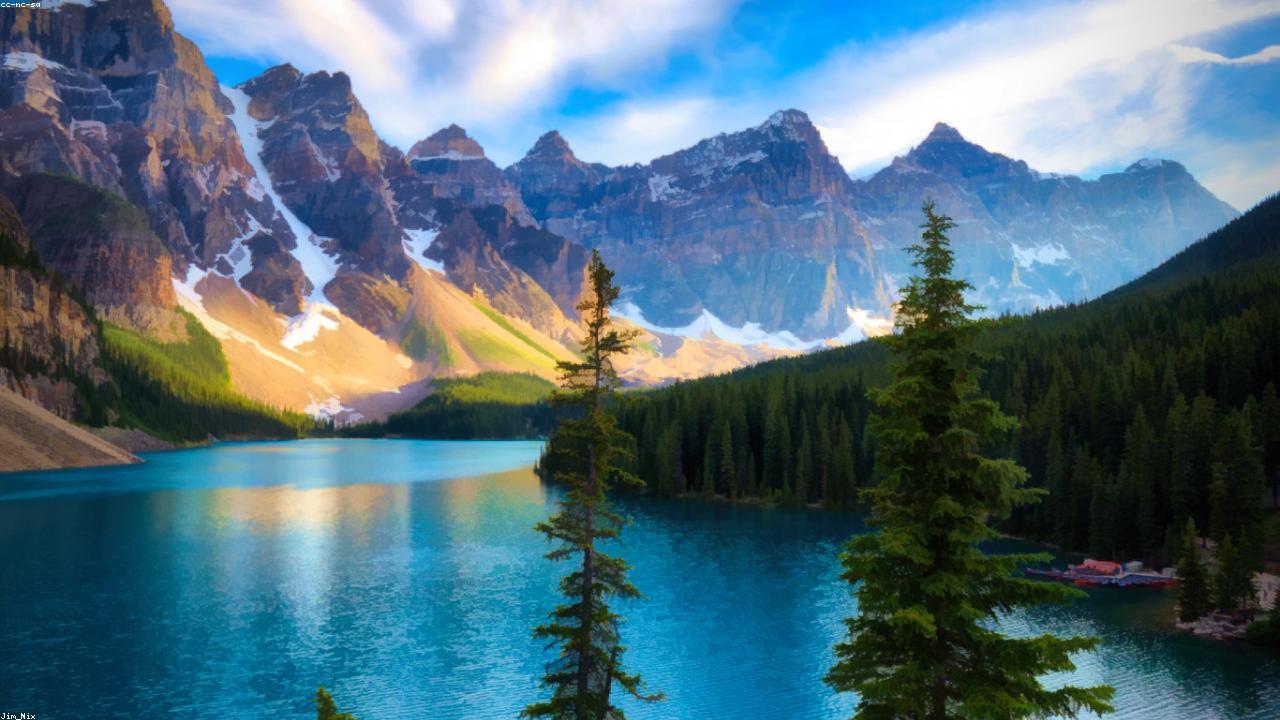
Photo: Ščenza
Banff, Canada · North America
Banff: the Canadian Rockies and the case for the shoulder season
Banff, Jasper, and the Icefields Parkway form one of the great mountain landscapes of North America. In July and August, the parking lots fill at 6 a.m. In May or late September, the crowds thin to a manageable level and the mountains are themselves.
By Ščenza
· updated · 5 min read
It’s 6:24 a.m. at Moraine Lake — the small alpine lake in the Valley of the Ten Peaks, one of the most photographed places in Canada — and the water is the colour of Caribbean turquoise. The colour is caused by glacial rock-flour suspended in suspension. The mountains around the lake — Mount Bowlen, Mount Tonsa, Mount Perren, and seven others — are still in shadow at this hour. There are perhaps a dozen people on the small viewing rockpile. By 9 a.m., this number will be five hundred. By 10, the shuttle buses from Lake Louise village will be running every fifteen minutes and the parking has been closed to private cars for years. This is the trick to the Canadian Rockies: get up early, or get up in the off-season, or both.
Why I keep coming back
The Canadian Rockies — Banff, Jasper, Yoho, and Kootenay National Parks, a contiguous UNESCO area along the Alberta-British Columbia border — contain some of the most spectacular mountain landscapes on earth. The combination of the rock geology (limestone, sharp and jagged), the glacial-rock-flour-coloured lakes (turquoise, jade-green, and milky), the surviving alpine wildlife (grizzly bears, wolves, elk, mountain goats, bighorn sheep), and the genuinely large remaining wilderness (the Icefield Parkway between Banff and Jasper is a 230-km drive through wild country) makes a week here one of the great mountain trips.
The parks have been very heavily marketed in the past decade, and high-season parking and crowds are a real issue. The shoulder seasons (late May–early June, mid-September–October) are the working answer.
Where to base yourself
Banff town for the central, walkable base; good restaurants, shops, easy access.
Lake Louise village for the closer-to-the-lake stays; smaller, quieter.
Canmore (10 minutes east of Banff) for a less expensive base just outside the park.
Jasper town for the northern parks; smaller, less developed, more wildlife in town.
What to actually do
See Moraine Lake and Lake Louise. The two iconic lakes. Both require a shuttle in high season (private cars banned at Moraine Lake; restricted at Lake Louise). Book the shuttle at parkscanada.gc.ca well in advance.
Drive the Icefields Parkway. The 230-km road between Lake Louise and Jasper. Allow a full day with stops. Highlights: Bow Lake, Peyto Lake (viewpoint), the Columbia Icefield and Athabasca Glacier (you can walk onto the glacier with a guide), Sunwapta Falls, Athabasca Falls.
Walk to Lake Agnes Tea House. From Lake Louise lakefront, a 3.6-km moderate hike up to a 1901 Swiss-built tea house at a small upper lake. A good half-day walk.
Hike the Plain of Six Glaciers. Another classic Banff hike, from Lake Louise.
Soak at Banff Upper Hot Springs. The natural sulfur hot springs above the town; small fee, lovely after a day of hiking.
Wildlife watching at dawn and dusk. Elk are essentially permanent in Banff town. Bears, both grizzly and black, in the surrounding forests; watch from a safe distance. Mountain goats and bighorn sheep on the cliffs along the Trans-Canada Highway.
Take the gondola. The Banff Gondola up Sulphur Mountain for the 360° view. The Lake Louise Gondola for bear-spotting in spring.
Cross-country ski or snowshoe in winter. The Banff cross-country trails are excellent; the snowshoe routes around Johnston Canyon and Bow Lake are accessible.
Where to eat
The Bison (Banff) — Mountain-themed but actually good; the bison ribeye. Park Distillery (Banff) — Distillery and restaurant; the rotisserie chicken. Three Ravens (Banff Centre) — Quiet, civilised, the local choice. Communitea (Canmore) — Healthy, fresh, good lunch. Truffle Pigs Bistro (Field, BC) — Worth the drive; in a tiny mountain village. Pyramid Lake Resort (Jasper) — Reliable for dinner with the lake-and-mountain view.
When to come
Late June through August for the warm-weather lake-and-hiking season. Lakes are at their bluest, hiking trails are open, but the crowds are at peak.
Late May to mid-June for early-season — some snow still on higher trails, but the lakes are coloured by mid-June, and the crowds are half.
Late September to mid-October for the autumn colours — the larches turn gold above 2000 m for about two weeks each year, and the crowds are again much thinner.
December through March for winter — Banff and Lake Louise ski areas are extensive; cross-country skiing and snowshoeing are excellent.
Practical notes
- Visa: eTA.
- Money: Canadian dollar.
- Park pass: A Parks Canada pass is required to drive in the park; CA$11.25/day for an adult or CA$22.50/day for a family/group.
- Lake Louise and Moraine Lake parking: Lake Louise has paid parking with a shuttle option; Moraine Lake is shuttle-only (no private vehicles). Both fill up; book the shuttle online.
- Transport: A rental car is essentially required for the Icefields Parkway. Hiring a Rocky Mountaineer train trip is the iconic-train option (Vancouver–Banff or Jasper, two days each way).
- Wildlife safety: Bear spray (CA$50 at outdoor shops) is recommended for hiking. Make noise. Stay 100 m from bears, 30 m from other large wildlife.
- Altitude: Banff is 1400 m, Lake Louise 1730 m, the Icefield Parkway summit 2068 m. Generally not high enough for serious altitude effects but worth pacing.
A final thought
The Canadian Rockies are the rare mountain destination that genuinely deserves the Instagram fame. The colour of the lakes is real; the scale of the peaks is real; the wildlife density is real. The volume of high-season visitors is also real and has reshaped the experience.
The shoulder seasons — late September especially, with the golden larches — are the underrated windows. The summer is at peak but it’s also at full crowd. The winter has its own beauty and the prices are lower.
Stay at least five nights. Drive the Icefields Parkway. See Moraine Lake early. Hike at least one trail with serious elevation gain. Watch for wildlife on the road. Spend a night in Jasper as well as Banff. The mountains have been doing this for a long time and will be here long after the parking-lot system has been revised once again.
If you only have a few days
6 ideal things to do in Banff
Johnston Canyon to the Ink Pots
Bow Valley Parkway, 25 km west of BanffBefore eight or after five. Midday is a queue on a catwalk
Steel catwalks bolted into the limestone carry you up a slot canyon to the Lower Falls, then the Upper, and that is where almost everybody turns round. Keep going another hour uphill into open meadow and you reach the Ink Pots: six spring-fed pools, blue-green, with sand quietly boiling at the bottom of each one. The crowd thins the moment the handrails end, and stays thin. In winter the whole thing freezes and people climb up it on axes.
Cave and Basin National Historic Site
Ten minutes' walk west of Banff townAny weather. It is mostly indoors and partly underground
Three railway workers dropped through a hole in the ground in 1883, found a steaming cave, tried to claim it, and lost — the government took it and built the reserve that became Canada's national park system. You enter through a tunnel now. It smells of sulphur, the water is the temperature of a bath you would complain about, and swimming stopped years ago because the pool turns out to be the last habitat of a snail that lives nowhere else on earth. Small museum, very large consequences.
Vermilion Lakes before sunrise
Vermilion Lakes Drive, five minutes from townThe half hour before the sun clears the ridge, any season
Shallow water along a dead-end road just west of the townsite, with Mount Rundle standing upside down in it on a windless morning. You can walk or cycle out from Banff in less time than it takes to queue for the Lake Louise shuttle. Elk use the marsh, and people have been camping on this ground for something like ten thousand eight hundred years, which puts the parking problem in perspective. I have gone at dawn four times and got the mirror twice — a respectable strike rate in mountain weather.
Lower Bankhead, the coal town that isn't there
Lake Minnewanka Road, ten minutes from BanffAny time. Twenty minutes to walk it
Roughly a thousand people lived here mining anthracite for the railway between 1903 and 1922. When the seam stopped paying, the company owned every building in town and simply moved them — houses to Banff and Canmore, the railway station up to Tunnel Mountain Road. What remains is foundations, a slag heap, some rusting machinery and a set of interpretive signs, sitting inside a park that would much rather you thought of it as untouched wilderness. Ten minutes from the lake everyone drives to, and I have never had to share it.
Sunshine Meadows in larch week
Sunshine Village, up by gondola from the Trans-CanadaRoughly the third week of September. It moves each year
Alpine meadow at 2,300 metres straddling the Continental Divide, with a five-and-a-half kilometre loop past Rock Isle Lake and, on a clear day, Mount Assiniboine doing its Matterhorn impression away to the south. For about a fortnight each September the larches turn the colour of a good beer and then drop their needles, being the one conifer that cannot commit. There is no road; you go up by gondola or shuttle. Book it, because every hiker in Alberta owns the same calendar.
Whyte Museum of the Canadian Rockies
Bear Street, Banff townA rainy afternoon, or the day your legs resign
Peter and Catharine Whyte — he a local painter, she from Massachusetts money — met at art school in Boston, married in 1930, and spent the rest of their lives collecting these mountains. The museum opened in 1968 and holds around seventeen and a half thousand objects, including Byron Harmon's photographs of the range before the road went through. Six historic buildings stand on the grounds, one of them the cabin of Bill Peyto, the guide the lake on the Icefields Parkway is named after.
From a Split boy’s notebook
The Split lens
What reminded me of home
Mountain town inside a national park, with extremely high tourist pressure and a small permanent population. The Lake Louise summer queue and the Mount Mosor or Klis summer crowding are different scales of the same problem: beautiful, accessible places with no real capacity management.
What Split could borrow
Banff and Lake Louise have introduced shuttle-only access at peak hours — private cars are banned at the most-visited sites. Our equivalent — Klis Fortress, the Mosor trailheads, the Krka park entrances — still allows private cars at full saturation. A shuttle-only system at peak summer would preserve both the experience and the surrounding nature.
Who can take you
Tour operators & guides to try
A short, opinionated starter list — just my humble opinion. Verify before booking.
Intrepid Travelsmall groupwww.intrepidtravel.com →
Intrepid's Canadian Rockies trips combine Banff with Jasper, the Icefields Parkway, and Lake Louise over 7–10 days. Group size 12–16. The hiking is moderate (Sulphur Mountain, Johnston Canyon, the Plain of Six Glaciers); they don't push the harder trails. Caveat: in July and August the major sites are at saturation regardless of operator; prefer late September for the larch turn and lower crowds.
Backroadssmall groupwww.backroads.com →
Backroads runs serious cycling and walking trips through the Canadian Rockies — the Banff to Jasper cycling trip is the iconic itinerary, with the Icefields Parkway closed-to-cars sections under cycling escort. Upper-tier pricing (USD 5,000+ per person for a week). Caveat: their cycling pace is genuinely fit; this is not a recreational-rider option. Hotels are excellent.
If you liked this, try these
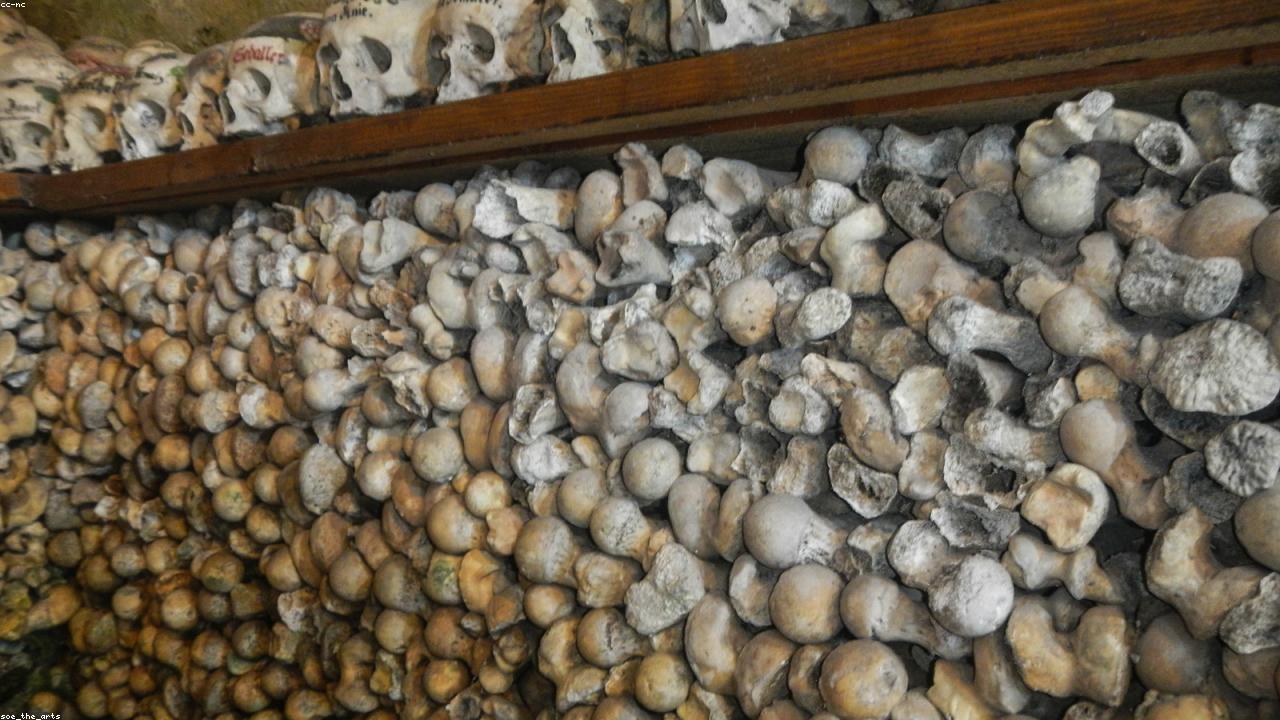
Hallstatt, Austria
Hallstatt at dawn: a tiny Alpine village before the buses
February 22, 2024
Vancouver, Canada
Vancouver: the rainforest city between the sea and the mountains
August 8, 2023
Quebec City, Canada
Quebec City in winter: the only walled city north of Mexico
January 25, 2021