Photo: Ščenza
Hong Kong, Hong Kong · Asia
Hong Kong: vertical city, tropical city, last-train city
Hong Kong's verticality is famous. What's less famous is how walkable it remains. The Mid-Levels escalator alone covers 800 metres of climb. The city is layered — street level, podium level, rooftop level — and the trick is to keep moving between them.
By Ščenza
· updated · 5 min read
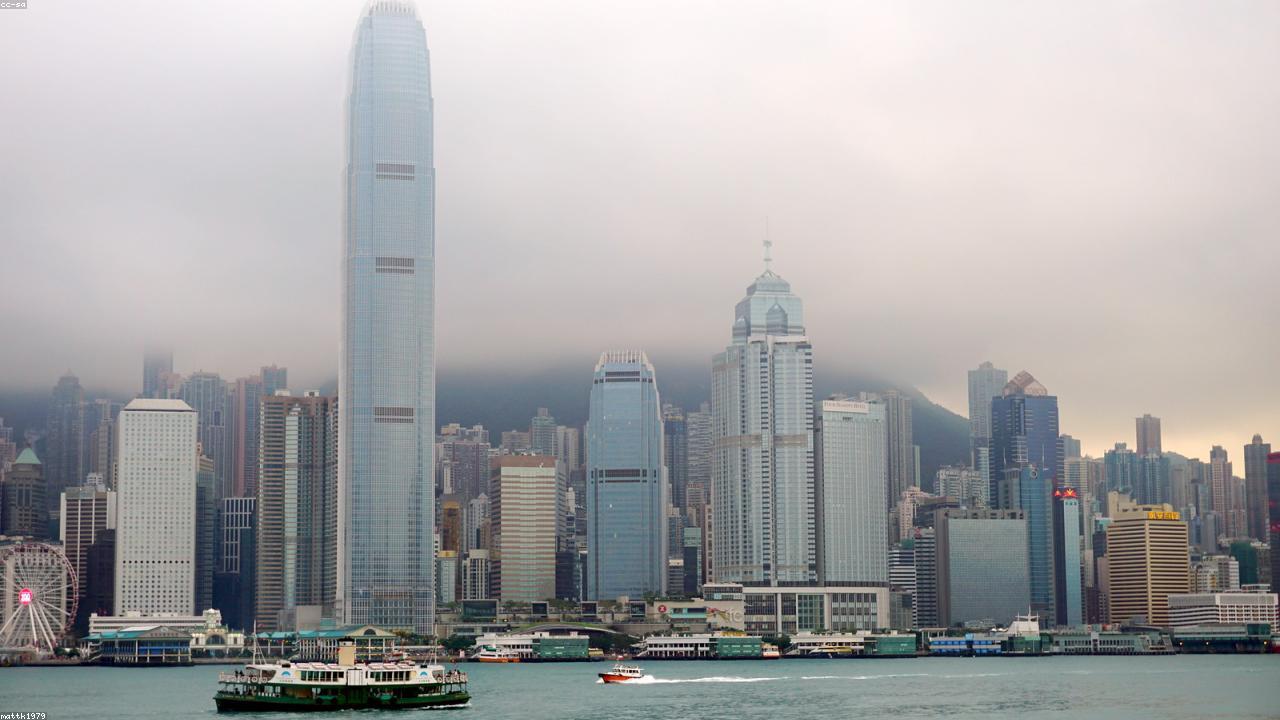
It’s 7:11 p.m. on the Star Ferry from Central to Tsim Sha Tsui and the Hong Kong skyline is doing what it does at this hour — the buildings flicking on their lights one tower at a time, the LED facade displays on three of them coordinating into a single show that’s been running, with periodic updates, since 2004. The HK$5 ferry fare has not changed materially in two decades. The seven-minute crossing remains the best urban view in Asia for the price of a banana.
Why I keep coming back
Hong Kong is the most vertical city on earth. Manhattan is denser by some measures; Hong Kong is taller. The Mid-Levels of Hong Kong Island — the residential band climbing from Central up the side of Victoria Peak — are a 200-metre staircase of buildings serviced by an 800-metre-long covered outdoor escalator that runs uphill in the morning and downhill in the evening. The cumulative effect of working out the layered urban infrastructure is one of the great pleasures of the city.
The food is one of the most consequential urban cuisines on earth. Cantonese cooking at the street stall level (the cha chaan teng, the diners), at the dim sum level, at the fine-dining level. The street culture, the markets, the wet markets, the hawker neon. The 7-day week.
Where to base yourself
Sheung Wan / Central for the heart of the island; convenient and walkable.
Tsim Sha Tsui (Kowloon side) for the harbour view and the cheaper hotels.
Mong Kok for the market and street-life density.
Sai Ying Pun for a slightly quieter, residential, increasingly chic neighbourhood, still walkable to Central.
What to actually do
Ride the Star Ferry at dusk. Central to Tsim Sha Tsui, then back. The HK$5 lower deck is the proper Hong Kong experience.
Take the Peak Tram up Victoria Peak. Then walk the circular path at the top (the Lugard Road loop) and walk back down. The taxi back is the easy alternative.
Eat dim sum at 10 a.m. on a Sunday. Lin Heung Tea House (the older, push-cart version, now largely retired but pockets remain) was the institution; Lung King Heen at the Four Seasons is the three-star modern version. Tim Ho Wan is the Michelin-starred budget version; queues are part of the experience.
Walk the Mid-Levels escalator. Start at Central, ride up through the Soho and Mid-Levels, get off at random levels for cafés and shops. Walk back down in the late afternoon as the escalator reverses.
Take the train to Mong Kok and walk the Ladies Market and the Goldfish Market. Markets specialised in single categories — birds, goldfish, flowers, shoes, electronics. A century-old Chinese urban institution.
Ferry to Lamma or Cheung Chau. The outlying islands, 30–60 minutes by ferry from Central. Lamma has a famous seafood village (Sok Kwu Wan); Cheung Chau has the longer walking trails and the small Bun Festival in the spring.
Hike Dragon’s Back. A 5-km ridge walk on the southeast of Hong Kong Island ending at Big Wave Bay beach. The most accessible of the city’s many serious hikes.
Where to eat
Lung King Heen — Three Michelin stars, the world’s first three-star Chinese restaurant. Tim Ho Wan — Michelin-starred dim sum at budget prices; the BBQ pork buns. Mak’s Noodle — Wonton noodles, four ingredients in the bowl, perfectly executed. Joy Hing Roasted Meat — The Cantonese roasted meat shop standard; the soy chicken. Sister Wah (Tin Hau) — Beef brisket noodles. Australia Dairy Company (Jordan) — The most efficient cha chaan teng on earth; eggs, macaroni soup, milk tea, in and out in 15 minutes. Yardbird — Modern yakitori (Japanese, but Hong Kong’s most-talked-about restaurant for a decade); walk-ins. Bar 8 1/2 Otto e Mezzo — The fine-dining Italian option.
When to come
October through early December is the season — pleasant temperatures, low humidity, clear skies.
January and February are cool and grey but workable.
June through September is brutal (35°C+, very high humidity, typhoon risk).
Chinese New Year (January or February) is festive and crowded; many restaurants close.
Practical notes
- Visa: Hong Kong remains separately administered from mainland China for visa purposes. 90 days visa-free for most Western passports.
- Money: Hong Kong dollar. Card universally; the Octopus card is the city transit card and is used at convenience stores, cafés, and many shops as well.
- Transport: The MTR is excellent; trams (the historic double-decker on Hong Kong Island) are slow and atmospheric and HK$3.
- Language: Cantonese is the local language. Mandarin is widely understood. English is the second official language and signage is bilingual.
- The post-2020 city: Hong Kong has seen significant changes since 2020 — the national-security law, the pandemic, demographic shifts. The visible tourist city is largely unchanged; the political conversations have changed. Be aware before discussing politics in public.
A final thought
Hong Kong is one of the cities I have visited most often over twenty years and remained most consistently impressed by. The infrastructure works at a level rarely matched. The food culture is layered in a way that rewards a fifth visit as much as a first. The vertical urban experience — riding an escalator past a 60-storey apartment block while the harbour glitters below — is genuinely unique.
The Hong Kong of 2026 is different from the Hong Kong of 2006 in ways that go beyond the headlines. The skyline has continued upward. The residential rents have stayed punishingly high. The political settlement has changed. The city’s particular blend of Cantonese cultural depth and global commercial energy remains.
For the visitor, the technical advice is: walk more than you think you should; ride the cheap trains and ferries rather than the taxis; eat at the cha chaan teng for breakfast and the dim sum houses for brunch; spend at least one evening at a working dai pai dong (the open-air food stall) before they finally disappear. The city, layered and vertical, rewards close attention. Look up. Look down. Keep moving.
If you only have a few days
8 ideal things to do in Hong Kong
The Star Ferry, lower deck, Central to Tsim Sha Tsui
Victoria Harbour crossingDusk, as the towers switch on
Seven minutes across the harbour on a green-and-white boat with wooden benches whose backrests you flip over by hand depending on which way the thing is pointing. It has been running for well over a century and still carries tens of thousands of people a day who are not sightseeing at all, they are going to work. The lower deck sits nearer the water and costs less, and the whole crossing costs less than the coffee you will want afterwards.
Ride the ding ding end to end on the upper deck
Hong Kong Island: Kennedy Town to Shau Kei WanWeekday mid-morning, for the front seat
Double-decker trams have run along the north shore since 1904 and the fare is flat however far you travel, which makes riding the entire line the best value in the city and also a faintly ridiculous way to spend ninety minutes. Front seat, upper deck, window open. You move at roughly jogging pace through wet markets, banking towers and tenement streets, close enough to read what is painted on the awnings and occasionally to smell what is cooking under them.
Man Mo Temple on Hollywood Road
Sheung WanLate morning, when the incense is thickest
Built in 1847 for the civil god and the martial god: literature and war, sharing one roof, an arrangement I have never entirely resolved. It is a declared monument now, sitting on a street of antique dealers. The ceiling is hung with enormous conical incense coils that burn for days and turn the light inside a deep brown. Ten minutes in there and your jacket carries the smell for a week, and I have long since stopped minding.
Dragon's Back to Big Wave Bay
Shek O Country Park, south-east Hong Kong IslandCool season; there is very little shade
Stage eight of the Hong Kong Trail — a ridge walk with the South China Sea on both sides, paragliders working the updraught above you, and a genuinely disorienting absence of skyscrapers given that they are all on the same island. About four hours to the finish at Big Wave Bay, where you should swim before catching the bus back. Not a hard walk, but there is a two-hundred-metre climb early on that I have now underestimated twice.
Tai O stilt village on Lantau
West Lantau; buses from Tung Chung or Ngong PingLate afternoon, staying for the sunset
Tanka fishing settlement on the far side of Lantau where the houses stand on stilts over tidal creeks — pang uk, still lived in, with laundry lines, outboard motors and trays of shrimp paste drying in the sun. It is a long way out and the bus across the island is a switchback that some passengers do not enjoy in silence. The place smells powerfully of salted fish, which is the honest smell of somewhere that has made its living that way for centuries.
Chi Lin Nunnery and Nan Lian Garden
Diamond Hill, KowloonMorning, before the light goes flat
Rebuilt in 1998 in Tang-dynasty style out of cypress joined without a single nail, and now the largest handmade wooden building in the world, sitting directly under Kowloon housing blocks. The garden opposite follows the same period logic, with a gold pavilion on a pond and a rock arrangement that has clearly been argued over in committee for years. Free, quiet, and about a hundred metres from a shopping mall and a motorway flyover.
M+ at West Kowloon
West Kowloon Cultural DistrictAllow half a day; end on the harbour terrace
Herzog & de Meuron's museum of twentieth- and twenty-first-century visual culture, open since 2021, and the first place I have seen give Asian design, architecture and moving image the floor space normally reserved for oil paintings. There is an entire Japanese Metabolist apartment capsule inside the building. The facade carries an LED screen facing the water, so at night the museum is also a component of the skyline it spends the day looking at.
Yuen Po Street Bird Garden and the flower market
Mong Kok, KowloonMorning, best on a Sunday
Older men bring their songbirds here in bamboo cages, hang them on the rails, and sit down. That is the entire activity, and it has been happening since the garden was built in 1997 to replace the original bird street, which was demolished for offices. Next door the flower market runs for several blocks of nothing but cut stems and orchids. Split has one flower stall by the market and I resent the comparison every time I stand here.
From a Split boy’s notebook
The Split lens
What reminded me of home
Vertical island city built around a harbour, where the daily commute is partly by boat. The HK$5 Star Ferry between Central and Tsim Sha Tsui at sunset is exactly the kind of small ferry we should be running between the Riva, Sustipan, and the Brač side of the channel. A working ferry as both transport and free urban delight.
What Split could borrow
The Star Ferry costs less than a coffee and is one of the most-loved features of Hong Kong daily life. We could replicate the form on a smaller scale: a small electric passenger-only ferry from the Riva to Sustipan to Solin, running every twenty minutes. Cheap, scenic, locally useful.
Who can take you
Tour operators & guides to try
A short, opinionated starter list — just my humble opinion. Verify before booking.
Intrepid Travelsmall groupwww.intrepidtravel.com →
Intrepid's Hong Kong + South China itineraries do the city as a 2–3 night chapter on the way into mainland China or out toward Vietnam. The Hong Kong portion is competent: Star Ferry, Lantau Island, a hike on Dragon's Back, dim sum. Group size 12–16. Caveat: the post-2020 political landscape has shifted what's said publicly on tour; the guides are professional but you'll get a softer version of the recent history than you might want.
Hong Kong Foodie Toursspecialisthongkongfoodietours.com →
Hong Kong Foodie Tours runs morning food walks through Central, the Sham Shui Po working-class district (the city's deepest dai pai dong tradition), and the smaller wet markets. Groups around 8–10. The Sham Shui Po walk is the more substantial — older food traditions, no tourist gloss. Caveat: not the right operator for the dim sum experience specifically; book a dedicated dim sum lunch at the bigger Cantonese restaurants (Lung King Heen, Tim Ho Wan) on a separate day.