Photo: Ščenza
Jerusalem, Israel · Middle East
Jerusalem: the city of stone, light, and contested ground
Jerusalem is, for the visitor, two things at once: an extraordinary historical city of stone and light, and a place of unresolved political conflict that no honest writer can ignore. A guide that tries to do both.
By Ščenza
· updated · 5 min read
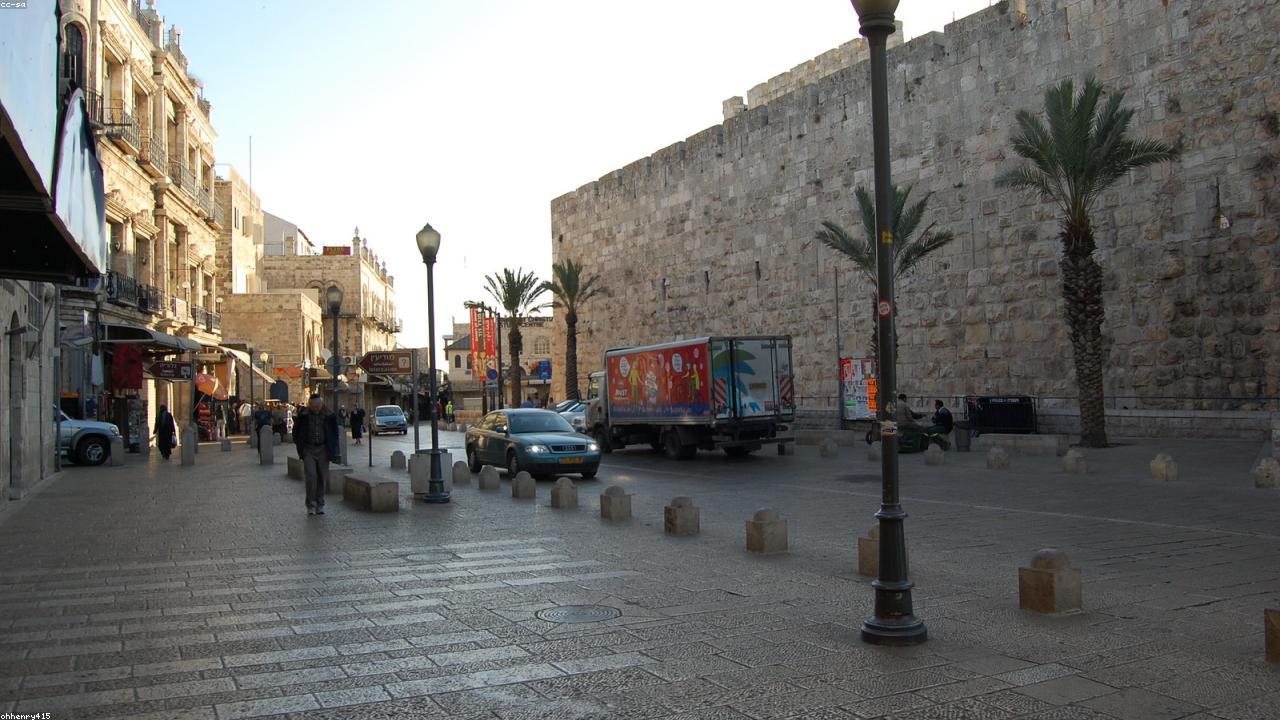
It’s 6:24 a.m. and the call to prayer from the Al-Aqsa Mosque is winding down across the Old City of Jerusalem. The bells at the Church of the Holy Sepulchre are starting up. The first orthodox Jewish men, in long black coats and wide-brimmed hats, are walking quickly to the Western Wall for the morning service. The Old City stone — Jerusalem stone, the pale limestone the British Mandate required all buildings be faced with — is starting to catch the dawn light. Three world religions are starting their morning. They have been doing this, in this space, for approximately two thousand years. This is the Jerusalem morning.
Why I keep coming back
I write this with full awareness of the difficulty of writing about Jerusalem at all. The city is sacred to three world religions and contested between two political peoples. It is, for the Western traveller, one of the most consequential places on earth and one of the most ethically complicated to visit thoughtfully.
I come back because the historical depth is unmatched. The Old City is one square kilometre of continuously inhabited urban space that contains: the Western Wall (the holiest site in Judaism), the Church of the Holy Sepulchre (which most Christian traditions believe to be the site of Jesus’s crucifixion and resurrection), and the Haram al-Sharif / Temple Mount (the third-holiest site in Islam, with the Dome of the Rock and the Al-Aqsa Mosque). The food is among the most sophisticated I have eaten anywhere. The light, particularly in the late afternoon, is what every painter who has tried has tried to capture.
Where to base yourself
The Old City itself — accommodation in the Armenian or Christian quarters is the closest to the central sites; quieter than the Jewish or Muslim quarters at night.
West Jerusalem — neighbourhoods like Nachlaot or Yemin Moshe, close to the Old City but in modern Jewish West Jerusalem.
East Jerusalem — Sheikh Jarrah or near Damascus Gate; a Palestinian-Arab residential character.
The choice of where to stay is, inevitably, partly a political choice. Stay where you are most comfortable.
What to actually do
Walk the Old City early, slowly, across all four quarters. The Old City is divided into Jewish, Christian, Muslim, and Armenian quarters; each has its own character. Walk through all four in a morning. Start at Damascus Gate (Muslim quarter), through to the Holy Sepulchre (Christian quarter), down to the Western Wall (Jewish quarter), back through the Armenian quarter to Jaffa Gate. Three hours, slowly.
Visit the Church of the Holy Sepulchre at 5 a.m. The doors open at 5 a.m. (a slightly different time on Sundays). Before 8 a.m., you can have the Stone of Anointing, the Calvary chapel, and the rotunda around the tomb to yourself. The status quo arrangement between the six denominations sharing the church is one of the most elaborate religious-property compromises in the world.
Spend a Friday afternoon at the Western Wall. The Sabbath welcoming on Friday evening is an extraordinary scene — singing, dancing, prayer at the wall, often a Bar Mitzvah celebration in the men’s section. Dress modestly; no photography from sundown Friday to sundown Saturday.
Visit Yad Vashem. The Israeli Holocaust memorial and research centre, in the western Mount Herzl area; not a cheerful day’s outing but essential. Allow half a day.
Walk Mahane Yehuda Market. The vast central market of West Jerusalem; midweek for the produce-buying, Friday morning for the maximum chaos.
Take a day trip to Bethlehem. Eight kilometres south, in the Palestinian West Bank (crossing the separation barrier). The Church of the Nativity (Greek Orthodox / Armenian shared) is the traditional site of Jesus’s birth. The Banksy ‘Walled Off’ Hotel is the contemporary art-installation experience opposite the wall.
Where to eat
Jerusalem and the broader Israeli-Palestinian food scene is, in my view, one of the most innovative cuisines in the world in the past two decades.
Machneyuda — Modernist Israeli, by Mahane Yehuda Market; arguably the most famous restaurant in the country. Eucalyptus — Refined biblical-influenced Israeli cuisine. Abu Shukri (Old City, Muslim quarter) — The legendary hummus shop; arrive at 11 a.m. before the lunch queue. Lina Restaurant (Old City) — Excellent Palestinian hummus, considered by many to be the best in the Old City. Azura (Mahane Yehuda) — The lunch-only hamin (slow-cooked stew) workshop; old-school, Iraqi-Jewish. Anna — A bistro café in a women’s-empowerment training programme; reliable. Pinati — Old-school West Jerusalem hummus on King George Street.
When to come
Spring (March–May) or autumn (September–November) for pleasant temperatures.
Summer (June–August) is hot (35°C+) and crowded. December–February has occasional cold rain and the rare snow event.
The Jewish High Holy Days (Rosh Hashanah, Yom Kippur, Sukkot in September–October), Passover (April), and the Christian Holy Week (varies, March–April) are the most atmospheric but also the most crowded times.
Practical notes
- Visa: Most Western passports get 90 days visa-free.
- Money: New Israeli shekel; card universally. In East Jerusalem and the West Bank, cash is more reliable.
- Transport: The light rail and city buses are extensive. The Old City is walking only. Tel Aviv is 50 minutes by fast train.
- Sabbath: Most West Jerusalem businesses close from Friday afternoon to Saturday evening. Plan accordingly.
- Security: The situation in Israel-Palestine has been volatile for decades. Check your government’s current travel advisories. Some sites are occasionally closed for tensions. Walk respectfully around political demonstrations; photograph cautiously.
- Dress code at religious sites: Shoulders and knees covered everywhere; head covering required at the Western Wall (kippot are provided), at the Temple Mount for women (and they’re closed to non-Muslims at most prayer times), and in many churches.
- The Temple Mount / Haram al-Sharif: Currently open to non-Muslims for limited hours (typically morning) through the Mughrabi Gate; check the day’s status, and access is sometimes closed entirely on short notice.
A final thought
Jerusalem is one of the most rewarding travel destinations on earth and one of the most ethically complicated places to write about. The visit is worth making. The conversations you will have — with Israelis, with Palestinians, with the orthodox and the secular, with the pilgrims and the locals — are conversations you will not have elsewhere.
No neutral position is available, and the visitor who claims one is usually being dishonest. What you can do is listen carefully, ask thoughtful questions, walk the city slowly, eat in restaurants and shops run by people on multiple sides of the conflict, and resist the temptation to reach a clean conclusion in three days.
The Old City at dawn, with the three religions starting their morning in the same square kilometre, is one of the most moving urban experiences in the world. The political reality is far more difficult than that morning suggests. Both are true. Both belong in any honest account.
If you only have a few days
7 ideal things to do in Jerusalem
The Church of the Holy Sepulchre in the first hour
Christian Quarter, Old CityAs soon as the doors are unlocked; a different hour on Sundays
Doors are unlocked each morning by a member of one of two Muslim families who have held the key since at least the twelfth century — an arrangement that exists because six Christian denominations share this building under the Status Quo, a property agreement so exact that a ladder left on a windowsill has not been moved for centuries. Arrive early and you can reach the Stone of Unction, the Calvary chapel and the Aedicule without queueing. By mid-morning you move through it at the pace of whoever is in front of you. I have queued ninety minutes here in the wrong shoes and learned only that I should have set an alarm.
Walk down the Mount of Olives
Start at the observation point on top; finish in the Kidron ValleyEarly morning, before the heat and before the coaches
From the top the entire Old City lies below you, and the walk down passes a Jewish cemetery of some 150,000 graves, the teardrop-shaped church of Dominus Flevit, and finally the Church of All Nations at the bottom, built by Antonio Barluzzi in the early 1920s around the bedrock where Jesus is said to have prayed. The lane is steep and the paving is uneven in places. I did it in trainers with no grip left, slid most of the last stretch, and would still tell you to walk down it rather than up.
Tower of David Museum
Immediately inside Jaffa GateYour first morning; save the tower climb for last
This citadel has been rebuilt by Hasmoneans, Herod, Crusaders, Mamluks and Ottomans in turn, and the museum inside it reopened after a long renovation with ten galleries, the moat and the Ottoman Kishla detention block. Do it on day one: it is the only place that lays four thousand years out in an order a visitor can actually hold in their head. Then climb Phasael tower for the full circle of city and spend a while working out which dome is which. I got that wrong twice and needed a local to sort me out.
The Shrine of the Book and the Second Temple model, Israel Museum
Givat Ram, west of the Old CityHalf a day; longer if the archaeology wing gets its hooks in
A white dome over an underground chamber holds the Dead Sea Scrolls, found in caves around Qumran between 1947 and 1956 and rotated in and out of display because light destroys them. Outside stands a model of the whole city as it was before the Romans levelled it in 70 CE. Walking the model first and then walking the real Old City is the most useful hour available in Jerusalem. I did it in the wrong order, naturally, and spent three days quietly confused about which hill was which.
Yad Vashem
Mount Herzl, western JerusalemHalf a day, on a day with nothing scheduled after it
Moshe Safdie's building, opened in 2005, is a triangular concrete prism driven straight through the hillside, and you walk its full length in a zigzag before you are let out at the far end onto a view of the Jerusalem hills. The Hall of Names holds around 2.8 million pages of testimony. The Children's Memorial is a room of mirrors and candles with names read aloud. There is no admission charge. Do not book anything for the afternoon afterwards — I did, once, and sat through it without hearing a word of it.
Mahane Yehuda Market on a Friday morning
West Jerusalem, off Jaffa RoadFriday before noon; then come back after dark
Two hundred and fifty vendors, something like 200,000 people a week, and Friday morning is the peak of the whole system: the entire city shopping at once, then a bugle, then the shutters coming down for Shabbat. Return after dark and those same shutters are painted portraits by Solomon Souza and the alleys have filled with bars. Two markets, one lane, twelve hours apart. I once turned up for halva in the middle of a Friday afternoon and had the schedule explained to me by four separate people, none of whom I had asked.
The Western Wall plaza on Friday at sundown
Jewish Quarter, Old CityFriday, arriving before sunset
Kabbalat Shabbat at the wall means singing, circles of dancing, and whole families arriving at once, and the plaza is open to anyone who dresses for it — shoulders and knees covered, paper kippot handed out at the entrance to the men's section, and a mechitza dividing the prayer area itself. Put the phone away completely from sundown; this is not a place to be photographing. Stand at the back of the plaza rather than pressing forward. You see more from there, which is true of a great many things and which I keep having to relearn.
From a Split boy’s notebook
The Split lens
What reminded me of home
Old city where multiple religious traditions overlap in a single square kilometre, each claiming the same stones. Our Diocletian's Mausoleum became the cathedral of Sveti Duje when Christians took the palace — the same kind of layered religious history at smaller scale. Both cities live in their own past.
What Split could borrow
Jerusalem's old city quarters — Jewish, Christian, Muslim, Armenian — are formally signposted and the visitor walks them with at least a basic sense of which tradition is which. Our old town's pre-Christian Roman layers, early Christian, Venetian, Habsburg, Yugoslav, are all there but uncommunicated. Better wayfinding would do for our palace what Jerusalem's signage does for the old city.
Who can take you
Tour operators & guides to try
A short, opinionated starter list — just my humble opinion. Verify before booking.
Intrepid Travelsmall groupwww.intrepidtravel.com →
Intrepid's Israel and Palestine itineraries are notable in the mainstream-tour market for actually crossing the separation barrier into the West Bank and engaging Palestinian-led guides for the Bethlehem and Hebron portions. The Jerusalem portion is balanced. Group size 12–16. Caveat: the post-2023 regional security situation continues to evolve; check current Foreign Office or State Department advisories at booking.
Context Travelspecialistwww.contexttravel.com →
Context Travel runs walks in Jerusalem with religious-history specialists — the Holy Sepulchre walk with a specialist in early Christianity, the Temple Mount/Haram al-Sharif walk with an Islamic-architecture historian, the Western Wall walk with a Jewish-history specialist. Six-person cap. Caveat: the security context constrains some of the routes; verify current access rules before booking.