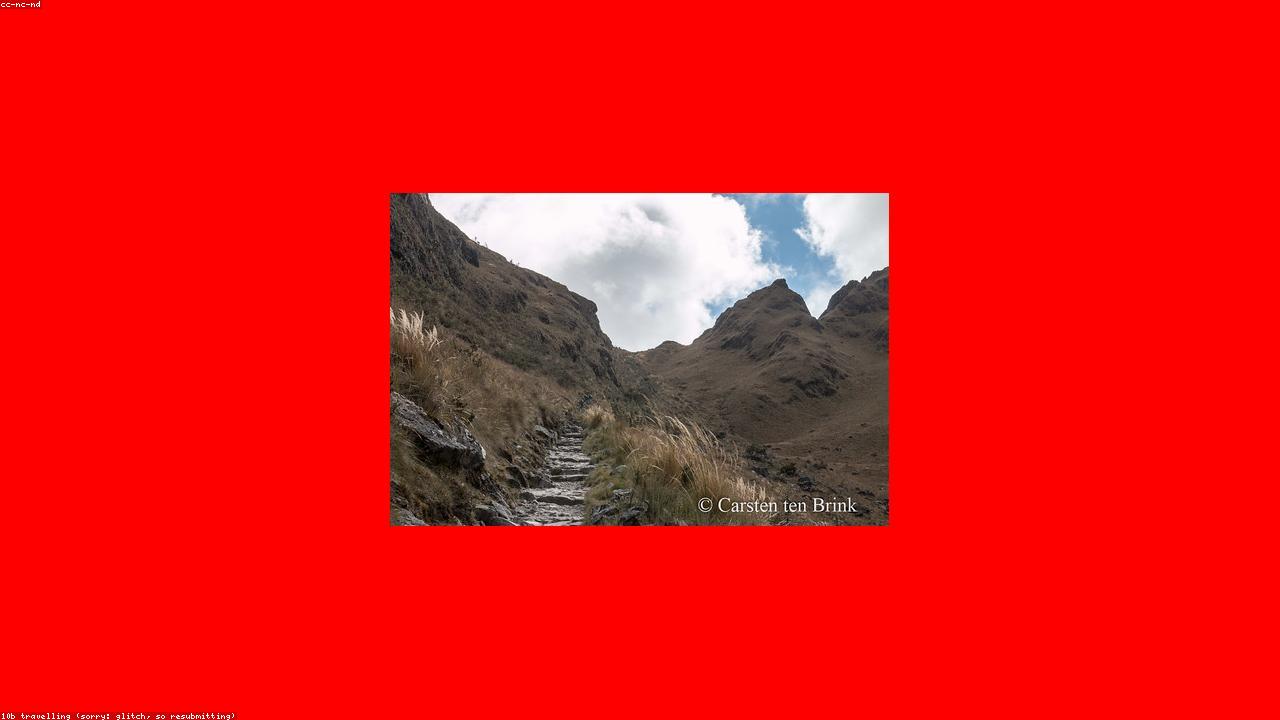
Photo: Ščenza
Aguas Calientes, Peru · South America
Machu Picchu: a day at the Inca city in the clouds
Machu Picchu is a place that survives its reputation almost entirely. The site is genuinely astonishing — a complete Inca city built on a vertical Andean ridge at 2,400 m, abandoned to the cloud forest for centuries, rediscovered in 1911. The trick is choosing how to arrive.
By Ščenza
· updated · 5 min read
It’s 6:24 a.m. and I’m sitting on a low stone wall above the eastern terraces of Machu Picchu watching the morning mist clear from Huayna Picchu, the steep pyramid-shaped peak that backs the famous viewpoint photograph. The fog is rolling slowly down the valley to the south. The first sunlight is hitting the central plaza. The stones of the Inca residential terraces, two metres in front of me, are warming up from the night’s cold. There are maybe forty people on the entire upper section. By 9 a.m., this number will be eight hundred. The first two hours after the gate opens are the trip-defining experience.
Why I keep coming back
I’ve been to Machu Picchu twice — first in 2010, on the standard Inca Trail trek, and again in 2017 on a different itinerary via the Salkantay trek. The site has, over the past decade and a half, been increasingly managed for crowd control: timed entry slots, mandatory guides for certain circuits, capacity caps. The crowd-management has improved the experience considerably — but only if you start at the first slot.
Machu Picchu was built around 1450 as a royal estate for the Inca Pachacuti, abandoned a century later (possibly as the Spanish conquest disrupted the empire), and remained known only to local farmers until Hiram Bingham’s 1911 ‘rediscovery’. The Spanish never found it. The site is in extraordinary preservation as a result.
How to arrive
The train from Ollantaytambo or Cusco (PeruRail or Inca Rail) is the standard route. From Ollantaytambo (in the Sacred Valley): 90 minutes. From Cusco’s outer suburb Poroy: 3.5 hours. The train ends at Aguas Calientes (also called Machu Picchu Pueblo), the small village at the foot of the mountain. From there, a 30-minute bus up the switchback road to the site entrance, or a steep 90-minute walk.
The Inca Trail — 4-day trek along a section of the original Inca-built path, ending at the Sun Gate above Machu Picchu. Strictly permit-limited (500 people per day, including porters). Book 6+ months ahead.
The Salkantay Trek — 4 or 5 days, a higher-altitude alternative (4,600-m pass), no permit limit. The Lares Trek and Choquequirao Trek are other alternatives.
The short-hike option — Arrive at Aguas Calientes by train, sleep one night, take the early bus up and a guided 2-hour walk through the central ruins. The minimum-time visit.
What to actually do once there
Take a guided tour for at least the first 2 hours. As of recent rule changes, a licensed guide is required for new visitors at the entrance. The guides are excellent and the Inca history of the site genuinely requires explanation.
Walk the chosen circuit. Machu Picchu has been divided into specific circuits (Circuits 1, 2, 3, 4, 5) — each gives access to different sections; choose at booking. Circuit 2 is the classic one with the postcard view.
Climb Huayna Picchu or Machu Picchu Mountain. Both require separate timed-entry permits booked weeks in advance. Huayna Picchu is the famous steep peak in the postcard; the climb is exposed and not for those with vertigo. Machu Picchu Mountain (the larger peak behind the site) is a longer, less vertiginous climb.
Walk to the Sun Gate. A 1-hour return walk from the central ruins, on the Inca Trail’s final section. The view of the city as the Inca Trail trekkers see it on their final morning.
Walk to the Inca Bridge. A short flat walk to a small wooden bridge across a vertical cliff section; vertigo-inducing.
Where to eat and stay
Aguas Calientes is a small tourist village; food options are mostly mediocre. Indio Feliz is a long-running French-Peruvian restaurant; reliable. The Sumaq Hotel at the edge of town does a tasting menu at fair-for-the-location prices. Belmond Sanctuary Lodge is the only hotel at the actual gate of Machu Picchu (US$1500+ per night); the convenience for the first-light entry is real. Inkaterra Machu Picchu Pueblo Hotel is a charming option in the cloud forest just outside Aguas Calientes.
When to come
May to September is the dry season — the best weather, but the most crowded.
April and October are shoulder seasons with better crowd-to-weather ratios.
February the Inca Trail is closed for maintenance; Machu Picchu itself remains open but the rainy season is at its peak.
Practical notes
- Visa: 90 days visa-free for most Western passports.
- Tickets: Strictly timed-entry. Book online (via the official Peruvian Ministry of Culture website) weeks in advance, particularly for the 6 a.m. slot and for the Huayna Picchu permits. Tickets are time-stamped and re-entry is restricted.
- Money: Peruvian sol.
- Altitude: Machu Picchu itself is at 2,400 m, lower than Cusco (3,400 m). The walking is largely vertical, with significant elevation change within the site.
- The guide requirement: Currently a licensed guide is required for new visitors. Some circuits and re-entries have different rules; check current regulations.
- What to bring: Layers (cold in the morning, warm by noon, can rain at any time), water, sunscreen, hat, walking shoes. Large bags are not permitted; a small daypack is fine.
- Coca leaves: Officially restricted at the entrance but local guides routinely chew them for altitude.
A final thought
Machu Picchu is one of the rare iconic destinations that lives up to and exceeds its photographic reputation. The combination of the architectural completeness of the Inca city, the dramatic Andean setting, the cloud forest below, and the access via the Inca Trail (still possible for the patient and physically fit) makes the visit one of the great experiences of South American travel.
The crowd-management has, in the past decade, significantly improved the experience for those who plan ahead. The first entry slot, with a guide, on a clear morning, is the trip-defining hour. The mid-day return visit (if you bought the re-entry option) is fine but the magic is in the early hours.
Do it as part of a 10-day Peru trip rather than a flying visit. Acclimatise in Cusco or the Sacred Valley first. Walk into the site at sunrise. Take a guide for the first two hours. Walk to the Sun Gate. Stay one night in Aguas Calientes. Leave the next morning. The site is genuinely one of the great architectural-ruin experiences anywhere; the trip around it deserves at least the week.
If you only have a few days
4 ideal things to do in Aguas Calientes
Walk in from Hidroeléctrica along the railway
Nine kilometres of track west of Aguas CalientesThe overland route in. Allow three hours and daylight
There is no road into Aguas Calientes. Trains come up the gorge, and buses get as far as the Hidroeléctrica station, from where you walk the last nine kilometres beside the rails with the Urubamba grinding away below you and the cloud forest closing in overhead. Three hours, effectively flat, with trains passing near enough that you step off the ballast for them. Most visitors take the train both ways and never see the valley from ground level. I did it with a rucksack packed for a city and was overtaken by a woman carrying a gas cylinder.
Take the stone stairway instead of the bus
From the Puente Ruinas bridge below the townFirst light going up. Downhill also counts, and hurts less
Buses grind up the switchbacks of the Hiram Bingham road; a stone footpath cuts straight across the bends, and it is about an hour and a half of stairs and a serious amount of vertical. I went up it at twenty-nine and down it at forty-one and the second was the better decision. Climbing, you arrive sweating at a site you then have to concentrate on for four hours. Descending, you get the whole gorge to yourself while everybody else queues in the sun for a seat on a minibus.
The thermal baths the town is named after
Uphill at the end of the main streetEvening, once you are down off the mountain
Aguas Calientes is not the official name — that is Machupicchu Pueblo — but it stuck because of the hot springs at the top of the street, which were here before the railway camp, before the hotels, before any of it. They are municipal, concrete, crowded and genuinely hot. After a day of Inca staircases at altitude, this is where the evening is supposed to end, and the municipal tiling does not diminish it. Bring a towel. Everybody forgets, including me, on both visits.
Break the train journey at Ollantaytambo
Ninety minutes down-valley by railA night on the way in beats a night on the way out
Ollantaytambo is the one place you can walk an Inca street grid that is still lived in — four long streets crossed by seven, walled compounds with a courtyard apiece, doorways people still come home through. Above the town the terraces climb to an unfinished Sun Temple built from six monoliths of pink rhyolite dragged from a quarry on the far side of the river, and nobody has satisfactorily explained how. Most people see it through a train window at speed, which is the largest single waste in Peruvian tourism.
From a Split boy’s notebook
The Split lens
What reminded me of home
A single iconic site that has so dominated the country's tourism that other genuinely extraordinary places get overlooked. Our equivalent is Plitvice — every visitor wants Plitvice; far fewer make it to Krka, Kornati, Mljet, or the smaller marvels in the hinterland.
What Split could borrow
Machu Picchu now enforces strict timed-entry, daily caps, and a mandatory-guide rule. The site has been preserved against the saturation that nearly destroyed it. Plitvice has caps and timed entry; Krka and Mljet are more loosely managed. Extending the Machu Picchu-style discipline to our other national parks before the saturation arrives is the obvious move.
Who can take you
Tour operators & guides to try
A short, opinionated starter list — just my humble opinion. Verify before booking.
PeruRailrailwww.perurail.com →
PeruRail is the main operator on the Ollantaytambo–Aguas Calientes route. Three classes — the Expedition (functional), the Vistadome (panoramic windows, light snacks, the right balance for most travellers), and the Hiram Bingham (lunch onboard, very expensive). Book online directly. Caveat: the Hiram Bingham is mostly the experience of the train rather than the destination; not worth it unless you're specifically a train-experience traveller.
Inca Railrailwww.incarail.com →
Inca Rail is the alternative on the same route — three classes, similar pricing, sometimes cheaper than PeruRail for the same day. Their 360° observation cars are arguably nicer than the Vistadome. Book online directly. Caveat: both operators have unpredictable summer (December-March) schedules due to the rains; verify your departure 24 hours ahead and have a buffer day before your Machu Picchu entry.
If you liked this, try these
El Chaltén, Argentina / Chile
Patagonia: the southern Andes and the long empty roads
November 19, 2022
Cusco, Peru
Cusco: the Inca capital and the gateway to the Sacred Valley
June 8, 2022

Uyuni, Bolivia
Salar de Uyuni: the white horizon and the highest desert in the world
March 4, 2023