Photo: Ščenza
Uyuni, Bolivia · South America
Salar de Uyuni: the white horizon and the highest desert in the world
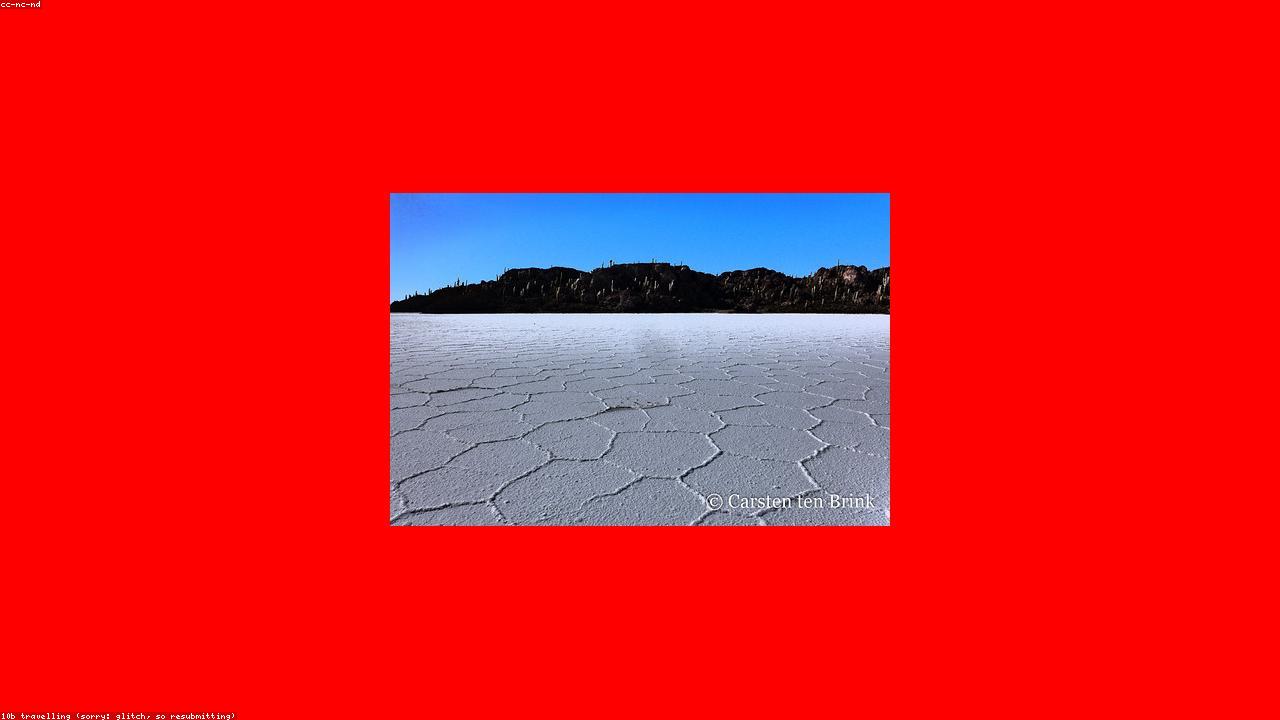
The Salar de Uyuni is a 10,500-square-kilometre salt flat at 3,650 m altitude in southwest Bolivia. In dry season it is a hexagonally-cracked white plain extending to the horizon; in wet season, a thin layer of water turns it into the largest mirror on earth.

By Ščenza
· updated · 4 min read
It’s 6:42 a.m. on the Salar in February — wet season — and the sky and the salt flat are essentially indistinguishable from each other. A thin layer of water, two or three centimetres deep, covers the entire 10,500 km² salt plain, and the morning clouds are reflected with no apparent distortion. Our 4x4, parked twenty metres away, is reflected in the water perfectly. Diego, the driver, has been doing this route for nineteen years. He pours coca tea from a thermos and we wait for the sun. This is the Salar at its most photographed.
Why I keep coming back
The Salar de Uyuni is the largest salt flat on earth and one of the most extraordinary geological features anywhere. It was formed by the desiccation of an ancient lake (Lago Minchin) over millennia; the salt crust is, in places, twelve metres thick.
In dry season (May–November), the surface is white and hexagonally-cracked, with isolated ‘islands’ of fossilised coral and giant cardón cacti. In wet season (December–April), a thin water layer turns it into the world’s largest mirror.
The surrounding southwest Bolivian altiplano — the high desert at 3,500–5,000 m — has the rest of the trip’s geology: coloured lagoons (Laguna Colorada, Laguna Verde), geyser fields (Sol de Mañana), high-altitude lava domes (the Stone Tree at Siloli), and the small village ruins.
How to do it
Most visitors do a 3-day 4x4 tour from Uyuni town, crossing from northwest to southeast across the Salar and the wider altiplano, ending at the Chilean border at Hito Cajón (where you cross into Chile and continue to San Pedro de Atacama).
Alternatively: a 1-day tour from Uyuni stays on the Salar only.
The 3-day tour is the worthwhile experience. The 4x4 has 5–6 passengers; the driver-guide; a cook for some segments; basic Bolivian-altiplano refugios for the two nights (basic but warm enough; expect bunk beds and shared bathrooms; the upper-end tours offer salt-block hotels).
What you’ll see (a 3-day itinerary)
Day 1: Uyuni → Train Cemetery (rusting steam locomotives outside town) → Salar surface → Incahuasi Island (the cactus-and-coral ‘island’ in the middle of the flat) → first sunset on the salt → overnight at a salt-block hotel at the edge of the Salar.
Day 2: Across the altiplano southward → Stone Tree at Siloli desert → Laguna Colorada (red-coloured lagoon with thousands of flamingos) → overnight at a basic refugio near the lagoon.
Day 3: Early start to Sol de Mañana geyser field at sunrise (4,800 m; the highest active geyser field on earth) → Laguna Verde (green lagoon under Licancabur volcano) → Chilean border crossing to San Pedro de Atacama.
Where to base yourself
Uyuni town is functional only; small Bolivian transit town. Don’t expect much.
San Pedro de Atacama (Chile, just over the border) is the easier and more pleasant base if you’re combining the Salar with Chilean Atacama Desert exploration.
For the high-end version, the Palacio de Sal or Luna Salada hotels are the salt-block luxury options on the edge of the Salar.
Where to eat
Food on the 3-day tour is provided by the operator — simple altiplano cooking (quinoa soup, llama meat, potatoes, rice). Vegetarian options should be requested at booking.
In Uyuni town, options are limited; the Minuteman Pizza is the long-running expat-friendly choice.
When to come
Wet season (December through March) for the mirror effect. The water is at its deepest in February.
Dry season (May through October) for the hexagonal-cracked white surface and the easier driving. The cardón islands are more accessible.
Shoulder weeks (late November and early April) sometimes give partial mirror in some sections — the best of both, with luck.
Practical notes
- Visa: 90 days visa-free for most Western passports.
- Money: Boliviano. ATMs in Uyuni are unreliable; bring cash (USD widely accepted).
- Altitude: 3,650 m on the Salar; 5,000 m at Sol de Mañana on day 3. Take it seriously. Acclimatise in La Paz (3,600 m) or another high town for at least a day before the tour.
- Operators: Tour quality varies considerably. Choose reputable operators (Quechua Connection, Red Planet Expedition, Salty Desert Aventours, Hidalgo Tours). The cheapest options sometimes cut corners on safety; the middle-tier is usually worth it. US$200–400 for a 3-day tour.
- Vehicle: 4x4 (Toyota Land Cruiser, usually). The roads are mostly dirt; expect rough going.
- What to bring: Layers (cold at night; can be near-freezing at the high refugios), sunglasses (the salt glare in dry season is intense), sunscreen, lip balm, water, head torch.
A final thought
The Salar de Uyuni is one of the most visually overwhelming places I have travelled to. The combination of the scale (you can see the curvature of the horizon), the colour (in wet season, the mirror; in dry season, the pure white), and the surrounding altiplano (the lagoons, the geysers, the volcanoes) makes the 3-day tour one of the great short trips of South American travel.
The trip is physically demanding — high altitude, long driving days, basic accommodation — but the photography and the sheer landscape scale are rare. Combine it with a few days in La Paz before and San Pedro de Atacama after; the resulting 8–10 day Bolivian-Chilean Andean trip is one of the best high-altitude experiences in the Americas.
If you only have a few days
5 ideal things to do in Uyuni
Sunrise on the salt in the wet season
Out on the flat, an hour or so from Uyuni townDecember to March for the mirror; the water is deepest in February
After rain, a film of water a couple of centimetres deep turns the flat into a mirror 129 kilometres across, and at sunrise there is no dependable horizon anywhere — sky underneath you, sky above, your own 4x4 standing in both at once. It is the most disorienting beautiful thing I have looked at. Bring boots you have already given up on, because the salt eats everything it touches, and expect a driver who has done this a thousand mornings to get out and watch it anyway.
The Cementerio de Trenes
3 km outside Uyuni townFirst stop of the tour, mid-morning
Antique steam locomotives left out in the desert to rust, with nobody bothering to fence them off. You climb on them. Everyone climbs on them. The metal is sharp in several places and the tetanus arithmetic is entirely your own business. It is a strange short stop that every visitor photographs and nobody quite explains, and it sets the tone accurately for three days of a landscape mostly made of things abandoned at very high altitude and then left alone.
Isla Incahuasi
In the middle of the Salar, well out from ColchaniMidday stop on day one
Fossil coral rising out of a salt flat, covered in cardón cacti several metres tall, with viscachas — long-tailed rabbit relatives with no discernible fear of anybody — sitting about on the rocks. A short path takes you to the top and a view of nothing but white in all directions, which is the point of climbing it. The geology takes a moment to land: this was the floor of a lake, and the thing you are standing on used to be a reef. I ate a cheese sandwich on it and felt underqualified.
Laguna Colorada
Eduardo Avaroa reserve, day twoAfternoon, with a night in a refugio nearby
Sixty square kilometres of red water at 4,278 metres, coloured by algae and sediment, with James's flamingos standing about in it at a temperature that would put me in hospital. Around forty bird species live out here and there is essentially no shelter from the wind. The refugios are basic — bunks, a shared bathroom, and fewer blankets than you will want by two in the morning. This was the night I properly understood that the altiplano is not a beach holiday, and I say that as a man from a beach.
Sol de Mañana at dawn
Around 4,800 m, near the Chilean border; day threePre-dawn departure, before the sun thins the steam
Fumaroles and mud pots at nearly five thousand metres, reached in the dark, because the steam columns only stand up like that in the cold before sunrise. There are no railings and no marked path, and the ground in places is a crust over something you would rather not meet. Walk behind your driver and put your feet where he puts his. Between here and the border you pass the Árbol de Piedra, a rock the wind has whittled into a tree, standing alone in the Siloli desert like set dressing nobody came back for.
From a Split boy’s notebook
The Split lens
What reminded me of home
A landscape so alien it's hard to describe — and a logistics infrastructure to reach it that depends on a small fleet of well-driven 4x4s and a network of basic refugios. Our Adriatic islands are not Bolivia, but the slow-boat-to-the-Kornati experience has the same quality of being briefly in a place that has not yet been smoothed for the visitor.
What Split could borrow
The Salar's 3-day 4x4 tour is the standardised package that turned the destination from inaccessible-to-accessible without ruining it. The trip is rough; you sleep in a basic refugio. Our Kornati could support a similar standardised 3-day slow-boat package with simple onboard sleeping and minimal shore accommodation. The accommodation simplicity is part of the appeal.
Who can take you
Tour operators & guides to try
A short, opinionated starter list — just my humble opinion. Verify before booking.
Intrepid Travelsmall groupwww.intrepidtravel.com →
Intrepid's Bolivia trips include the Salar in their southwest circuit — typically the 3-day 4x4 tour from Uyuni or via the Chilean San Pedro de Atacama crossing. Group size 12–16. They use the established mid-tier operators (the 4x4 quality is the trip-defining variable). Caveat: the altitude (3,650 m on the Salar, 5,000 m at Sol de Mañana on day 3) is serious; verify your acclimatisation plan before committing.
Adventure Lifesmall groupwww.adventure-life.com →
Adventure Life partners with Bolivian operators for the Salar circuit and integrates it into longer Bolivia-and-Peru itineraries. They tend to use the better-rated mid-tier operators (Hidalgo, Red Planet, Quechua Connection). Mid-tier pricing. Caveat: the wet-season mirror effect (December-March) versus the dry-season hexagonal pattern (May-October) — choose by your photographic preference, not by the operator's suggestion.
If you liked this, try these
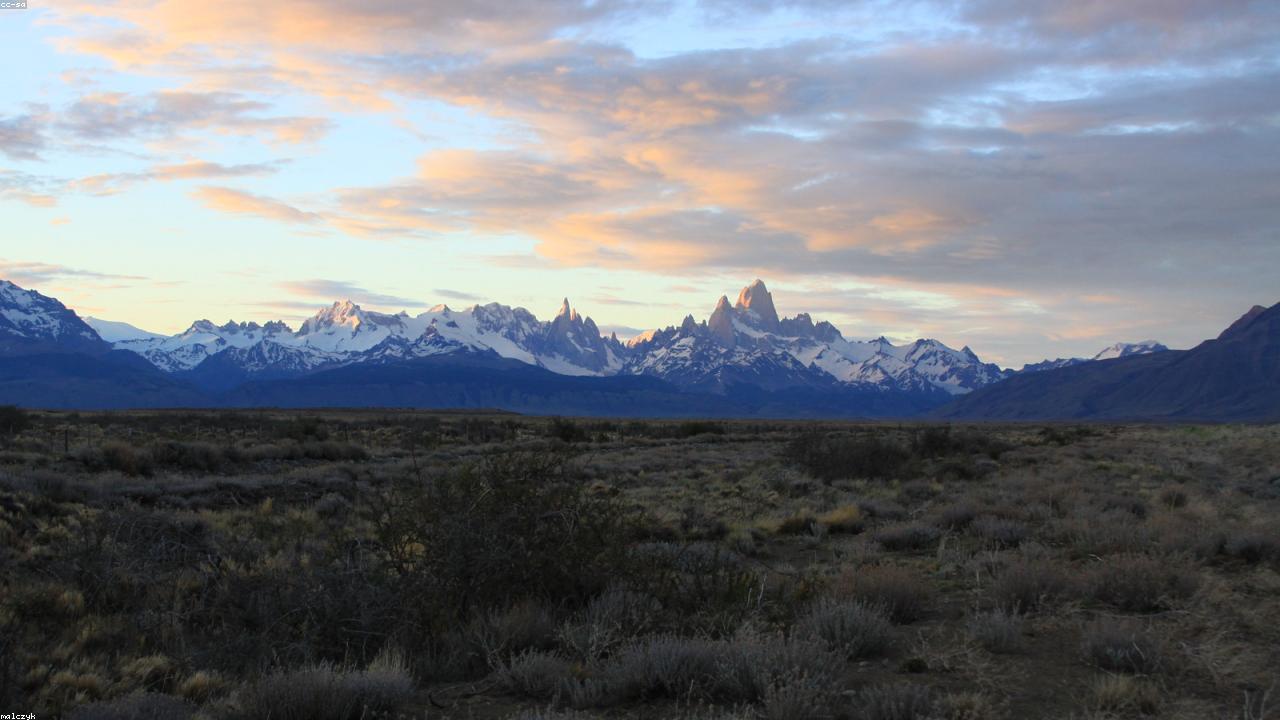
El Chaltén, Argentina / Chile
Patagonia: the southern Andes and the long empty roads
November 19, 2022
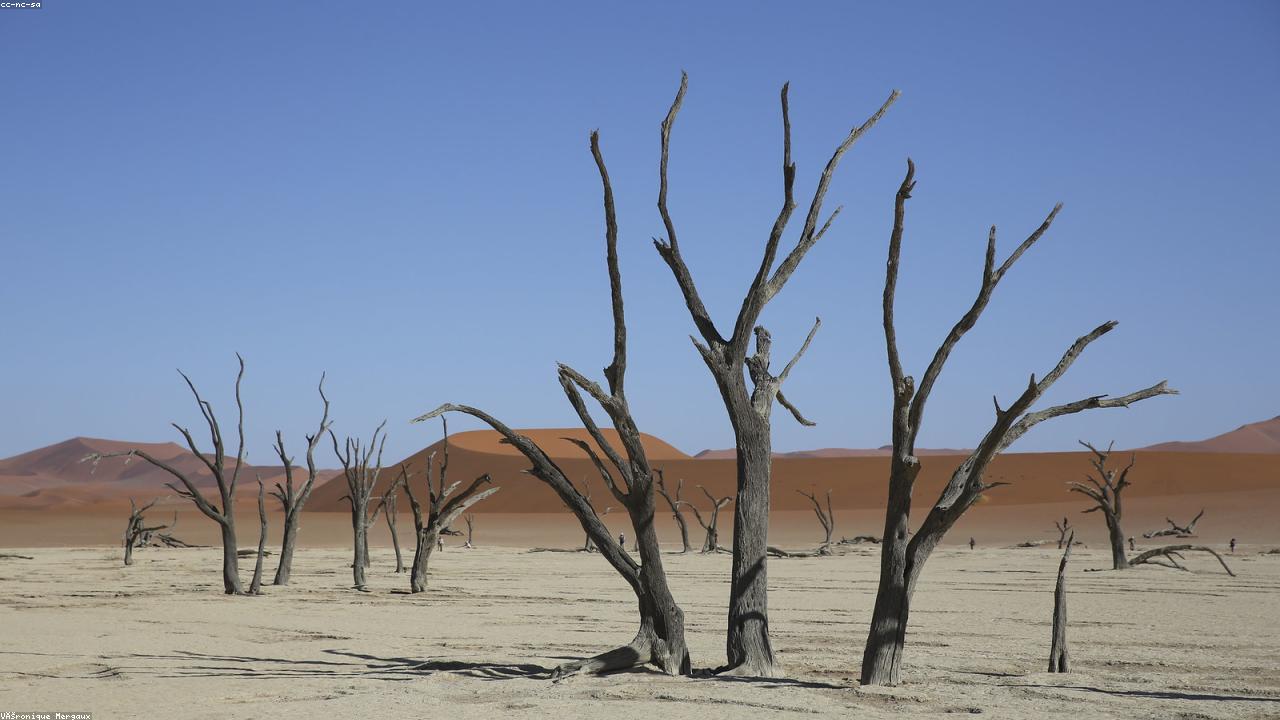
Sesriem, Namibia
Sossusvlei: the dunes of the Namib and the country around them
October 15, 2022
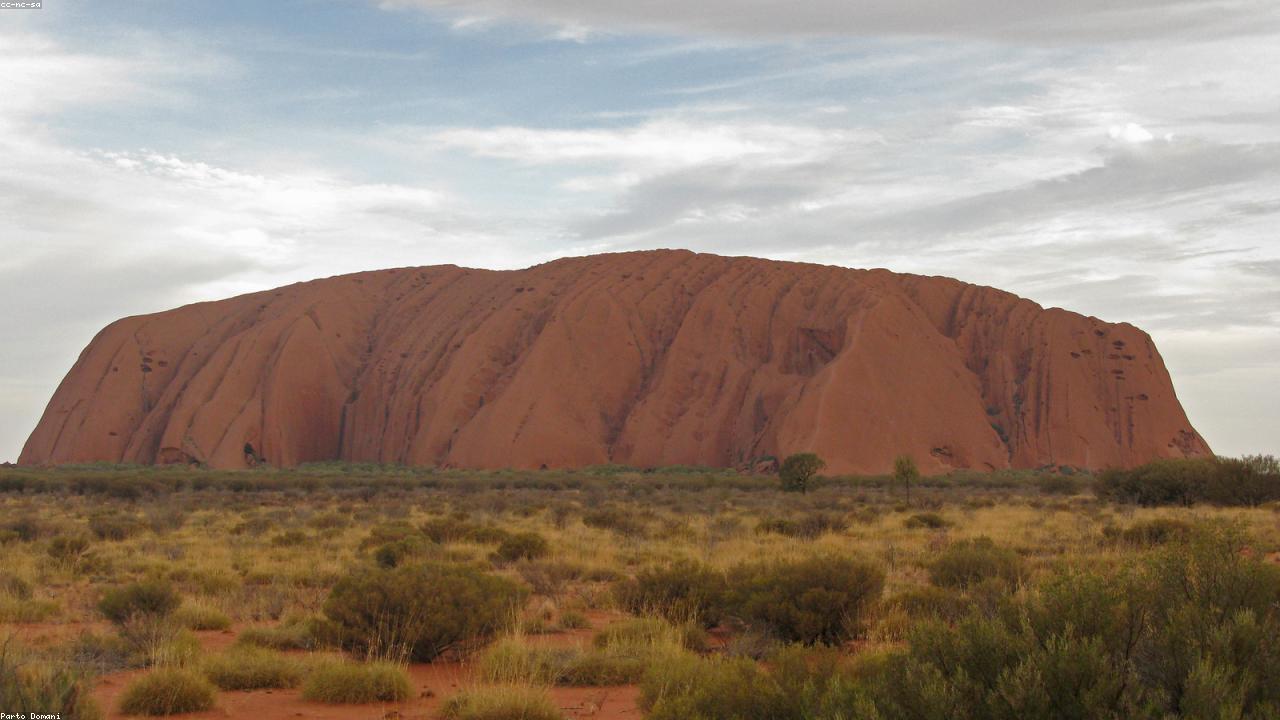
Yulara, Australia
Uluru: the desert monolith at the heart of Australia
September 24, 2022