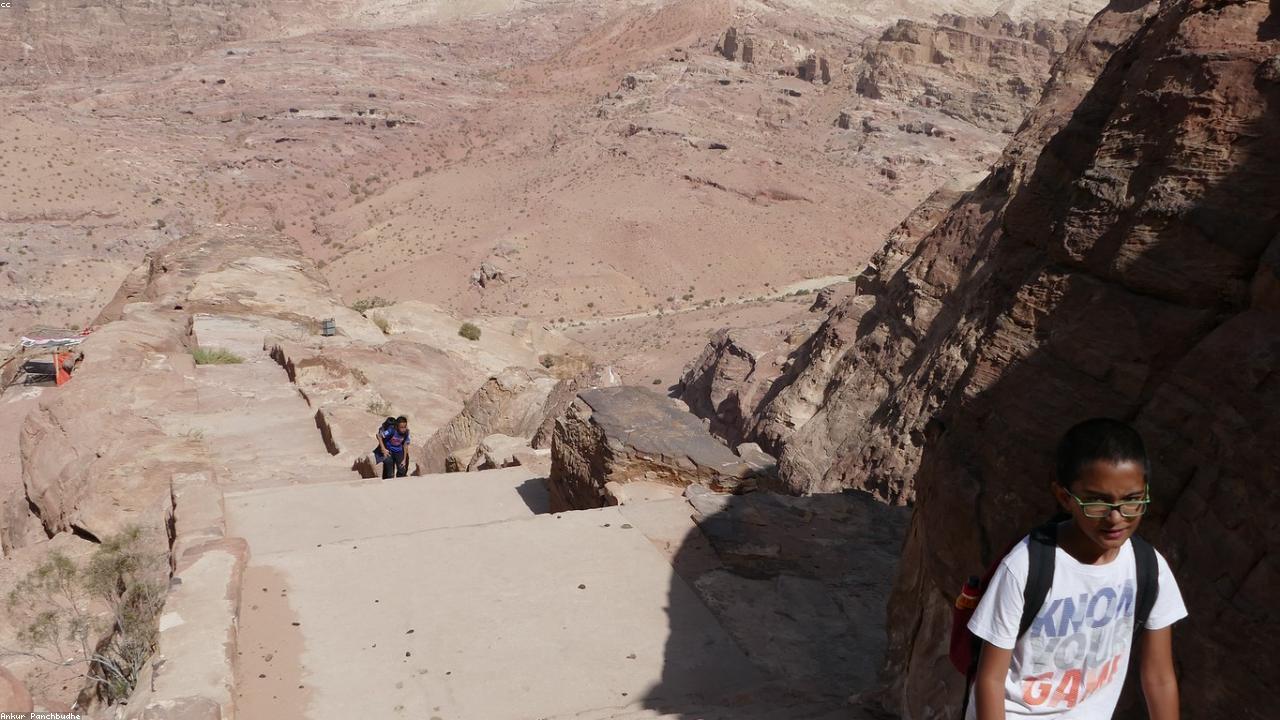
Photo: Ščenza
Petra, Jordan · Middle East
Petra: a week in the rose-red city of the Nabataeans
The Treasury at Petra is the iconic photograph; the city itself is much larger and much weirder than the photograph suggests. The Nabataean Empire carved an entire capital out of the sandstone cliffs of southern Jordan, and most visitors see less than a quarter of it.
By Ščenza
· updated · 5 min read
It’s 6:30 a.m. and I’m walking down the siq — the 1.2-kilometre slot canyon that is the natural entrance to Petra — alone except for one Bedouin and his donkey, who walks past me with a polite nod. The siq is narrow enough that at one point the rock walls almost meet overhead. Then it widens, and the Treasury — the famous facade, the al-Khazneh, the Indiana Jones picture you’ve seen a thousand times — appears in the slot. The dawn light is hitting it. There are no tour groups yet. The Treasury, at this hour, is mine.
Why I keep coming back
Petra is not a single building. It is an entire Nabataean city — a third-century-BC trading capital — carved into the sandstone cliffs over an area of about 60 square kilometres. The Treasury is the entry-point facade and the iconic image; behind it lies a whole valley of tombs, temples, theatres, colonnaded streets, and the high-mountain Monastery (Ad-Deir) which is 800 steps up and almost as imposing as the Treasury and visited by a fraction of the visitors.
The Nabataeans were an Arab people whose hydraulic engineering (a series of dams, channels, and cisterns) made habitation in this dry valley possible and whose Hellenistic-influenced rock-cut architecture is some of the most extraordinary funerary architecture in the ancient world.
Where to base yourself
Wadi Musa, the small town next to the Petra site entrance.
The Movenpick Resort is directly opposite the entrance gate, the most convenient option.
Petra Marriott at the top of the town has the cliff view.
Cheaper options: Cleopetra Hotel and Petra Moon are reliable mid-range.
What to actually do
Buy at least a 2-day Petra ticket. A single day is barely enough to walk to the Treasury and back; two days lets you reach the Monastery and the High Place of Sacrifice. A three-day ticket is what serious visitors choose.
Walk in at first opening. 6:30 a.m. in summer, 7:30 a.m. in winter. You’ll have the Treasury essentially to yourself for the first hour.
Hike to the Monastery (Ad-Deir). 800 steps up from the main valley. The Monastery is larger than the Treasury (48 m wide, 47 m tall) and almost always less crowded. The summit viewpoint behind the Monastery, marked ‘best view in the world’ by a Bedouin coffee-seller’s sign (he’s not wrong), looks out over Wadi Araba.
Climb to the High Place of Sacrifice. A different route up, with a Nabataean altar at the top and panoramic views over the central valley. A 60–90 minute climb.
Take a Petra-by-Night tour at least once. Three evenings a week, the siq is lit by 1500 candles in paper bags and the Treasury is candlelit. Touristy and worth doing once.
Day trip to Little Petra (Siq al-Barid). 9 km north, a smaller Nabataean satellite settlement; far less crowded, with a rare surviving Nabataean fresco room.
Drive south to Wadi Rum. Two hours’ drive south of Petra; the protected sandstone-and-granite desert valley used as the location for Lawrence of Arabia and many science fiction films (it’s a stand-in for Mars). Overnight Bedouin camps from US$50–500 per night; the simpler camps are better.
Where to eat
The food in Wadi Musa is mostly serviceable rather than exceptional; the real Jordanian food is in Amman.
The Beit Al-Barakah Restaurant for traditional Jordanian mansaf (the national dish: lamb with yogurt over rice). Petra Kitchen offers a hands-on Jordanian cooking class in the evenings — much-recommended. My Mom’s Recipe Restaurant for genuine home-style Jordanian; small, friendly. The Cave Bar is the world’s oldest bar (the building has been a watering-hole since around 2000 BC); a bit kitsch but a genuine surviving Nabataean rock-cut space.
In the park itself, the small Bedouin tea stalls along the trails sell sweet mint tea for one or two dinars; a useful break.
When to come
March–May and September–November. Pleasant temperatures (15–25°C), low rainfall, comfortable hiking.
June through August is hot (38°C+); the rocks radiate heat, especially around the Monastery. Avoid.
December through February is cold (occasionally freezing at night) and the rare rain causes flash floods in the siq — the park sometimes closes for safety.
Practical notes
- Visa: Jordan offers visa-on-arrival for most Western passports (US$56 for the standard single entry). The Jordan Pass combines a visa, two-day Petra entry, and entry to several other sites; buy it online before flying.
- Money: Jordanian dinar; ATMs in Wadi Musa.
- Transport: From Amman, around 3.5 hours by JETT bus or 3 hours by car. Most visitors hire a car and driver for a 7-day Jordan loop (Amman, Jerash, Madaba, the Dead Sea, Petra, Wadi Rum, Aqaba).
- Bedouin guides: Local Bedouin guides offer their services for trails inside the park (sometimes officially, sometimes informally). The licensed ones are excellent value for getting to the lesser-visited parts of the site.
- The donkey/camel rides: A real animal-welfare issue. The animals are not always treated well. Walking is the recommended approach.
- Hydration: Carry more water than you think you need. The sandstone is dehydrating, and the climbs are surprisingly demanding.
A final thought
Petra is the rare ancient site that, even after twenty years of mass tourism, rewards extended visits. The first day is the Treasury, the Royal Tombs, and the Roman colonnade. The second day is the Monastery, the High Place, and the back trails. The third day is everything you didn’t have time for — the Renaissance Tomb, the small Petra church with its rare Nabataean mosaics, the side wadis.
The combination of Petra and Wadi Rum is, in my view, the most rewarding short trip in the Middle East. Three or four days at Petra, two nights at a small Bedouin camp in Wadi Rum, and a couple of days in Amman bookending the trip; ten days total. Pay the Jordan Pass. Walk every trail. Wake at dawn at least three times. The Nabataeans built this city to last; the rock has done that job for them. You should be willing to give them a proper week.
If you only have a few days
5 ideal things to do in Petra
Walk the Siq at first opening
From the gate at Wadi MusaBe there when the gate opens; the difference is an hour of empty canyon
The Siq narrows to three or four metres in places, with the Nabataean water channels still cut into the walls at shoulder height, and then it opens and al-Khazneh is standing there in a slot of light — twenty-four metres wide, thirty-seven tall. I have walked it four times and the only one that mattered was the morning I got in before anybody else, when a Bedouin and his donkey went past me with a nod and that was the entire crowd. By eleven the same patch of ground holds a hundred phones.
Climb to Ad-Deir, the Monastery
Far end of the main valley, up the rock-cut stairsLate afternoon — the façade takes the setting light and the crowd has gone down
Ad-Deir is bigger than the Treasury, fifty metres across and forty-five high, and a fraction of the visitors ever reach it, because it sits at the end of a long stair climb that begins after you have already walked several kilometres. That is the whole trade, and it is a fair one. There is a tea stall at the top run by people who carried the kettle up the same steps you just complained about, and a viewpoint behind the monument looking west over Wadi Araba with a hand-painted sign claiming the best view in the world. Not a serious claim. Not badly wrong either.
The High Place of Sacrifice on Jebel Madbah
Up from the Roman theatre, down the far side through Wadi FarasaStart early; the staircase is fully exposed
Eight hundred-odd steps up from the theatre to a Nabataean altar cut flat into the summit, with drainage channels carved into the rock in a way that leaves very little to the imagination about what ran down them. Go up this way and descend the far side through Wadi Farasa and you get a full loop that most visitors never attempt. My knees now hold firm opinions about that descent which they did not hold in 2011.
Little Petra (Siq al-Barid) and its painted biclinium
8 km north of Wadi MusaHalf a morning. It is free and entirely separate from the main ticket
Siq al-Barid means the cold canyon, which it is — narrow enough to hold its shade all day, 450 metres of it, with three small open chambers and rock-cut dining rooms reached by ladders. The thing to come for is the ceiling of the painted biclinium: Hellenistic frescoes of vines, grapes and winged figures, dated to somewhere around the turn of the era, and the only Nabataean figurative painting still surviving where it was made. Look up. Then look where your feet are, because I did those two in the wrong order.
A night in Wadi Rum
About two hours' drive south of PetraSpring or autumn. The summer heat here is not a rhetorical problem
Drive south for two hours and the sandstone stops being carved and starts being enormous: seven hundred square kilometres of protected desert, World Heritage since 2011, with Thamudic petroglyphs of hunters and antelope on the walls of Khazali canyon and Jebel Umm ad Dami, the highest point in Jordan, out to the south. Stay a night with one of the Bedouin camps. The simple ones are better — I once paid extra for a transparent dome tent and spent the night listening to the generator that inflated it, rather than to nothing at all.
From a Split boy’s notebook
The Split lens
What reminded me of home
Stone city carved directly out of rock by an empire long gone. Diocletian's Palace and the Treasury at Petra share a structural instinct — that emperors built to last, and that two thousand years later we're still walking through their decisions. The siq morning is what our Diocletian's substructure should feel like before the cruise crowds.
What Split could borrow
Petra's archaeological park is presented with proper interpretive signage in three languages, with timed-entry crowd management. Our Diocletian's Palace has, frankly, terrible interpretation. A visitor walks through 1,700-year-old Roman structures with almost no idea what they're looking at. A proper archaeological-park presentation is overdue.
Who can take you
Tour operators & guides to try
A short, opinionated starter list — just my humble opinion. Verify before booking.
Intrepid Travelsmall groupwww.intrepidtravel.com →
Intrepid's Jordan trips do Petra over 2–3 days (the right minimum), with Wadi Rum and the Dead Sea on either side. Group size 12–16. The Petra ticketing is handled correctly — multiple days, with a dawn entry on the first morning. Caveat: the camel-and-donkey concessions inside the site have welfare concerns; Intrepid skips them, but you'll see them at the entrances and the harassment can be aggressive.
Wild Frontierssmall groupwww.wildfrontierstravel.com →
Wild Frontiers' Jordan + Israel itineraries are the more thoughtful alternative — smaller groups (8–12), longer stays in Wadi Rum, more time on the Petra back trails. Higher cost than Intrepid. Caveat: regional politics affect both countries' tourism patterns; verify current advisory status at booking, and accept that itineraries sometimes have to be re-routed on short notice.
If you liked this, try these
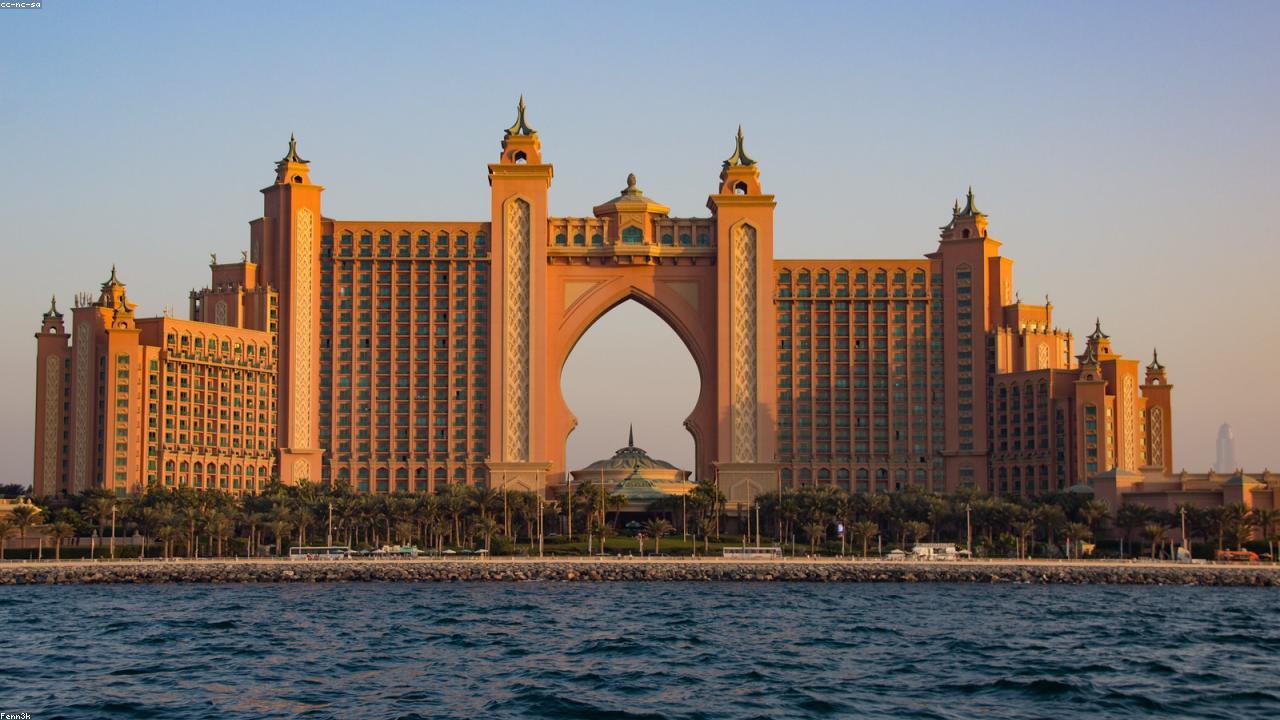
Dubai, United Arab Emirates
Dubai: the engineered city in the Gulf and the desert beyond it
March 24, 2023
Muscat, Oman
Muscat and the Omani interior: the Arabian peninsula the other way
April 26, 2022
Jerusalem, Israel
Jerusalem: the city of stone, light, and contested ground
March 8, 2021