Africa
Seronera, Tanzania
Serengeti: the East African plains and the great migration
July 4, 2022
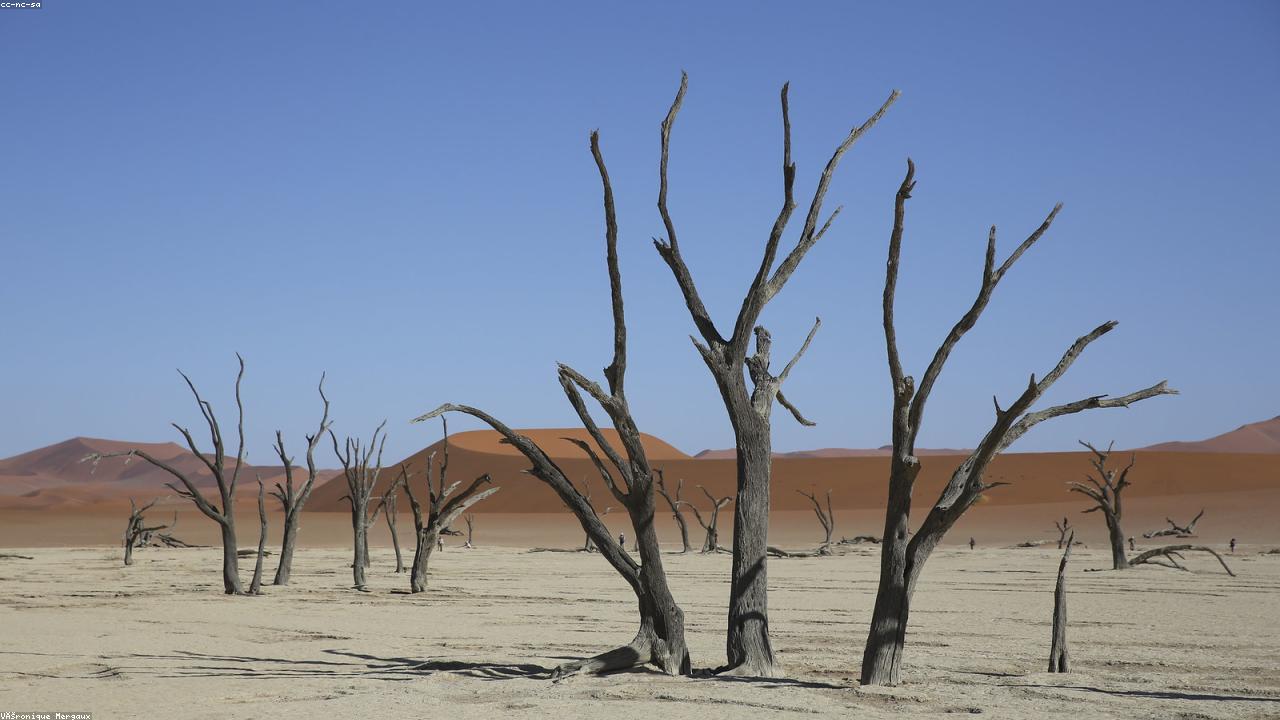
Photo: Ščenza
Sesriem, Namibia · Africa
The short list, pulled out of the long essay. No opening hours, because they change and I would only get them wrong — just what is worth your morning, roughly when to turn up, and where I have wasted time so you don’t have to.

By Ščenza
Last checked
Inside the park, 60 km beyond the Sesriem gateStart at first light; by nine the sand is unwalkable
You climb the ridgeline barefoot, because sand inside your shoes gives you no grip whatsoever, and it takes most people an hour of two-steps-up-and-one-back. Then you run straight down the face into Deadvlei, which takes ninety seconds and is the most fun available to anyone carrying that much sand in their clothing. The pan below is white clay with black camel-thorn skeletons standing in it, dead six or seven hundred years and still upright because nothing out here rots. No shade, no water. Carry more than you think and be back at the car before the heat arrives.
45 km along the road in from the Sesriem gateFirst light; this is the standard sunrise stop and everybody knows it
Named, with a magnificent bureaucratic lack of romance, for its distance in kilometres from the gate. It is the easy climb — clean ridge, car park at the bottom, a scatter of camel thorns in the foreground — which is why every vehicle in the park stops here at dawn and why that ridge carries a line of small silhouettes in roughly every photograph ever taken of Namibia. Go anyway. Nothing a queue can do will spoil what the first twenty minutes of light does to that sand.
About 4 km from the park gateThe heat of the day, after the dunes are done
Roughly a kilometre of slot canyon, thirty metres deep, cut by the Tsauchab through cemented gravel and narrow enough in places to touch both walls at once. The name is Afrikaans for six thongs — the length of rawhide rope the Dorsland trekkers needed to lower a bucket to the water. There are permanent pools down there and the birds know all about them. It is the only cool place for a hundred kilometres in any direction and costs nothing but the walk in, which after a morning on Big Daddy is precisely the right level of ambition.
Sesriem, or the NamibRand reserve to the southAny moonless night; June and July are the coldest and the clearest
NamibRand has been an International Dark Sky Reserve since 2012, and the air is dry enough out here that the Milky Way throws a shadow. I did not believe that phrase either until I held a hand out over pale gravel and watched it happen. Several lodges keep observatories, but you need nothing of the sort: walk two hundred metres away from the campsite lights, give your eyes twenty minutes, and lie down on your back. Take a fleece. It was six degrees in June and I had packed for a desert, like an idiot.
The long version
The Sossusvlei dunes of the Namib Desert are some of the oldest and tallest in the world. Climbing one at dawn, with the orange sand turning red against the indigo of the not-yet-lit sky, is one of the iconic experiences of African travel.
Read the full essay →Seronera, Tanzania
July 4, 2022
Antananarivo, Madagascar
September 26, 2022
Santa Elena, Costa Rica
January 8, 2024