Oceania
Sydney, Australia
Sydney: the harbour city and its long coastal walks
November 4, 2023
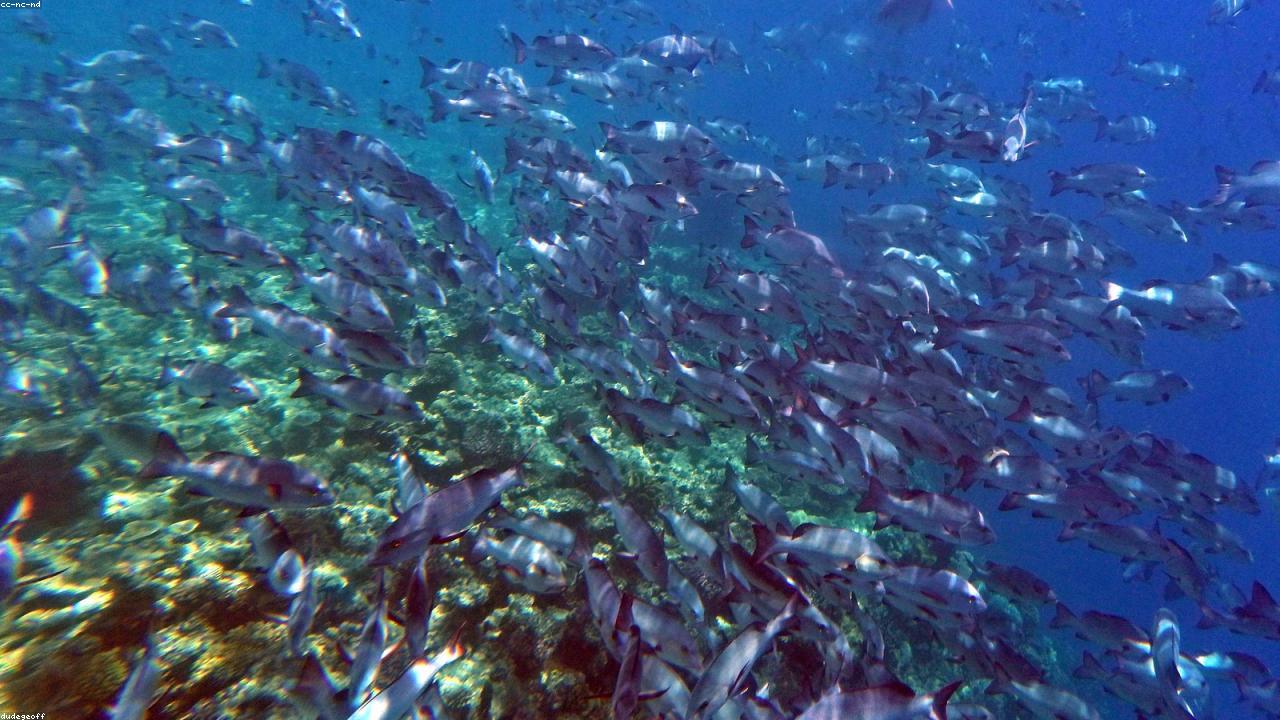
Photo: Ščenza
Cairns, Australia · Oceania
The short list, pulled out of the long essay. No opening hours, because they change and I would only get them wrong — just what is worth your morning, roughly when to turn up, and where I have wasted time so you don’t have to.

By Ščenza
Last checked
33 km east of Cairns; a morning's sail outJune to October — dry season, better visibility, no stingers inshore
Thirty-three kilometres east of Cairns there is a low sand cay holding more than one per cent of the world's greater and lesser crested terns, which is why visitors are confined to a roped-off wedge of beach and the birds get everything else. They are extremely loud and entirely unbothered by you. Underwater the coral is in better shape than the inshore reefs, though 'better' is doing real work in that sentence — bleached table coral sits alongside healthy stuff, and a good crew will tell you honestly which is which if you ask them.
Far northern reef, reached by liveaboard out of CairnsThree to seven nights aboard, dry season
Ribbon Reef number ten, well beyond day-boat range, and the reason serious divers put up with a bunk roughly the dimensions of a coffin for four nights running. The resident potato cod are enormous and completely habituated to people, which is both the appeal and the ethical problem: decades of hand-feeding did that, and survey counts of the fish fell sharply through the 1990s. Several established operators run north from Cairns. Ask what their feeding policy is before you book, and take the answer seriously.
Daintree National Park, 80–110 km north of CairnsA full day, with the Daintree River cable ferry built into the plan
Ninety-odd kilometres north of Cairns the Mossman River comes down out of Daintree National Park, and there is a 2.4-kilometre loop walk across a suspension bridge into rainforest that has been doing this continuously for longer than most things have existed. This is Kuku Yalanji country and the guided walk is the better version of the visit. Keep driving, cross the river by ferry, and the road ends at Cape Tribulation where World Heritage rainforest runs straight into World Heritage reef. Read the crocodile signs. They are not decorative.
Smithfield to Kuranda, up the Atherton escarpmentGo up early; cloud settles on the tableland through the afternoon
Two entirely different methods of climbing the same escarpment, and the sensible move is one of each. The cableway runs 7.5 kilometres over the canopy with stops at Red Peak and Barron Falls. The railway takes 37 kilometres of 1880s track through fifteen tunnels and across fifty-five bridges to achieve the same gain, slowly and loudly and much better. I did it in the wrong order — train up, gondola down — and spent the descent wishing I had saved some attention for the canopy.
Atherton Tablelands, about ninety minutes southwest of CairnsAfter rain, which up on the tablelands is most of the time
Millaa Millaa is the waterfall from every Queensland tourism poster, and the plunge pool underneath it is genuinely swimmable: cold, dark, ringed with dripping vegetation and, on a Tuesday in June, almost empty. The circuit continues to Zillie and Ellinjaa Falls within a few kilometres of road. The tablelands sit high enough to run noticeably cooler than the coast, which after four days of tropical Cairns registered as a personal favour.
The long version
The Great Barrier Reef is the largest living structure on earth. It is also one of the most visibly distressed marine ecosystems on the planet, with successive bleaching events over the past decade. The visit is worth making, more carefully than the brochures suggest.
Read the full essay →