Europe
Barcelona, Spain
Barcelona without the postcard: a week with the working city
April 8, 2024
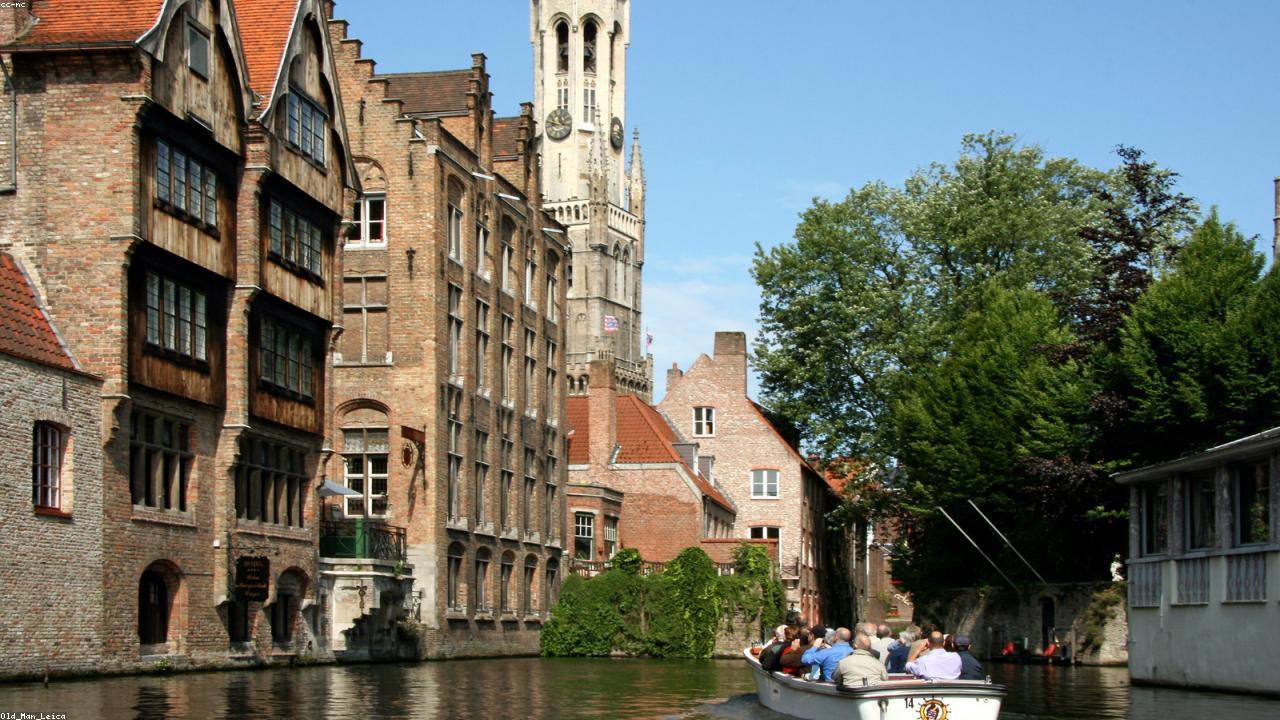
Photo: Ščenza
Bruges, Belgium · Europe
The short list, pulled out of the long essay. No opening hours, because they change and I would only get them wrong — just what is worth your morning, roughly when to turn up, and where I have wasted time so you don’t have to.
By Ščenza
Last checked
MarktFirst slot of the morning, November to February
Three hundred and sixty-six steps up an 83-metre tower that leans 87 centimetres to the east, and the staircase narrows exactly where you would like it to widen. I went up on a wet Tuesday behind a Flemish grandfather who stopped at the drum chamber to explain the carillon mechanism to nobody in particular, and was right about every word of it. The reward is red roofs out to the polders. In July there is a timed queue; in November there is nobody.
Dijver, along the canalWeekday mornings
Six centuries of Flemish painting in a building you can cross in forty minutes, which is the mistake almost everyone makes. The Madonna with Canon Joris van der Paele is here, and the canon's face — the pouches, the stubble, the cold — was painted by Jan van Eyck with no mercy whatsoever. There is a Bosch and a Memling triptych within a few rooms of it. Two hours and one bench is the correct dose.
Mariastraat, opposite the Church of Our LadyMorning; the hospital church goes dim in the late afternoon
Memling painted the sides of a gilded wooden reliquary about the size of a large dog kennel with the entire legend of Saint Ursula, panel by panel, around 1489. It stands inside a hospital founded in 1188 that spent seven centuries as a working ward, and the brick, the beams and the old pharmacy are still there. I went in for one object and stayed for the building, which in this town is usually the right way round.
Wijngaardplein, beside the MinnewaterBefore nine, or at dusk
Whitewashed houses around a walled lawn, Benedictine sisters in residence since 1927, and a sign at the gate asking for quiet that visitors actually obey — which in a centre this photographed is the closest thing to a miracle on offer. In March the courtyard turns yellow with daffodils planted as a nurseryman's gift back in 1931. Go in, sit down, and resist the urge to narrate anything.
Walplein, south of the MarktLate afternoon
Brewing on this spot since 1856, six generations of one family, and when the delivery lorries became impossible on medieval streets the brewery laid a three-kilometre pipeline under the city to the bottling plant instead of moving out. A town that will tunnel beneath its own UNESCO cobbles rather than lose a brewery has its priorities settled. The tour ends on the roof with a Brugse Zot and the whole red-tiled sprawl underneath you.
6 km north-east, out through the DampoortAutumn, when the poplars turn
Napoleon ordered this canal dug, and the poplars stand along it in a single line the whole way, on ground as flat as a billiard table — which after a life of Dalmatian hills felt like cheating. Twenty-five minutes on a hired bike puts you in a village of one long street with a Gothic town hall, a couple of taverns and no coaches. The wind off the polders is the only climb you will do all day.
The long version
Bruges has, for fifteen years, been a kind of cautionary tale about overtourism — a town of 20,000 in the old centre that absorbs 8 million visitors a year. In November, all but a few thousand of those visitors are elsewhere. Bruges in November is one of the most beautiful walking weeks in Europe.
Read the full essay →