Asia
Kyoto, Japan
Kyoto in the early hours: the old capital before the day-trippers
August 23, 2024
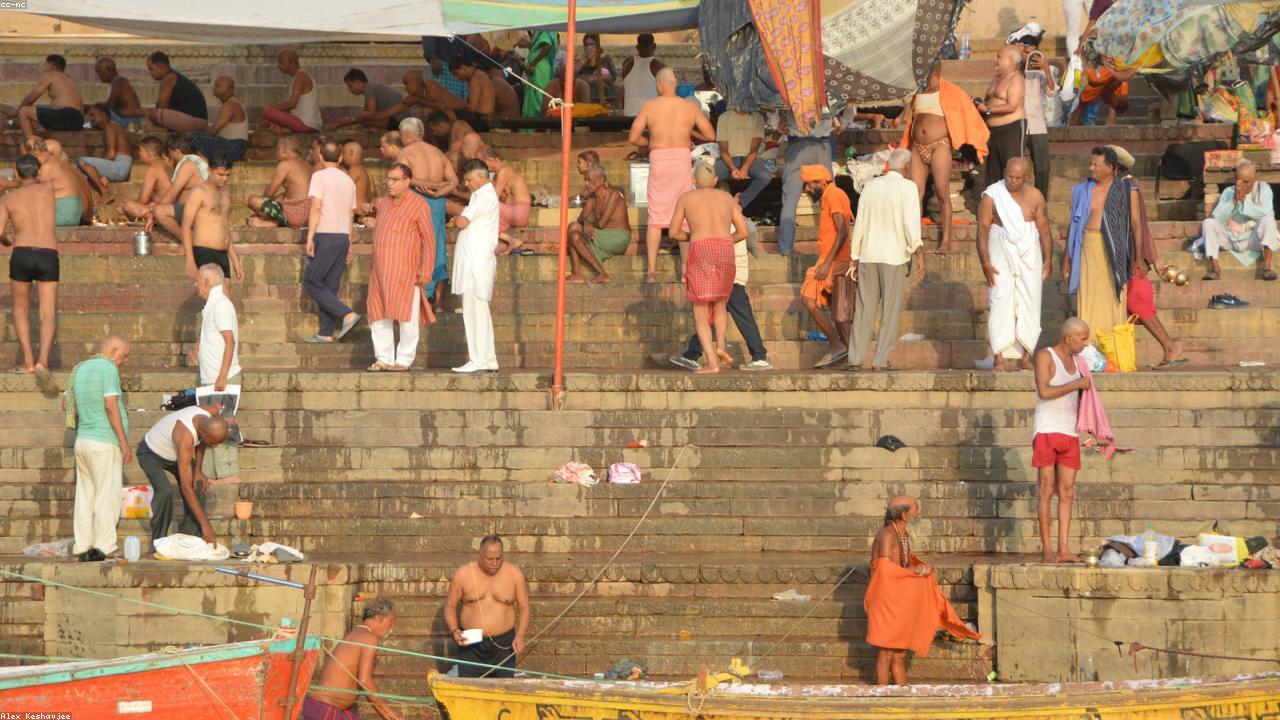
Photo: Ščenza
Varanasi, India · Asia
The short list, pulled out of the long essay. No opening hours, because they change and I would only get them wrong — just what is worth your morning, roughly when to turn up, and where I have wasted time so you don’t have to.

By Ščenza
Last checked
Assi Ghat, the southern end of the riverfrontPush off around five; allow two hours on the water
Flat-bottomed wooden boat, one oarsman, six and a half kilometres of ghats sliding past on your right while the mist comes off the water and the bathers go in. Settle the hour and the fare on the bank rather than mid-river. The light between five and seven is the entire reason people come to this city, and it does not last long. My boatman mentioned that his father and grandfather had rowed the same stretch, with no particular emphasis, the way you would mention which bus you take to work.
The full 6.5 km riverfront, on footEarly morning; the stone is punishing by mid-morning
Eighty-four named stone terraces along the river, and the walk between them is the trip. You pass laundry, cricket, goats, wrestling pits, sadhus, and eventually the cremation ground at Manikarnika, where the pyres burn continuously and have done for centuries. Put the camera away entirely there — this is enforced, and correctly so. Stand well back, keep quiet, and decline the man offering to walk you to a 'viewing terrace' for a donation. I did this first in sandals and arrived at Dashashwamedh with a blister and a much-revised sense of the day ahead.
Central ghats, below Kashi VishwanathEvery evening at dusk; Tuesdays and festival days are the biggest
Brahmin priests on raised platforms swing brass lamps the size of footballs in choreographed unison for roughly forty-five minutes, free, with the crowd stacked up the steps behind them and more people watching from boats tied up offshore. You can take the steps or pay a boatman for a seat on the water, which is the better view and the worse sound. I have done both and I would take the steps, and I would get there early enough to feel faintly ridiculous about how early I was.
Assi Ghat, southern endDaily, the two hours before sunrise
A free morning programme the state started in 2014 — Vedic chanting, a fire ritual, yoga, and then Banaras-gharana classical music played to the river as the light comes up. It runs about two hours and it genuinely is for whoever turns up. Sit at the back on the steps and do not get in the way of the people doing the yoga. I arrived expecting a production staged for visitors and found mostly local people who plainly do this every morning, plus one flautist I have thought about at odd moments ever since.
8 km northeast; half a day including the driveMorning, back in the city for lunch
Here the Buddha gave his first sermon after his enlightenment, and the Dhamek Stupa that marks the spot is thirty-nine metres of brick and carved stone. The archaeological museum next to it holds the Ashokan lion capital from around 250 BCE — the one reproduced on every Indian banknote and passport. Modern temples built by Thailand, Japan, Tibet, Myanmar and half a dozen other traditions ring the site. After two days on the ghats the silence out here is close to medically necessary.
14 km, on the east bank of the GangesLate afternoon; October if you want the Ramlila
The Maharaja of Benares still lives in part of it, so you see only a section — but that section is the Saraswati Bhawan, a museum of vintage American cars, lotus-shaped palanquins, weapons from three continents, and an astronomical clock built in 1852 that tracks the sun, the moon and the constellations. Nothing is well labelled. Half the cases resemble somebody's attic, and I mean that as praise. The month-long Ramnagar Ramlila runs across the town in October with the Maharaja arriving on an elephant; if your dates are close, move your dates.
The long version
Varanasi is not for everyone, and it does not pretend to be. The city is dense, intense, ancient, and dedicated to a kind of religious practice that does not soften itself for visitors. The morning river, at dawn, is the experience that justifies the journey.
Read the full essay →