Europe
Budapest, Hungary
Budapest in steam: the city of baths, ruined pubs, and the Danube
March 19, 2023
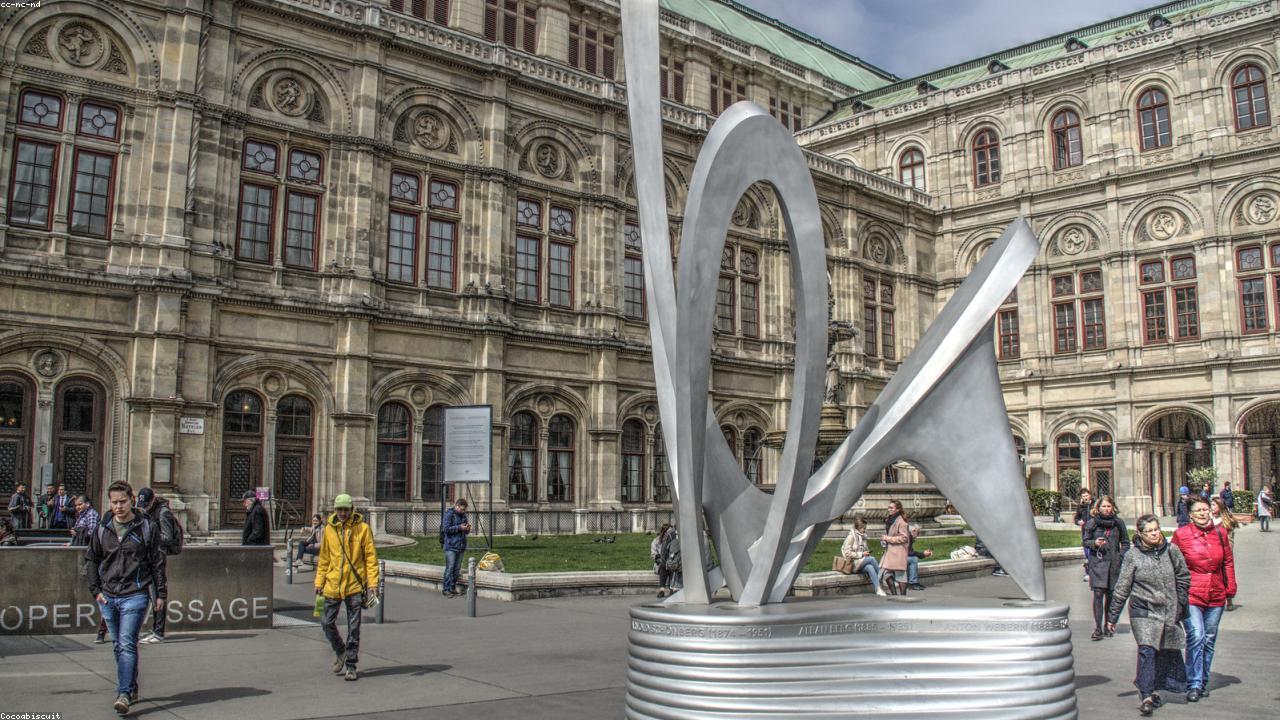
Photo: Ščenza
Vienna, Austria · Europe
The short list, pulled out of the long essay. No opening hours, because they change and I would only get them wrong — just what is worth your morning, roughly when to turn up, and where I have wasted time so you don’t have to.
By Ščenza
Last checked
Side entrance on OperngasseQueue roughly an hour and a half before curtain
Five hundred and sixty-seven standing places, sold cheap on the day, about eighty minutes before the curtain. You queue at the side door, you get a leaning rail, you tie a scarf to it to claim your spot, and the acoustics up there beat most of the seats below. The regulars in the top gallery have been coming for decades and boo with genuine technique. Leave after an act if you have had enough — nobody minds, and a good number of them are doing exactly that.
Maria-Theresien-Platz, on the RingJanuary, when the museum is half empty and Hunters in the Snow makes sense
Bruegel's Hunters in the Snow hangs here alongside the largest gathering of his paintings anywhere, and in a Viennese January the picture functions less as art than as a weather report. Do not attempt the whole museum. Sit in that one room for an hour, then go and find Vermeer's Art of Painting and the Cellini salt cellar — stolen in 2003, dug out of a forest three years later — and then leave while you still like looking at things.
Simmering; the 71 has run out here since 1907November, in fog, for the full effect
Tram 71 has served the Central Cemetery since 1907, and there is a long-standing Viennese euphemism for dying that involves taking that number. Beethoven and Schubert were moved here in 1888; Brahms, Salieri, Johann Strauss and Schoenberg lie in the same musicians' section, with a Mozart cenotaph standing in for a man nobody can actually locate. The place covers two and a half square kilometres and holds more people than several Austrian towns. Take a map, or accept in advance that you are going to get lost.
Penzing, up the hill inside the Steinhof hospital groundsWeekend afternoons in the warmer half of the year — the interior opens rarely
Otto Wagner built a church for a psychiatric hospital between 1903 and 1907 and designed it around the people who would actually use it: rounded corners and no sharp edges, a floor that drops about twenty-six centimetres from door to altar, running water in place of shared stoups. Koloman Moser did the glass and the mosaics. The last restoration put two kilos of gold leaf back on the dome. It is well out of the centre, the opening times are awkward, and it is the finest building in Vienna.
MuseumsQuartierLate in the day, when the MQ courtyard fills up and the galleries empty out
Egon Schiele died at twenty-eight in the 1918 influenza epidemic, three days after his pregnant wife, and the Leopold holds the largest collection of his work in existence — put together over five decades by a Viennese doctor and his wife, who bought while nobody else wanted any of it. The self-portraits are difficult to stay in a room with, which is the correct response to them. Klimt, Kokoschka and Gerstl are here too, and the whole building is calmer than the scrum around The Kiss at the Belvedere.
Wienzeile, along the covered course of the Wien riverSaturday mornings only, and early
Saturdays since 1977 the market stretches on past the food stalls into several hundred metres of trestle tables selling other people's grandparents: Bakelite radios, Soviet cameras, ski boots, postcards by the shoebox, and an unaccountable quantity of brass. Haggling is expected and conducted quietly. In twenty years I have bought exactly one useful object here, a 1960s Viennese street map, which I still own and have never once used to find anything.
Nussdorf and Heiligenstadt, out at the end of the D tram and the U4Autumn, when the new wine comes in. Look for the fir bundle over the door
Vienna is the only major capital with commercial vineyards inside the city boundary, and the taverns that sell that wine hang a bundle of fir twigs above the door — ausg'steckt — to signal that they are open this particular fortnight. Walk up through Heiligenstadt along the Beethovengang, the streamside path Beethoven used while going deaf and writing the Pastoral, then find a Heuriger and order a quarter-litre of Gemischter Satz and cold meat by the plateful. It is the least imperial thing this city does and the part I miss most from Split.
The long version
Vienna is a city that doesn't want to be done quickly, and it's surprisingly good at outlasting visitors who try. The Viennese take their afternoons in coffee houses for a reason. Sit down. Order. Stay.
Read the full essay →