Photo: Ščenza
Ulaanbaatar, Mongolia · Asia
Mongolia: the steppe, the Gobi, and the world's emptiest country
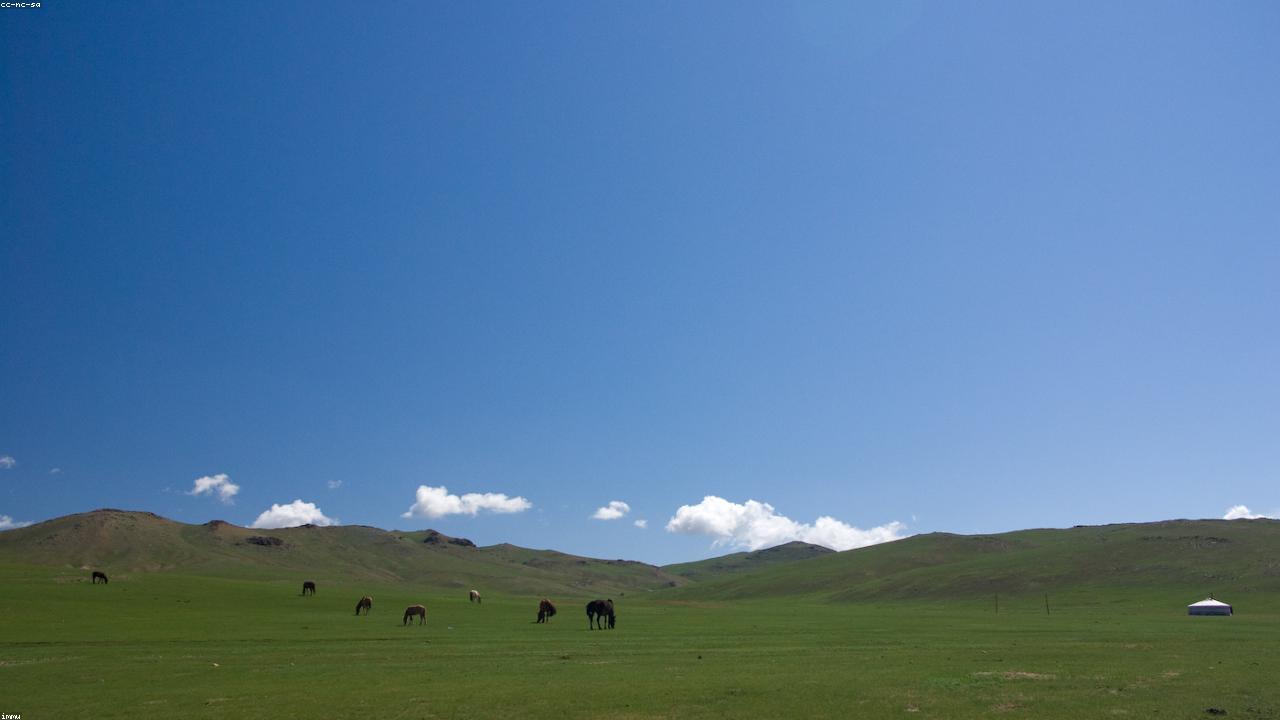
Mongolia is, by population density, the emptiest country on earth. The steppe and the Gobi Desert stretch for thousands of kilometres of grassland and arid plain. The nomadic-herder culture, with its felt gers (yurts) and seasonal migrations, remains the country's defining cultural form.
By Ščenza
· updated · 5 min read
It’s 6:14 a.m. on the steppe, three hours by 4x4 west of Ulaanbaatar, and I am standing outside the ger (the Mongolian felt tent — never call it a yurt; that’s the Turkic word) where I slept last night. The grassland extends to the horizon in every direction. The host family’s herd of three hundred sheep and goats is grazing about a kilometre off. The host father, Tsogt, is already on a horse, checking the herd. His wife, Bayarmaa, has the morning fire going and is heating water for the tea-with-milk-and-salt that is the Mongolian morning. This is the country, on its own quiet terms.
Why I keep coming back
Mongolia is the world’s least densely populated independent country (3.4 million people in 1.5 million km²). The nomadic-herder culture, suppressed under Soviet-era collectivisation, has reasserted itself since the 1990 democratic transition. Roughly 30% of Mongolians still live some version of the nomadic-pastoral life, moving with their herds seasonally and living in gers that they pack and re-pitch.
The country has, geographically, three major zones: the steppe (the central and eastern grasslands), the Gobi Desert (the southern semi-arid zone, stretching into China), and the mountain forests of the north and west (the Khangai, Khentii, and Altai ranges).
Where to base yourself
Mongolia is not a ‘base in one place’ trip. Most travellers do a 10–14 day circuit by 4x4 with a Mongolian driver-guide, sleeping in ger camps or with host families.
Ulaanbaatar is the only major city (1.6 million people, around 45% of the national population). The arrival and departure point.
The standard circuits visit:
- Central Mongolia — Kharkhorin (the ancient Mongol capital site), Orkhon Valley UNESCO area, Erdene Zuu monastery.
- The Gobi Desert — Yolyn Am ice gorge, Khongoryn Els (the singing dunes), Bayanzag (the Flaming Cliffs where the first dinosaur eggs were found).
- The Khövsgöl Lake region — the alpine lake on the Russian border, the Tsaatan reindeer-herder culture.
- The Altai Mountains in the west — the eagle hunters of the Kazakh ethnic minority.
What to actually do
Stay with a nomadic family. Multiple operators arrange home-stays in gers; usually one or two nights in a single family’s ger; herding, milking, traditional food. The most affecting Mongolia experience.
Ride a horse. Mongolian horses are small, hardy, and famously responsive. Day rides or multi-day pack rides are widely available; some operators run long horse-trek expeditions across the steppe.
Visit a Buddhist monastery. Tibetan Buddhism is the dominant Mongolian religion (the Dalai Lama-affiliated Gelugpa school). Erdene Zuu (16th century, at the site of the old Mongol capital) is the largest; Gandantegchinlen in Ulaanbaatar is the active urban monastery.
See the Gobi Desert. The Khongoryn Els (‘singing dunes’) in southern Gobi — 180 km of dunes up to 300 m tall — produce a sound when the sand slides at certain angles. The Yolyn Am ice gorge in the Gurvan Saikhan mountains holds ice into July.
Visit during Naadam. Mongolia’s national festival in July (11–13 July) — the three ‘manly sports’ of wrestling, horse racing (children riding distances of 15–30 km), and archery.
Visit the dinosaur sites. Mongolia has some of the world’s most significant fossil sites; the Flaming Cliffs (Bayanzag), the Nemegt formation. For fossils in the capital, the Central Museum of Mongolian Dinosaurs is the one to go to — the old Natural History Museum closed in 2013 and its building came down in 2019. The famous Velociraptor-and-Protoceratops pair locked mid-fight is a designated national treasure held by the Mongolian Paleontological Center rather than a permanent exhibit, so do not plan a day around seeing it.
Where to eat
Mongolian food is meat-and-milk-heavy and reflects the herder economy.
Mongolian dishes: khorkhog (mutton cooked with hot stones inside a sealed pot), boodog (a goat or marmot cooked with hot stones inside its own skin), buuz (steamed dumplings), aaruul (dried curd), airag (fermented mare’s milk).
In Ulaanbaatar, the food scene has matured significantly in recent years:
Modern Nomads — Modern Mongolian. Rosewood Kitchen + Enoteca — Western fine dining. Khaan Buuz — A chain of Mongolian dumplings; cheap, popular, reliable. The Bull — Mongolian hot pot.
In the countryside, you’ll eat what the host family eats — typically lamb, mutton, dairy products, and tea.
When to come
Mid-June to August is the practical season; mild temperatures (15–25°C), the steppe is green.
July (11–13) is the Naadam festival.
September through October is the harvest and the autumn light; mid-October becomes cold.
Mongolia in winter (November through April) is extraordinarily cold (-30°C or below) and difficult to travel in, but is the season for the Eagle Festival in the western Altai (late September / early October), the ice festivals at Khövsgöl Lake (February–March), and the genuinely off-grid winter experience.
Practical notes
- Visa: 30 days visa-free for many Western passports since 2024.
- Money: Mongolian tögrög; ATMs in Ulaanbaatar; cash in the countryside.
- Transport: 4x4 with driver is the practical move for the countryside. Domestic flights to remote provinces are useful for longer trips.
- The roads: Most countryside roads are unpaved; expect very rough going and long driving days.
- Health: Standard tropical-adjacent precautions are not needed. Some altitude in the western Altai. Carry rehydration salts.
- Cost: The country is inexpensive compared with most major destinations. A 10-day organised circuit is around US$1,500–3,000 per person plus international flights.
A final thought
Mongolia is the rare destination where the experience is, mostly, what the place itself is — vast, empty, lived-in by people whose daily life is structurally different from urban-Western daily life in ways that no amount of media exposure quite prepares you for. A night in a ger with a herder family, milking the goats at dawn, drinking the salted milk tea, watching the sun come up over the herd, is one of the most affecting travel experiences I have had.
Go for at least 12 days. Hire a private driver-guide. Stay with one or two nomadic families on the route. See the Gobi. Time the trip for Naadam if possible. The country is, by every meaningful measure, more itself in 2026 than most countries have managed to remain. Travel here is the encounter with that fact.
If you only have a few days
6 ideal things to do in Ulaanbaatar
Morning chanting at Gandantegchinlen Monastery
Bayangol district, west of central UlaanbaatarEarly morning, while the halls are in use rather than on show
Gandan was founded in 1809 and between 1944 and 1989 was the only monastery the state allowed to function, which explains the particular weight the place carries. The 26.5-metre gilded Avalokiteśvara inside was dedicated in 1996; the original was broken up in the late 1930s and is thought to have gone to Moscow to be melted down. Come while the monks are chanting and the pigeons are being fed on the steps, and stand at the back. It is a working monastery first and a sight second.
The Choijin Lama Temple Museum
Immediately south of Sükhbaatar Square, hemmed in by glass towersOpen year-round; shorter hours in the cold months
Directly behind the office blocks of the centre stands a temple complex built between 1904 and 1908 for the State Oracle, shut down in 1937 and saved a year later by being reclassified as a museum — in that decade, a considerable piece of cunning. The cham dance masks are the reason to go: papier-mâché faces the size of a car bonnet, worn to frighten off the coming year's misfortune. The contrast with the towers over the wall is not subtle and nobody pretends it is.
Naadam, and getting out to the horse racing
The National Sports Stadium, plus the racecourse outside the city11–13 July
Wrestling, archery and horse racing, held every midsummer since long before anyone thought to sell a ticket for it. The stadium wrestling is the televised half; the racing happens out on open grass over fifteen to thirty kilometres with children riding, and the finish is a wall of dust and an enormous amount of shouting. If you can arrange to be at the racecourse rather than in the stands, do it. That is where the country actually is that week.
The Chinggis Khaan equestrian statue at Tsonjin Boldog
54 km east of Ulaanbaatar, on the road towards TereljCombine it with Gorkhi-Terelj in a single day
Forty metres of stainless steel on a colonnaded drum, put up in 2008, and you climb through the horse's chest to stand on its head and look at the grass going on forever. It is vast, mirror-bright, faintly absurd and completely sincere: three and a half million people making a statement they were forbidden from making for seventy years. I smirked at the photographs beforehand and did not smirk at all once I was standing on the horse.
Gorkhi-Terelj National Park and Turtle Rock
About 60 km north-east; paved road nearly all the wayJune to September; the wildflowers come in late June
An easy day out of the capital: granite outcrops in a river valley, one of which genuinely does look like a turtle and another like an old man bent over a book, and enough space to walk for hours without a plan or a map. The ger camps here are the gentle version of the steppe — a bed, hot water, somebody else lighting the stove. Purists will tell you this is not the real countryside. Purists have not just come off a nine-hour flight.
Takhi at Hustai National Park
About 100 km west of Ulaanbaatar, off the Kharkhorin roadDusk or first light, when the harems come down to water
Przewalski's horse — the takhi, the only horse never domesticated — went extinct in the wild and was returned to this valley from zoo stock from 1992 onwards; there are a few hundred in the park now. You watch from a distance, from a vehicle, and they look back at you like something that has read the file on humans and drawn conclusions. Take binoculars. The guides carry a pair, but you will not want to give them back.
From a Split boy’s notebook
The Split lens
What reminded me of home
A country whose national identity is built around long horizons and the right to be untethered. The Dalmatian Hinterland — Zagora, the Cetina canyon, the wide karst plateaus behind Klis — has the same emptiness at smaller scale. Most Splićani have never spent a night out there.
What Split could borrow
Mongolia treats its emptiness as a national tourism asset and protects it from over-development. Our Dinaric hinterland is similar in scale and has been largely ignored as a tourism product. A serious off-grid hinterland trail network (cabin-to-cabin walking, like the Mongolian ger-to-ger circuits) would diversify our coast-only tourism.
Who can take you
Tour operators & guides to try
A short, opinionated starter list — just my humble opinion. Verify before booking.
Wild Frontierssmall groupwww.wildfrontierstravel.com →
Wild Frontiers' Mongolia itineraries are among the best in the country — the standard Gobi-and-steppe loop done in proper 4x4 vehicles with English-speaking Mongolian driver-guides, ger camps and home-stays integrated. Group size 8–12. Higher cost than the cheaper Ulaanbaatar-based operators but the standard is notably higher. Caveat: the Naadam festival week (July 11–13) is the trip's iconic timing; book a year ahead if that's your priority.
Steppes Traveltailoredwww.steppestravel.com →
Steppes Travel's Mongolia program is the tailored-and-luxury end — they'll arrange the eagle-hunters' visit in the western Altai, the reindeer-herder Tsaatan trip in Khövsgöl, and customised routes that the small-group operators don't cover. Upper-tier pricing. Caveat: Mongolia's interior logistics are demanding regardless of operator; plan 12–14 days minimum, and budget 2 buffer days for weather and road delays.