Photo: Ščenza
Paro, Bhutan · Asia
Bhutan: the Buddhist kingdom that charges you to come
Bhutan is the only country I have visited that requires a daily Sustainable Development Fee (now US$100/day) and a state-licensed itinerary. The cost is the point. The kingdom uses tourism to fund its national health and education systems, and to keep the country from being overrun. It works.
By Ščenza
· updated · 5 min read
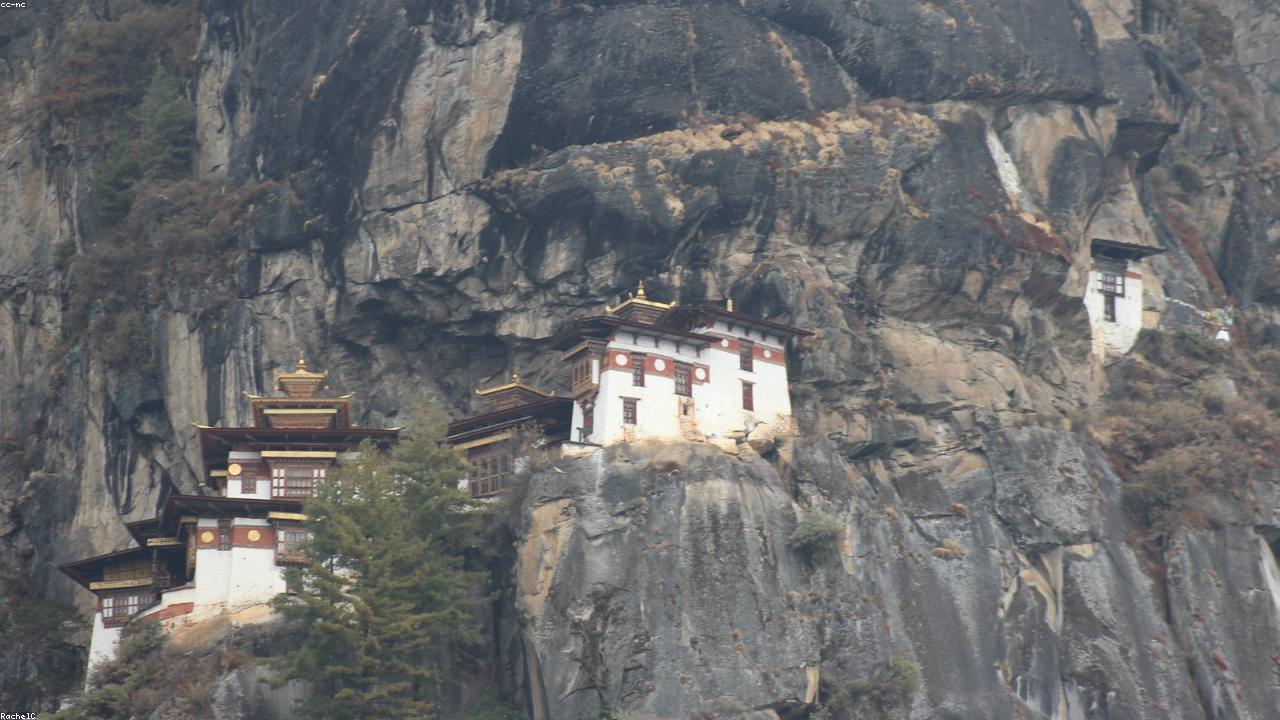
It’s 7:42 a.m. on the trail up to Taktsang — the Tiger’s Nest monastery, the most photographed building in Bhutan — and the monastery is visible across the cliff face, a small whitewashed cluster of buildings clinging implausibly to a vertical limestone face 900 metres above the Paro Valley. The hike up is three hours of steady climbing through blue-pine forest and prayer-flag stations. My guide, Karma, pauses periodically to point out medicinal plants and to chant a small protective mantra under his breath. The valley below is filling with sunlight. The monastery, when I reach it three hours later, is the eighth-century site where Guru Rinpoche meditated in a cave, and you can still enter that cave.
Why I keep coming back
Bhutan is the only Himalayan kingdom that survived the 20th century intact — never colonised, never invaded — and the only country in the world that measures its national success in ‘Gross National Happiness’ rather than GDP. The state-mandated traditional dress (the gho for men, the kira for women) is worn daily by most public-sector workers. The vernacular architecture — whitewashed, timber-framed, with intricately painted window-frames and overhanging eaves — is preserved by building code.
The country opened to tourism only in 1974. The Sustainable Development Fee, which has been adjusted upward repeatedly (and now stands at US$100/day for most visitors), funds free health and education for Bhutanese citizens and keeps visitor numbers in the low six figures. The required state-licensed itinerary means you cannot really do Bhutan independently — the guide and the licensed driver are part of the package.
This sounds restrictive and it is. It also produces a travel experience genuinely unlike any other.
Where to base yourself
Paro has the international airport and the proximity to Taktsang.
Thimphu is the capital, 90 minutes east.
Punakha is a further drive east, in a warmer subtropical valley with the most beautiful dzong (fortified monastery) in the country.
The classic 7–10 day itinerary covers Paro, Thimphu, and Punakha; longer trips add Bumthang in the central valleys and trekking routes.
What to actually do
Hike to Taktsang (Tiger’s Nest). Three hours up, two hours down. Bring water, snacks, a layer for the cool wind near the top. Don’t skip this; it’s why most people come.
Visit a Tshechu festival. The annual masked dance festivals at the major dzongs (each town has its own date; Paro Tshechu in March-April and Thimphu Tshechu in autumn are the largest). Days of monastic mask dances re-enacting Buddhist mythology, the locals in their best traditional dress, a deeply religious occasion that is also one of the most photographable in Asia.
Walk through a dzong. The Punakha Dzong — at the confluence of the male and female rivers — is the most beautiful. The Tashichho Dzong in Thimphu, the country’s administrative centre. The Paro Dzong above the airport.
Eat a Bhutanese meal. Ema datshi — chillies in cheese sauce, the national dish, vegetarian, extraordinary, sometimes painfully spicy.
Walk the suspension bridge at Punakha. A 200-m prayer-flag-festooned suspension bridge across the river to a small village; one of the iconic Bhutanese sights.
Drive the eastern road to Bumthang. A 6-hour drive through the central valleys, the country’s most agrarian and least visited region. The Jakar Dzong and the Kurje Lhakhang are key sites; the apple orchards and the cheese factories the local economy.
Where to eat
While in Bhutan, you’ll eat in your hotel’s restaurant most of the time (this is the structure of the tour). Bhutanese food is heavy on cheese, chillies, rice (often the red varietal), and pork.
Ema datshi — the national dish. Phaksha paa — stir-fried pork with dried chillies and radish. Hoentay — buckwheat dumplings filled with turnip greens; specifically the central-valley dish. Suja — butter tea, the salty Tibetan version; an acquired taste. Ara — Bhutanese rice or millet spirit, served warm; closer to soju than to baijiu.
The Bukhari restaurant at the Como Uma Paro is the special-occasion option in the country. Folk Heritage Museum Restaurant in Thimphu does the most traditional Bhutanese set lunch.
When to come
March–May for the rhododendrons in bloom and the spring festivals.
September–November for the clearest mountain views and the autumn festivals.
December through February is cold but clear; the mountain passes can be closed. June through August is the monsoon and not recommended for trekking.
Practical notes
- Visa: Bhutan visa is arranged by your licensed Bhutanese tour operator before arrival. The Sustainable Development Fee is currently US$100/day (recently reduced from US$200 for many countries) for most visitors; this is in addition to the cost of the hotel, food, transport, and guide.
- Money: Bhutanese ngultrum (pegged 1:1 to the Indian rupee). Cash useful; some hotels take card.
- Transport: Domestic flights between Paro and the central valleys (Bumthang, Trongsa) exist on a small turboprop. Most travel is by road in a licensed vehicle with a driver. The roads are mostly two-lane mountain roads with hairpin switchbacks.
- The licensed guide: Required. You will quickly come to appreciate the guide’s role as cultural mediator, religious explainer, and occasional translator. Tipping the guide and driver at the end of the trip is expected (around US$15–25 per day, total).
- Altitude: Paro is at 2200 m; Thimphu at 2400 m; the road over the Dochula Pass is at 3100 m. Take it slow on day one.
- Phones and connectivity: Local SIM cards are easy and cheap. Wi-Fi is patchy outside hotels.
A final thought
Bhutan is the most expensive country I have visited per day, by a significant margin, and the most consistent. The combination of the daily fee, the required guide, and the state-licensed tour operators creates a tourism economy that is small, well-paid for the Bhutanese involved, and effectively immune to the boom-and-bust crowding cycles that have damaged other Himalayan destinations.
The philosophy is articulate: high-value, low-impact tourism. The Bhutanese themselves are mostly proud of it. The country is, in important ways, the museum of a Tibetan-Buddhist civilisation that Tibet itself can no longer be. You are not getting a discount on this trip; you are paying to keep the country the way the country wants to be.
The Tiger’s Nest is the postcard. The slower experiences — the suspension-bridge walk at Punakha, the morning prayers at any dzong, the long mountain drive through the valleys, the conversation with the guide about Bhutanese Buddhism over butter tea — are the lasting ones. Go for ten days. Pay the fee. Walk the trails. Watch the dance festivals. Come home aware that not every country has chosen to be priced at the volume the market would otherwise dictate, and that some of them, for now, are still here.
If you only have a few days
5 ideal things to do in Paro
The climb to Taktsang, the Tiger's Nest
10 km north of Paro townStart early; roughly three hours up, two down
Nine hundred metres above the valley floor, on a cliff that has no business supporting a building, and the walk up is three steady hours through blue pine with a cafeteria at the halfway viewpoint where everybody stops and pretends not to be relieved. What you see was built in 1692 around the cave where Padmasambhava is said to have meditated; it burned in 1998 and was rebuilt by 2005. My guide chanted quietly at each prayer-flag station and I, somewhere above three thousand metres with a software developer's lungs, was in no condition to hold up my end of the conversation.
Rinpung Dzong and the Nyamai Zam bridge
Above Paro town, over the Paro ChhuLate afternoon, when the whitewash turns gold
Zhabdrung Ngawang Namgyal pulled down the older fort and built this one, consecrated in 1646, and it still does both jobs a dzong does: monastery on one side, district administration on the other. Cross the traditional covered cantilever bridge below it on foot and walk up, rather than driving to the top car park, because the approach is the entire reason the thing was sited where it is. Monks in maroon crossing a courtyard while a clerk in a gho heads to a meeting is the whole country in one frame.
Paro Tshechu
Rinpung Dzong and the ground above itSecond month of the Bhutanese lunar calendar, usually March or April
Days of masked dance in the dzong courtyard, the whole valley turned out in its best kira and gho, and on the final morning before dawn an enormous appliqué thongdrel unrolled down a wall and rolled away again before the sun can touch it. It is a religious occasion that happens to be the most photogenic event in the Himalaya, and the order of those two facts matters — behave like a guest at a service rather than an audience. I stood on a wall for four hours to see the thongdrel and would happily do it again on a worse wall.
Kyichu Lhakhang
A short drive up the valley from Paro townMorning, while local people are circumambulating
Built in 659 by the Tibetan emperor Songtsen Gampo as one of 108 temples raised in a single campaign, which makes it one of the oldest buildings in Bhutan and older than more or less anything I have stood inside. The two orange trees in the courtyard are said to fruit all year round. A second temple was added alongside the original in 1971. Twenty quiet minutes is all it takes, and after the queue of walkers on the Taktsang trail that turns out to be precisely what your last morning needs.
The National Museum in the Ta Dzong
The round watchtower on the hill directly above Rinpung DzongPair it with the dzong and walk down between the two
The old circular watchtower that once guarded the dzong became a museum in 1968 and holds over three thousand objects across some 1,500 years — bronzes, thangkas, textiles, the mask collection. Do this before Taktsang rather than after, so that when your guide names a deity on a monastery wall you have already met its face somewhere with a label under it. I went in the other order and spent an entire hike nodding knowledgeably at things I did not recognise in the slightest.
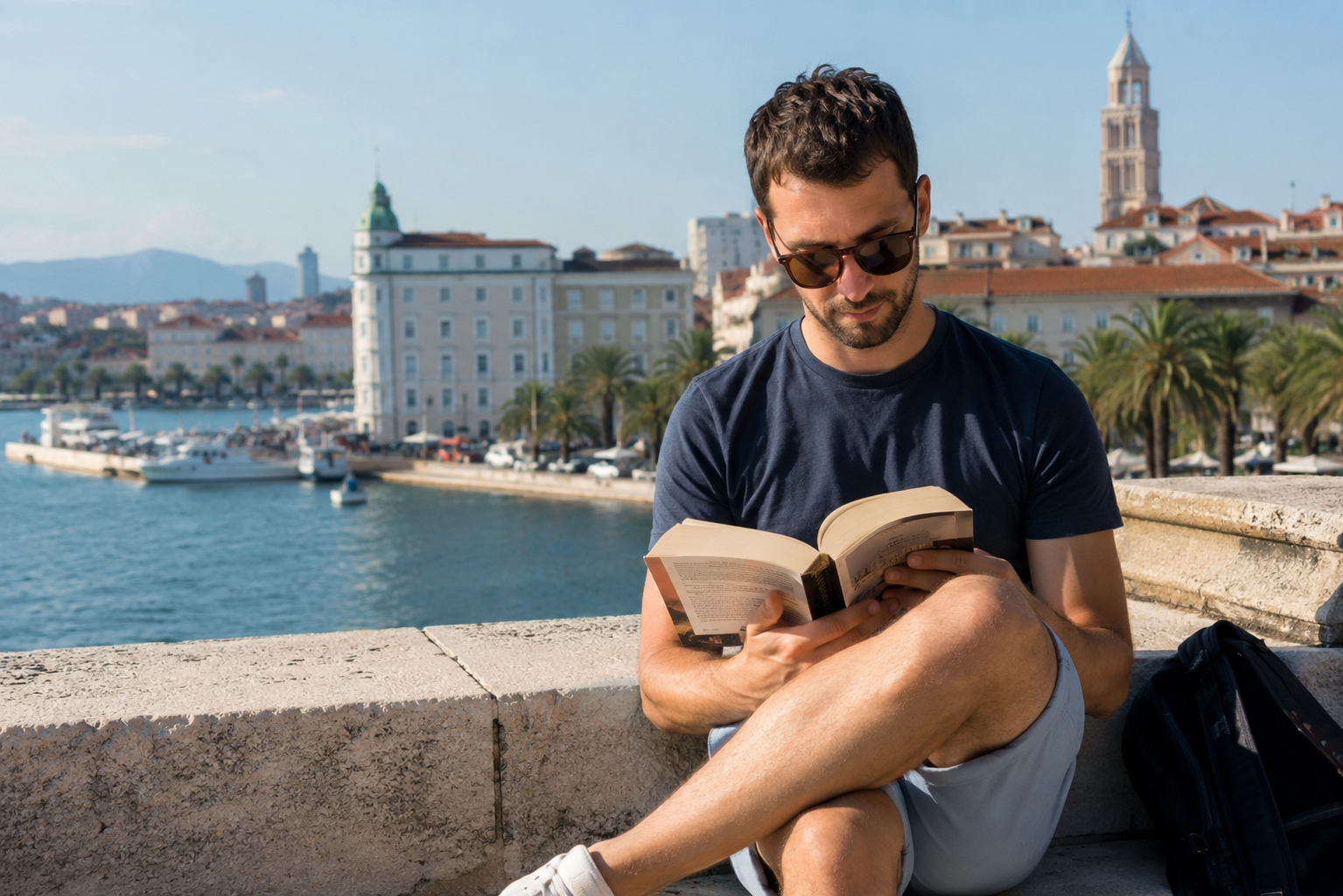
From a Split boy’s notebook
The Split lens
What reminded me of home
Small country with a deliberate tourism policy — high cost, low volume, conservation-funded. Bhutan's daily fee is not what we'd want exactly, but the underlying principle — that mass tourism damages the place and the people are entitled to push back — is what we should be debating.
What Split could borrow
Bhutan's Sustainable Development Fee funds national health and education. A modest daily tourism levy in Split — even five euros per day per visitor — would generate a serious municipal fund for old-town conservation and would mark Split as a serious heritage city rather than a discount destination.
Who can take you
Tour operators & guides to try
A short, opinionated starter list — just my humble opinion. Verify before booking.
Audley Traveltailoredwww.audleytravel.com →
Audley Travel's Bhutan trips are well-suited to the country's licensed-operator-only structure — they coordinate the daily-fee logistics and the licensed local guides, build a custom itinerary across Paro, Thimphu, Punakha (and Bumthang if you have time). Upper-tier pricing. Caveat: the Sustainable Development Fee changes; verify current rates before booking, and budget accurately.
MT Sobeksmall groupwww.mtsobek.com →
MT Sobek's Bhutan program is the more trekking-focused alternative — they do the Druk Path trek and the Snowman trek for serious hikers, with the country's monastery visits integrated. Upper-tier pricing. Caveat: the Snowman is a 24+ day trek and one of the hardest commercial treks in the Himalaya; it's not for first-time visitors. The shorter Druk Path is more accessible.