Photo: Ščenza
Yerevan, Armenia · Caucasus
Yerevan: the pink city under Ararat
Yerevan is, in some lights, simply a small Soviet-modernist capital in the South Caucasus. In other lights, it is the cultural heart of one of the world's oldest continuous Christian civilisations and a country still working through the unresolved memory of 1915.
By Ščenza
· updated · 4 min read
It’s 5:51 a.m. on the Cascade — the giant limestone staircase that climbs up the hillside on the northern edge of central Yerevan — and Mount Ararat (which is, of course, in Turkey now, but visible in clear weather from anywhere in Yerevan) is just becoming visible across the plain. The snow-capped twin peaks of Big Ararat (5,137 m) and Little Ararat (3,896 m) are catching the dawn. The Armenian symbol of national identity, on the other side of the closed border, fifty kilometres away. The geography of the Yerevan morning is, in some sense, the whole history of the country.
Why I keep coming back
Armenia is the world’s first officially Christian country (since AD 301, with the conversion of King Tiridates III) and home to one of the oldest continuous national cultures in the world. The Armenian alphabet was invented in AD 405; the manuscripts at the Matenadaran in Yerevan are some of the oldest surviving Christian liturgical texts.
The country is also one of the smallest and most physically constrained in the region — landlocked, with closed borders to Turkey (since 1993) and Azerbaijan (since 1991), opening only to Georgia and Iran. The geopolitical situation has been difficult for thirty years; the 2020 and 2023 Nagorno-Karabakh wars produced significant changes to the country’s borders and population.
Yerevan itself is a 19th-century Russian-Imperial-laid-out city that has been heavily Soviet-modernist-rebuilt since the 1920s, with the famous tuff-stone buildings (volcanic rock in pinks, oranges, and creams) that give the city its distinctive colour palette.
Where to base yourself
Central Yerevan (around the Opera House or Republic Square) for the walking experience.
Kentron (the central district) for the boutique hotels and restaurants.
What to actually do
Walk Republic Square at dusk. The 1924 designed central square with its singing fountains in summer; the architectural symmetry of the surrounding Soviet-modernist tuff-stone buildings.
Climb the Cascade. The giant 20th-century staircase project from the city centre to the top of the hill, with sculpture gardens and contemporary art at each level (the Cafesjian Center for the Arts), ending at a Soviet-Armenian monument at the top.
Visit the Matenadaran. The Armenian manuscript museum and repository; the Mesrop Mashtots Institute. Some of the oldest Christian liturgical manuscripts in the world.
Visit the Genocide Memorial and Museum. Tsitsernakaberd. The 1915 Armenian Genocide remains the central historical fact for Armenian national identity. The museum is sober and essential.
Day-trip to Geghard Monastery and Garni. An hour east of Yerevan; Geghard is the half-built, half-rock-cut 13th-century monastery; Garni is the 1st-century Greco-Roman temple (a rare classical-era survivor in the Caucasus).
Day-trip to Tatev or the Areni wine region. Tatev is the 9th-century monastery in the southern mountains, accessed by the world’s longest non-stop double-tracked aerial tramway (the ‘Wings of Tatev’). The Areni Cave Complex, in the same region, contains the world’s oldest known winery (6,100 years old).
Drink Armenian cognac. Armenia produces some of the best brandies in the post-Soviet space; the Yerevan Brandy Company’s Ararat brand is the famous label. Tour and tastings available.
Where to eat
Armenian food: lavash (the long-cooked flatbread, UNESCO-listed), khorovats (Caucasian grilled meat), dolma (stuffed vine leaves), spas (yogurt soup), the strong tradition of dried fruits and walnuts.
Sherep — Modern Armenian; popular with locals; cafeteria-style for lunch. Lavash — Refined Armenian. Dolmama — Higher-end Armenian. Mer Tagh — Cheap, traditional, the daily working lunch. The wine bars on Saryan Street — the city’s drinking strip; mid-tier Armenian wines. Coffee at the Armenian small-cup style — strong, no milk, served with a glass of cold water.
When to come
May–June and September–October for the most pleasant weather.
Summer is hot (35°C+); winter is cold (sometimes well below freezing in January) but the high mountains have excellent skiing.
Practical notes
- Visa: Most Western passports get 180 days visa-free.
- Money: Armenian dram; ATMs work.
- Transport: The Yerevan Metro is small but useful. Taxis and Yandex/GG apps for longer rides. A car with driver for day trips.
- Language: Armenian (with its own unique script); Russian widely understood; English increasingly common in central Yerevan.
- The 1915 history: A central and unresolved fact of Armenian identity. The genocide perpetrated by the Ottoman Empire killed 1.5 million Armenians and displaced the survivors across the Middle East, Europe, and the Americas. Most Armenians have family directly affected. Engage thoughtfully.
- The 2020 / 2023 wars: The loss of much of Nagorno-Karabakh and the displacement of 100,000+ ethnic Armenians from the region is recent and visible. Some refugees may be visible in Yerevan.
A final thought
Armenia is one of the most historically deep and politically constrained countries I have travelled in. The combination of the world’s first official Christian state, the medieval and ancient manuscript culture, the 20th-century genocide and Soviet experience, and the difficult contemporary geopolitics produces a country that does not yield itself to a quick visit.
The rewards, for the patient visitor, are real. The architecture (the volcanic tuff stone, the medieval monasteries, the Soviet-modernist mid-century), the cuisine (one of the most distinctive in the wider Caucasus), the wines (the natural-wine scene around Areni is genuinely interesting), and the warmth of the Armenian hospitality are all worth a longer visit than most tourists give.
Five nights in Yerevan, plus three or four days for monasteries and day trips, is the right length. Combine with Georgia (an easy land border at Sadakhlo / Bagratashen, 5 hours by road) for a 12–14 day Caucasus loop. Both small countries reward the patient traveller in ways that the more famous destinations of the region do not.
If you only have a few days
7 ideal things to do in Yerevan
The manuscripts at the Matenadaran
The top of Mashtots AvenueMorning, before you take on the Cascade
Mesrop Mashtots invented the Armenian alphabet in 405 and his statue sits on the steps outside, teaching. Inside is the largest collection of Armenian manuscripts anywhere — gospels, medicine, astronomy, law — built into the hillside and listed by UNESCO as documentary heritage. What lands is not one particular book but the arithmetic of it: a small, repeatedly invaded country that has kept its own written record continuously, in a script nobody else on earth uses.
Climb the Cascade at the end of the day
Kentron, above the Tamanyan Street sculpture gardenLate afternoon into dusk
The Cascade is a monumental limestone staircase running up the hillside, with the Cafesjian collection spread across its terraces and gardens — Botero's enormous cat down at the bottom, and escalators inside the structure for when the steps have made their point, which for me was somewhere around the fourth landing. Yerevan spreads out below and on a clear day Ararat stands behind it. In Split we have a hill with a view. It did not occur to us to put a museum inside it.
Tsitsernakaberd, the genocide memorial and museum
On the hill west of the centre, above the Hrazdan gorgeGo in the morning, and plan nothing demanding afterwards
Go up here early, and go before you do anything else in this country. Basalt slabs lean inward around an eternal flame; a split stone needle stands beside them. The museum underneath is sober, carefully made and unbearable in the way it is supposed to be. Nearly every Armenian you meet has a family route out of 1915 somewhere in their history. This is not a sight to tick off. It is the explanation for a great deal of everything else.
The Sergei Parajanov Museum
Dzoragyugh, on the lip of the Hrazdan gorgeAny afternoon
Parajanov made a handful of films and spent years in Soviet prisons, and while he was inside he made collages out of whatever came to hand — foil from milk-bottle tops, thread, buttons, dried flowers. The house above the gorge holds hundreds of them, plus the drawings, the dolls and the hats. It is funny, cluttered and quietly furious. It took me twenty minutes to work out what I was looking at and two hours to leave.
The Vernissage craft market
Aram and Buzand streets, a short walk from Republic SquareLate morning
Aram Street fills with trestle tables for a few hundred metres: carpets, silver, wood-carved backgammon boards, Soviet camera lenses, obsidian, and one stretch of frankly menacing antique tools. The carpet sellers are patient and will unroll for half an hour with no expectation attached. I went in intending to buy nothing and came out with a backgammon board that had to be checked into the hold on the way home.
Garni and Geghard in one afternoon
Kotayk, between thirty minutes and an hour east of the cityTake Geghard second, for the late light in the rock chapels
Half an hour east stands a Hellenistic colonnaded temple above the Azat gorge, flattened by an earthquake in 1679 and rebuilt in the 1970s out of its own fallen stones, which is a very Armenian solution to a very Armenian problem. Twenty minutes further on, Geghard is cut directly into the cliff: chambers hollowed from solid rock, a spring running inside, and an acoustic that somebody will demonstrate for you if a singer happens to be there. Hire a driver and do both.
Khor Virap, and the mountain you cannot get to
The Ararat plain, about 40 km south, at the closed Turkish borderClear mornings in spring or autumn; summer haze hides the mountain
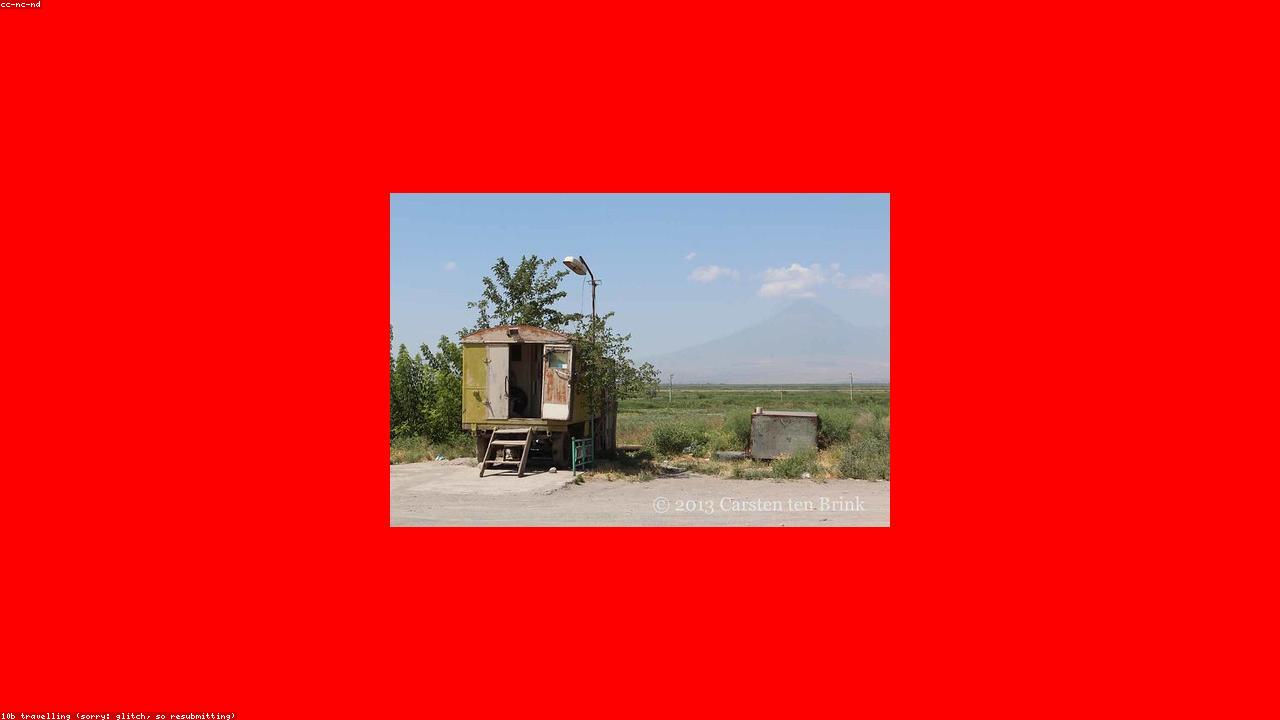
Ararat has been inside Turkey since the 1920s, and this monastery on the plain is where Armenians go to look at it. There is a pit here you climb down into on an iron ladder, where Gregory the Illuminator was held for thirteen years before the king converted and the country became the first Christian state in 301. Beyond the vines is the fence, and then the border. Nobody explains why this stings. You work it out from where everybody is standing and which way they are facing.
From a Split boy’s notebook
The Split lens
What reminded me of home
Stone city with a deep continuous Christian tradition, a strong national identity built on long memory and small territory, and a diaspora that significantly outnumbers the home population. Our Croatian diaspora situation is structurally similar — more Croats abroad than at home, with a deep emotional connection to the old country.
What Split could borrow
Armenia formally engages its diaspora through reduced-fee long-stay visas and a 'repatriation' framework. Our Croatian diaspora is courted at election time and largely ignored otherwise. A serious diaspora-engagement infrastructure — long-stay visas, property-purchase support, business-investment incentives — would tap a significant resource Split currently doesn't.
Who can take you
Tour operators & guides to try
A short, opinionated starter list — just my humble opinion. Verify before booking.
Wild Frontierssmall groupwww.wildfrontierstravel.com →
Wild Frontiers' Armenia trips are usually part of a Caucasus loop — Yerevan, Echmiadzin, the Geghard Monastery, Tatev in the south, and (where possible) the Nagorno-Karabakh region (currently inaccessible after the 2023 events). Group size 8–12. Caveat: the country's recent history is sober and present; the genocide memorial and the 2020/2023 displacement narratives are unavoidable. Engage thoughtfully.
Steppes Traveltailoredwww.steppestravel.com →
Steppes Travel's Armenia program is the tailored-and-private end — private guiding, the harder-to-reach monasteries (Khor Virap with Ararat, the Vorotnavank complex), the natural-wine producers around Areni. Upper-tier pricing. Caveat: Armenia is genuinely inexpensive by international standards; the upper-tier pricing is for the private logistics and the bespoke routes rather than for accommodation premiums.